

Join Our Newsletter To Be Informed When New Videos Are Posted
Hebrew Text
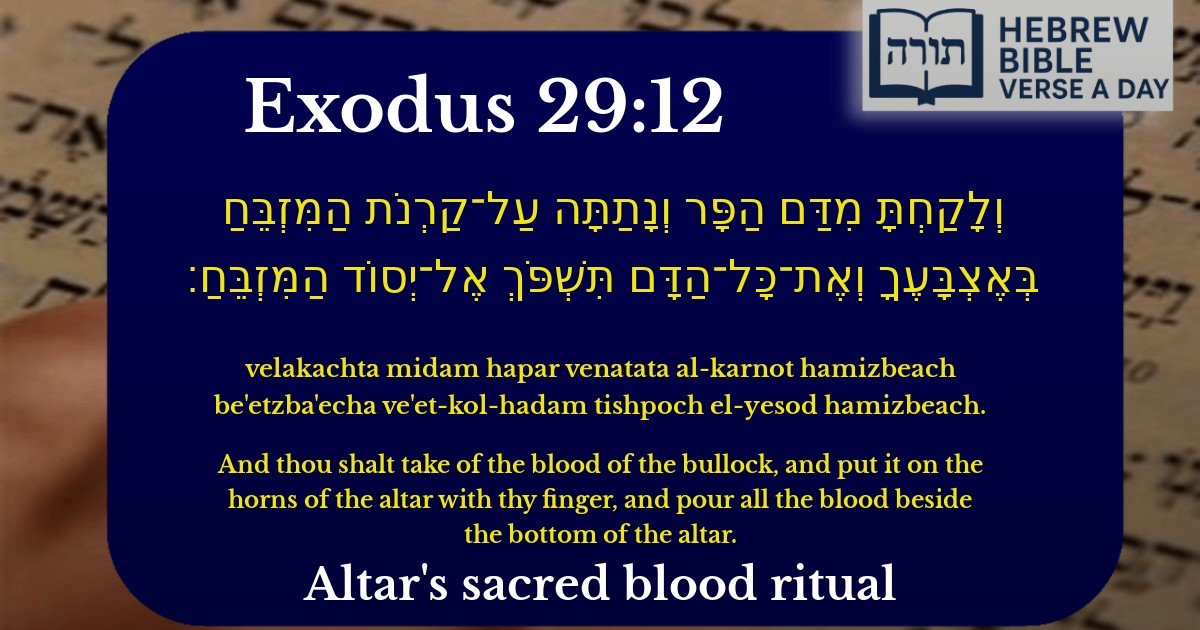
וְלָקַחְתָּ מִדַּם הַפָּר וְנָתַתָּה עַל־קַרְנֹת הַמִּזְבֵּחַ בְּאֶצְבָּעֶךָ וְאֶת־כָּל־הַדָּם תִּשְׁפֹּךְ אֶל־יְסוֹד הַמִּזְבֵּחַ׃
English Translation
And thou shalt take of the blood of the bullock, and put it on the horns of the altar with thy finger, and pour all the blood beside the bottom of the altar.
Transliteration
Velakachta midam hapar venatata al-karnot hamizbeach be'etzba'echa ve'et-kol-hadam tishpoch el-yesod hamizbeach.
Hebrew Leining Text
וְלָֽקַחְתָּ֙ מִדַּ֣ם הַפָּ֔ר וְנָתַתָּ֛ה עַל־קַרְנֹ֥ת הַמִּזְבֵּ֖חַ בְּאֶצְבָּעֶ֑ךָ וְאֶת־כׇּל־הַדָּ֣ם תִּשְׁפֹּ֔ךְ אֶל־יְס֖וֹד הַמִּזְבֵּֽחַ׃
🎵 Listen to leining
Parasha Commentary
📚 Talmud Citations
This verse is quoted in the Talmud.
📖 Zevachim 37b
The verse is discussed in the context of the proper procedure for offering sacrifices, specifically the application of blood on the altar's horns and the pouring of the remaining blood at its base.
📖 Menachot 4a
Referenced in a discussion about the details of sacrificial rites, emphasizing the importance of the priest's actions with the blood of the offering.
Source and Context
The verse (Shemot 29:12) is part of the Torah's instructions for the consecration of the Kohanim (priests) and the Mizbeach (altar) during the inauguration of the Mishkan (Tabernacle). This specific commandment details the proper handling of the blood of the par ha'chatat (sin-offering bull) as part of the sacrificial service.
Rashi's Explanation
Rashi (Rabbi Shlomo Yitzchaki) comments that the placement of the blood on the karnot hamizbeach (horns of the altar) symbolizes atonement, as horns represent strength and elevation (based on Tehillim 118:27). The act of applying blood with the finger (rather than pouring) emphasizes precision and intentionality in the avodah (Temple service). The remaining blood is poured at the base of the altar, completing the atonement process.
Rambam's Perspective
In Hilchot Ma'aseh HaKorbanot (Laws of Sacrificial Procedure 5:12), the Rambam (Maimonides) explains that this procedure applies specifically to the chatat (sin-offering). The blood on the horns represents the sinner's plea for mercy, while the pouring at the base signifies the removal of guilt. The Kohen's use of his finger (rather than a vessel) underscores the personal responsibility in seeking atonement.
Symbolism in Midrash
The Midrash Tanchuma (Tzav 14) connects the four horns of the altar to the four directions of the world, teaching that the atonement offered through the korbanot extends universally. The blood's placement on the highest points (horns) and lowest point (base) symbolizes that teshuva (repentance) must encompass both elevated spiritual aspirations and practical behavioral change.
Halachic Details from Talmud