

Join Our Newsletter To Be Informed When New Videos Are Posted
Hebrew Text
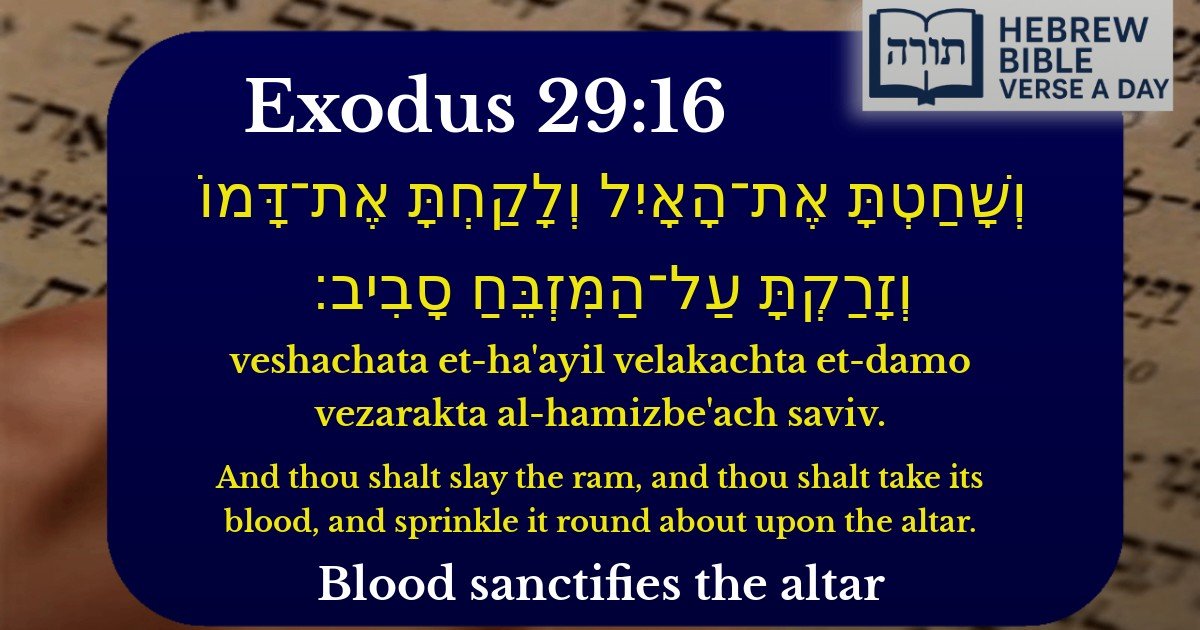
וְשָׁחַטְתָּ אֶת־הָאָיִל וְלָקַחְתָּ אֶת־דָּמוֹ וְזָרַקְתָּ עַל־הַמִּזְבֵּחַ סָבִיב׃
English Translation
And thou shalt slay the ram, and thou shalt take its blood, and sprinkle it round about upon the altar.
Transliteration
Veshachata et-ha'ayil velakachta et-damo vezarakta al-hamizbe'ach saviv.
Hebrew Leining Text
וְשָׁחַטְתָּ֖ אֶת־הָאָ֑יִל וְלָֽקַחְתָּ֙ אֶת־דָּמ֔וֹ וְזָרַקְתָּ֥ עַל־הַמִּזְבֵּ֖חַ סָבִֽיב׃
🎵 Listen to leining
Parasha Commentary
📚 Talmud Citations
This verse is quoted in the Talmud.
📖 Zevachim 37b
The verse is discussed in the context of the laws regarding the sprinkling of blood on the altar during sacrificial offerings.
📖 Menachot 5a
Referenced in a discussion about the proper procedures for sacrifices, particularly the sprinkling of blood around the altar.
Context of the Verse
The verse (Exodus 29:16) is part of the instructions for the consecration of the Kohanim (priests) during the inauguration of the Mishkan (Tabernacle). The ram mentioned here is the Ayil HaMiluim (the ram of consecration), a central component of the sacrificial service that sanctified Aharon and his sons for their priestly duties.
Explanation of the Ritual
Rashi (Exodus 29:16) explains that the slaughtering of the ram and the sprinkling of its blood around the altar symbolize the complete dedication of the Kohanim to divine service. The blood, representing life force (nefesh), is applied to the altar to signify atonement and purification, as the altar serves as the conduit between Bnei Yisrael and Hashem.
Symbolism of the Blood Sprinkling
Midrashic Insights
The Midrash Tanchuma (Tzav 14) connects this act to the broader theme of devotion, stating that just as the blood encircles the altar, so too must the service of Hashem encompass every facet of a Jew’s life. The ram’s blood, specifically, alludes to the binding of Yitzchak (Akeidas Yitzchak), where a ram was sacrificed in his stead, reinforcing the idea of total commitment to Hashem.
Halachic Significance
According to the Shulchan Aruch (Yoreh De’ah 1:1), the details of blood application in sacrificial rites underscore the precision required in divine service. The Kohanim had to perform this act meticulously, as improper sprinkling could invalidate the korban, teaching the importance of adhering strictly to halachah in avodas Hashem.