

Join Our Newsletter To Be Informed When New Videos Are Posted
Hebrew Text
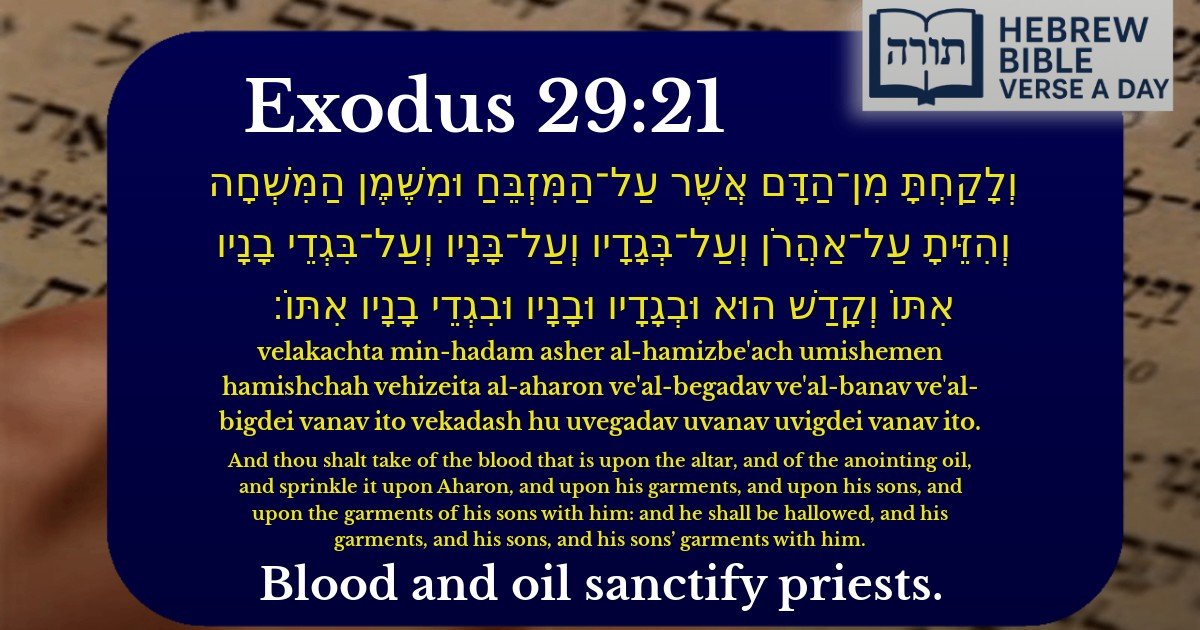
וְלָקַחְתָּ מִן־הַדָּם אֲשֶׁר עַל־הַמִּזְבֵּחַ וּמִשֶּׁמֶן הַמִּשְׁחָה וְהִזֵּיתָ עַל־אַהֲרֹן וְעַל־בְּגָדָיו וְעַל־בָּנָיו וְעַל־בִּגְדֵי בָנָיו אִתּוֹ וְקָדַשׁ הוּא וּבְגָדָיו וּבָנָיו וּבִגְדֵי בָנָיו אִתּוֹ׃
English Translation
And thou shalt take of the blood that is upon the altar, and of the anointing oil, and sprinkle it upon Aharon, and upon his garments, and upon his sons, and upon the garments of his sons with him: and he shall be hallowed, and his garments, and his sons, and his sons’ garments with him.
Transliteration
Velakachta min-hadam asher al-hamizbe'ach umishemen hamishchah vehizeita al-aharon ve'al-begadav ve'al-banav ve'al-bigdei vanav ito vekadash hu uvegadav uvanav uvigdei vanav ito.
Hebrew Leining Text
וְלָקַחְתָּ֞ מִן־הַדָּ֨ם אֲשֶׁ֥ר עַֽל־הַמִּזְבֵּ֘חַ֮ וּמִשֶּׁ֣מֶן הַמִּשְׁחָה֒ וְהִזֵּיתָ֤ עַֽל־אַהֲרֹן֙ וְעַל־בְּגָדָ֔יו וְעַל־בָּנָ֛יו וְעַל־בִּגְדֵ֥י בָנָ֖יו אִתּ֑וֹ וְקָדַ֥שׁ הוּא֙ וּבְגָדָ֔יו וּבָנָ֛יו וּבִגְדֵ֥י בָנָ֖יו אִתּֽוֹ׃
🎵 Listen to leining
Parasha Commentary
📚 Talmud Citations
This verse is quoted in the Talmud.
📖 Zevachim 19b
The verse is discussed in the context of the sanctification process of Aaron and his sons, particularly regarding the sprinkling of blood and oil as part of their consecration as priests.
📖 Keritot 5b
Referenced in a discussion about the requirements for the sanctification of priests and their garments, emphasizing the importance of the blood and anointing oil in the consecration process.
Context of the Verse
This verse (Shemot 29:21) is part of the detailed instructions for the consecration of Aharon and his sons as Kohanim (priests) in the Mishkan (Tabernacle). The process involves the use of sacrificial blood and anointing oil to sanctify them and their garments, marking their transition into sacred service.
Rashi's Explanation
Rashi (on Shemot 29:21) explains that the blood mentioned here is from the ram of consecration (איל המילואים), which was offered earlier in the ceremony. The mixture of blood and anointing oil symbolizes the complete dedication of the Kohanim to their divine service. Rashi emphasizes that the sprinkling on Aharon, his sons, and their garments serves to unify them in holiness, as the verse concludes: "וְקָדַשׁ הוּא וּבְגָדָיו" ("he shall be hallowed, and his garments").
Rambam's Perspective
In Hilchot Klei HaMikdash (9:7), the Rambam (Maimonides) discusses the sanctity of the priestly garments. He notes that the sprinkling of blood and oil on the garments imbues them with a unique kedushah (holiness), making them fit for avodah (Temple service). This act parallels the sanctification of the Kohanim themselves, as both the individuals and their vestments must be ritually prepared.
Midrashic Insights
The Midrash Tanchuma (Tetzaveh 10) elaborates that the anointing oil represents wisdom and divine favor, while the blood signifies atonement and life force. By combining these elements, the Kohanim are spiritually elevated to serve as intermediaries between Bnei Yisrael and Hashem. The Midrash also highlights that the sanctification of the garments teaches that external appearances (the dignified priestly attire) must align with internal purity.
Symbolism of the Garments
Practical Halachic Implications
The Sefer HaChinuch (Mitzvah 99) derives from this verse that the sanctity of the Kohanim and their garments is eternal, even when the Beit HaMikdash is not standing. This principle informs halachic discussions about the preservation of priestly sanctity and the future restoration of the Temple service.