
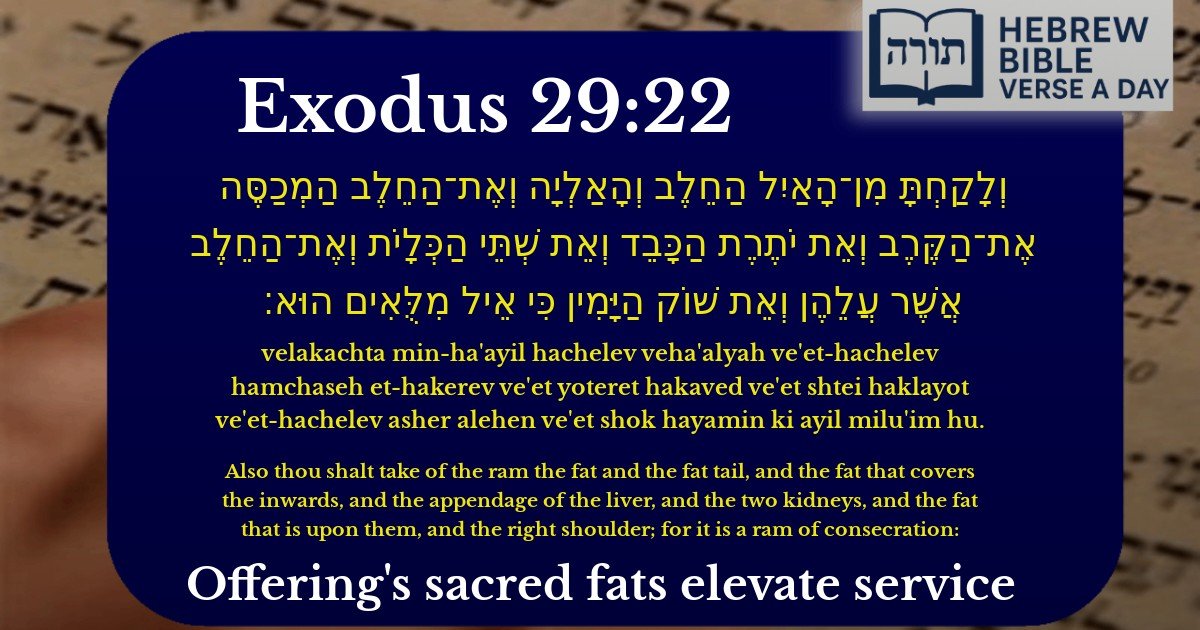

Exodus 29:22 - Offering's sacred fats elevate service

Exodus 29:22 - שמות 29:22

Hebrew Text

וְלָקַחְתָּ מִן־הָאַיִל הַחֵלֶב וְהָאַלְיָה וְאֶת־הַחֵלֶב הַמְכַסֶּה אֶת־הַקֶּרֶב וְאֵת יֹתֶרֶת הַכָּבֵד וְאֵת שְׁתֵּי הַכְּלָיֹת וְאֶת־הַחֵלֶב אֲשֶׁר עֲלֵהֶן וְאֵת שׁוֹק הַיָּמִין כִּי אֵיל מִלֻּאִים הוּא׃

English Translation

Also thou shalt take of the ram the fat and the fat tail, and the fat that covers the inwards, and the appendage of the liver, and the two kidneys, and the fat that is upon them, and the right shoulder; for it is a ram of consecration:

Transliteration

Velakachta min-ha'ayil hachelev veha'alyah ve'et-hachelev hamchaseh et-hakerev ve'et yoteret hakaved ve'et shtei haklayot ve'et-hachelev asher alehen ve'et shok hayamin ki ayil milu'im hu.

Hebrew Leining Text

וְלָקַחְתָּ֣ מִן־הָ֠אַ֠יִל הַחֵ֨לֶב וְהָֽאַלְיָ֜ה וְאֶת־הַחֵ֣לֶב&thinsp

🎵 Listen to leining

Parasha Commentary

Context of the Verse

This verse (Shemot 29:22) is part of the detailed instructions for the consecration of the Kohanim (priests) during the inauguration of the Mishkan (Tabernacle). The "ram of consecration" (אֵיל מִלֻּאִים) was a special offering brought as part of this ceremony, symbolizing the dedication of Aharon and his sons to their priestly service.

Explanation of the Components

Rashi explains that the specific parts of the ram mentioned here—the fat, the fat tail (אַלְיָה), the covering fats, the liver's appendage (יֹתֶרֶת הַכָּבֵד), the kidneys, and the right thigh—were all offered on the Mizbeach (altar) as part of the sacrificial service. These portions were considered the choicest parts of the animal, representing the elevation of the physical to the spiritual.

  • The Fat (הַחֵלֶב): The Torah prohibits consuming certain fats (חֵלֶב), and these were reserved exclusively for the altar (Vayikra 3:16-17). Rashi notes that these fats symbolize the removal of physical indulgence in favor of divine service.
  • The Fat Tail (הָאַלְיָה): A distinctive feature of rams in the ancient Near East, the fat tail was considered a delicacy. The Rambam (Moreh Nevuchim 3:46) suggests that offering it symbolized surrendering one's material luxuries to Hashem.
  • The Right Shoulder (שׁוֹק הַיָּמִין): The right side is often associated with strength and favor in Jewish thought (see Bereishit 48:13-14). The Talmud (Chullin 134b) teaches that this portion was given to the Kohanim as a perpetual portion (מתנה) from certain offerings.

Symbolism of the Ram of Consecration

The Midrash (Tanchuma, Tzav 14) connects this offering to the Akeidah (Binding of Yitzchak), where a ram was sacrificed in Yitzchak's place. Just as Avraham demonstrated complete dedication to Hashem, the Kohanim were to embody that same level of commitment in their service.

The Ramban (Nachmanides) adds that the "ram of consecration" served as a covenant between Hashem and the Kohanim, with the offering's parts representing different aspects of their role:

  • The fats—devotion in thought (mind).
  • The kidneys—discernment in judgment (as kidneys were associated with advice in Tanach, e.g., Tehillim 16:7).
  • The right shoulder—strength in action.

Halachic Significance

The Talmud (Zevachim 96a) derives from this verse that certain fats are designated for the altar, while others are permitted for consumption. The Rambam (Hilchos Maaseh HaKorbanos 9:6-7) codifies the precise procedures for separating and offering these parts, emphasizing the meticulous care required in the Avodah (Temple service).

📚 Talmud Citations

This verse is quoted in the Talmud.

📖 Zevachim 19b
The verse is discussed in the context of the laws of sacrifices, specifically regarding the parts of the ram that are to be offered in the consecration service.
📖 Menachot 62a
The verse is referenced in a discussion about the proper procedures for offering sacrifices, particularly the ram of consecration.

Frequently Asked Questions

Q: What is the significance of the fats and organs mentioned in Exodus 29:22?
A: In Exodus 29:22, the fats and specific organs (such as the fat tail, kidneys, liver appendage, and right shoulder) are designated for offering on the altar. According to Rashi and the Talmud (Chullin 49b), these parts were considered the choicest and most fitting for sacrificial service. The fats symbolize devotion, as they are the richest parts, while the organs represent inner purity (kidneys for thought, liver for emotions). This teaches that serving Hashem requires giving our best and aligning both our actions and inner intentions.
Q: Why was the right shoulder specifically chosen in this verse?
A: The right shoulder (שׁוֹק הַיָּמִין) symbolizes strength and action, as the right side is traditionally associated with power in Jewish thought (Midrash Tanchuma, Tzav 14). By offering it, the kohen (priest) demonstrates dedicating his physical abilities to divine service. Rambam (Hilchos Maaseh HaKorbanos 7:2) explains that this also represents the kohen’s role to 'carry' the spiritual responsibilities of the people.
Q: What does 'a ram of consecration' (אֵיל מִלֻּאִים) mean?
A: The term 'ram of consecration' refers to the special offering used to inaugurate the kohanim (priests) during their ordination (Rashi on Exodus 29:22). The word 'milu’im' (מִלֻּאִים) means 'filling,' symbolizing that the kohanim were being 'filled' with holiness and authority for their service. The Talmud (Zevachim 101a) connects this to the idea that their hands were 'filled' with sacrificial duties as representatives of the Jewish people.
Q: How does this verse apply to us today without the Temple?
A: While we no longer bring physical sacrifices, the Torah’s emphasis on offering the 'choicest parts' teaches us to dedicate our finest efforts—whether in prayer, charity, or mitzvos—to Hashem (Rambam, Moreh Nevuchim 3:32). The verse also reminds us to serve with both action (symbolized by the shoulder) and inner devotion (symbolized by the organs), as the Talmud (Berachos 17a) states: 'The essential thing is the intention of the heart.'