

Join Our Newsletter To Be Informed When New Videos Are Posted
Hebrew Text
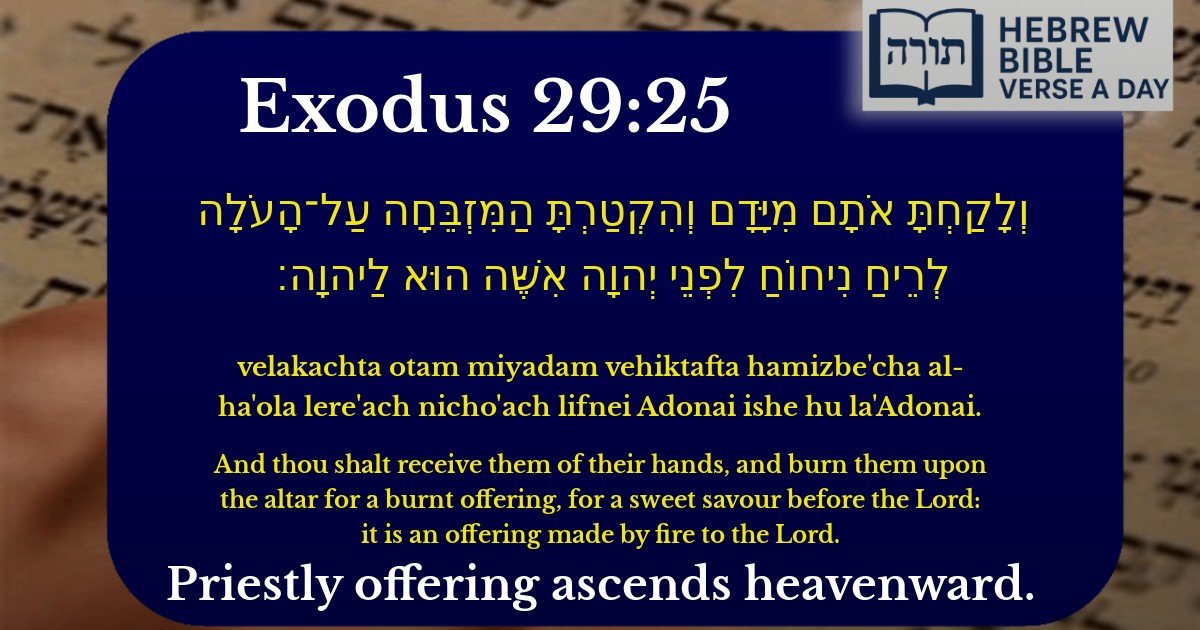
וְלָקַחְתָּ אֹתָם מִיָּדָם וְהִקְטַרְתָּ הַמִּזְבֵּחָה עַל־הָעֹלָה לְרֵיחַ נִיחוֹחַ לִפְנֵי יְהוָה אִשֶּׁה הוּא לַיהוָה׃
English Translation
And thou shalt receive them of their hands, and burn them upon the altar for a burnt offering, for a sweet savour before the Lord: it is an offering made by fire to the Lord.
Transliteration
Velakachta otam miyadam vehiktafta hamizbe'cha al-ha'ola lere'ach nicho'ach lifnei Adonai ishe hu la'Adonai.
Hebrew Leining Text
וְלָקַחְתָּ֤ אֹתָם֙ מִיָּדָ֔ם וְהִקְטַרְתָּ֥ הַמִּזְבֵּ֖חָה עַל־הָעֹלָ֑ה לְרֵ֤יחַ נִיח֙וֹחַ֙ לִפְנֵ֣י יְהֹוָ֔ה אִשֶּׁ֥ה ה֖וּא לַיהֹוָֽה׃
🎵 Listen to leining
Parasha Commentary
📚 Talmud Citations
This verse is quoted in the Talmud.
📖 Zevachim 46a
The verse is referenced in the discussion about the laws of sacrifices, specifically regarding the burning of offerings on the altar and the requirement for them to be a sweet savor before the Lord.
📖 Menachot 110a
This verse is cited in the context of discussing the various types of offerings and their significance, emphasizing the importance of the burnt offering as an offering made by fire to the Lord.
Context in the Torah
This verse (Exodus 29:25) appears in the context of the consecration of the Kohanim (priests) for service in the Mishkan (Tabernacle). It describes the procedure for offering the ram of ordination (eil hamilu'im), which was part of the seven-day inauguration process for Aharon and his sons.
Rashi's Explanation
Rashi explains that "וְלָקַחְתָּ אֹתָם מִיָּדָם" ("And thou shalt receive them of their hands") refers to Moshe receiving certain parts of the sacrifice (the fat, kidneys, and lobe of the liver) from the hands of Aharon and his sons. This act symbolized the transfer of priestly authority from Moshe (who served as the initial "Kohen") to Aharon and his descendants.
The Nature of the Offering
The verse describes this as "אִשֶּׁה הוּא לַיהוָה" ("an offering made by fire to the Lord"). The Rambam (Hilchot Ma'aseh HaKorbanot 1:4) explains that isheh offerings are those completely consumed by the altar fire, as opposed to other sacrifices where parts are eaten by the Kohanim or owners.
The Concept of "Reiach Nichoach"
The phrase "לְרֵיחַ נִיחוֹחַ" ("for a sweet savour") appears frequently in connection with sacrifices. The Talmud (Menachot 110a) teaches that this expression indicates the satisfaction Hashem derives from Jews fulfilling His commandments, regardless of whether there is an actual physical aroma.
Halachic Significance
The Mechilta derives from this verse that certain sacrifices require semichah (leaning one's hands on the animal), as implied by the phrase "from their hands." This became a standard requirement for many korbanot.
Symbolic Meaning
The Midrash Tanchuma (Tzav 14) sees in this verse an allusion to the idea that proper sacrificial service requires both the participation of the Kohanim ("from their hands") and the divine acceptance ("before the Lord"). This reflects the partnership between human and divine in the sacrificial system.