

Join Our Newsletter To Be Informed When New Videos Are Posted
Hebrew Text
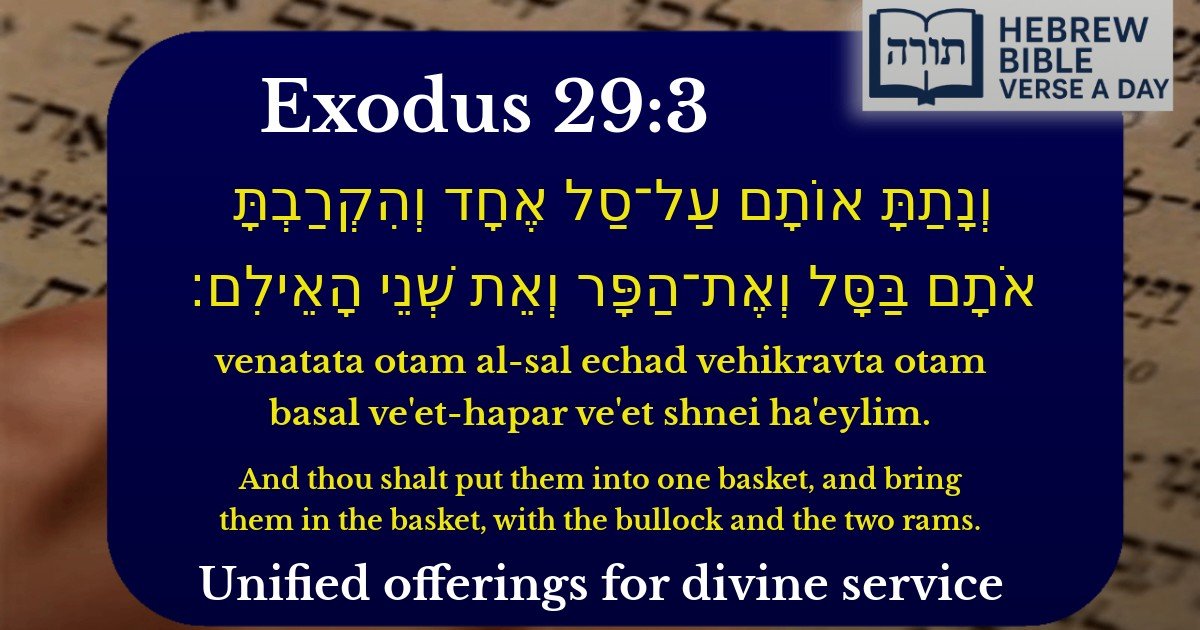
וְנָתַתָּ אוֹתָם עַל־סַל אֶחָד וְהִקְרַבְתָּ אֹתָם בַּסָּל וְאֶת־הַפָּר וְאֵת שְׁנֵי הָאֵילִם׃
English Translation
And thou shalt put them into one basket, and bring them in the basket, with the bullock and the two rams.
Transliteration
Venatata otam al-sal echad vehikravta otam basal ve'et-hapar ve'et shnei ha'eylim.
Hebrew Leining Text
וְנָתַתָּ֤ אוֹתָם֙ עַל־סַ֣ל אֶחָ֔ד וְהִקְרַבְתָּ֥ אֹתָ֖ם בַּסָּ֑ל וְאֶ֨ת־הַפָּ֔ר וְאֵ֖ת שְׁנֵ֥י הָאֵילִֽם׃
🎵 Listen to leining
Parasha Commentary
📚 Talmud Citations
This verse is not quoted in the Talmud.
Context in the Torah
This verse (Exodus 29:3) appears in the context of the consecration of Aaron and his sons as Kohanim (priests) during the inauguration of the Mishkan (Tabernacle). The verse describes the preparation of the offerings, including placing specific items—matzot, unleavened cakes, and unleavened wafers—into a single basket to be presented along with a bull and two rams.
Rashi's Explanation
Rashi (Exodus 29:3) explains that the phrase "וְנָתַתָּ אוֹתָם עַל־סַל אֶחָד" ("And thou shalt put them into one basket") refers to the three types of unleavened bread mentioned earlier in the passage: matzot (unleavened loaves), chalot matzot (unleavened cakes mixed with oil), and rekikei matzot (unleavened wafers smeared with oil). These were all placed together in a single basket as part of the inauguration offerings.
Symbolism of the Basket
The Midrash (Tanchuma, Tzav 14) suggests that the use of one basket symbolizes unity and harmony among the Kohanim and the Jewish people. Just as the different types of bread are united in a single vessel, so too must the priests and the nation serve Hashem with a unified purpose.
Rambam's Halachic Perspective
In Hilchot Klei HaMikdash (Laws of Temple Vessels 2:4), the Rambam discusses the importance of the vessels used in the Mishkan and Beit HaMikdash. The basket mentioned here was likely made of fine materials, as all vessels used in divine service required craftsmanship and sanctity. The act of bringing the offerings in this basket emphasized the honor due to the mitzvah.
The Bull and the Rams
The verse concludes by mentioning the accompanying animals: "וְאֶת־הַפָּר וְאֵת שְׁנֵי הָאֵילִם" ("with the bullock and the two rams"). Rashi notes that these animals were central to the consecration process:
Practical Lessons
The Sforno highlights that the meticulous arrangement of these offerings teaches the importance of order and precision in divine service. Just as the Kohanim had to follow exact procedures, we too must approach mitzvot with care and attention to detail.