

Join Our Newsletter To Be Informed When New Videos Are Posted
Hebrew Text
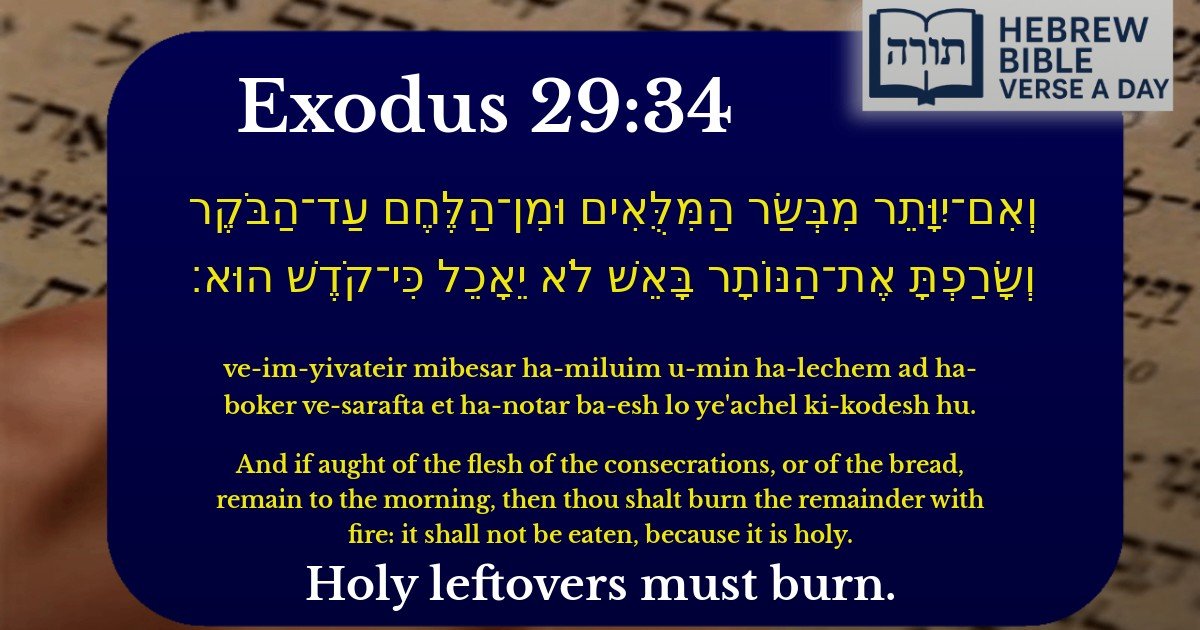
וְאִם־יִוָּתֵר מִבְּשַׂר הַמִּלֻּאִים וּמִן־הַלֶּחֶם עַד־הַבֹּקֶר וְשָׂרַפְתָּ אֶת־הַנּוֹתָר בָּאֵשׁ לֹא יֵאָכֵל כִּי־קֹדֶשׁ הוּא׃
English Translation
And if aught of the flesh of the consecrations, or of the bread, remain to the morning, then thou shalt burn the remainder with fire: it shall not be eaten, because it is holy.
Transliteration
Ve-im-yivateir mibesar ha-miluim u-min ha-lechem ad ha-boker ve-sarafta et ha-notar ba-esh lo ye'achel ki-kodesh hu.
Hebrew Leining Text
וְֽאִם־יִוָּתֵ֞ר מִבְּשַׂ֧ר הַמִּלֻּאִ֛ים וּמִן־הַלֶּ֖חֶם עַד־הַבֹּ֑קֶר וְשָׂרַפְתָּ֤ אֶת־הַנּוֹתָר֙ בָּאֵ֔שׁ לֹ֥א יֵאָכֵ֖ל כִּי־קֹ֥דֶשׁ הֽוּא׃
🎵 Listen to leining
Parasha Commentary
📚 Talmud Citations
This verse is quoted in the Talmud.
📖 Pesachim 83a
The verse is referenced in a discussion about the laws of burning leftover sacrificial meat and bread, emphasizing the prohibition against eating it due to its holy status.
📖 Yoma 45a
The verse is cited in the context of discussing the proper disposal of remnants from sacrifices, highlighting the requirement to burn them by morning.
Understanding the Verse in Context
The verse (Shemot 29:34) discusses the remnants of the milu'im (consecration offerings) and the accompanying bread from the inauguration ceremony of the Kohanim (priests). The Torah commands that any leftover sacrificial meat or bread must be burned by morning and may not be eaten, as it retains its sanctity (kodesh).
Rashi's Explanation
Rashi (on Shemot 29:34) clarifies that this prohibition applies specifically to the milu'im offerings, which were unique to the consecration of the Mishkan and its priests. He emphasizes that the sanctity of these offerings does not expire overnight, unlike certain other sacrifices (e.g., kodshei sha'ah, temporary sanctities). Thus, burning the leftovers prevents improper consumption of holy items.
Rambam's Halachic Perspective
In Hilchot Ma'aseh HaKorbanot (10:12), the Rambam rules that any sacrificial meat or mincha (meal offering) left beyond its designated time becomes notar (leftover) and must be burned. This aligns with our verse, reinforcing the principle that sacred items require proper disposal to avoid me'ilah (misuse of sanctified property).
Midrashic Insight
The Mechilta (Bo 12) draws a parallel between this law and the prohibition of leaving the Paschal sacrifice overnight (Shemot 12:10). Both teach that holiness has boundaries—once its time passes, it must be treated with reverence through burning rather than casual consumption.
Key Lessons