

Join Our Newsletter To Be Informed When New Videos Are Posted
Hebrew Text
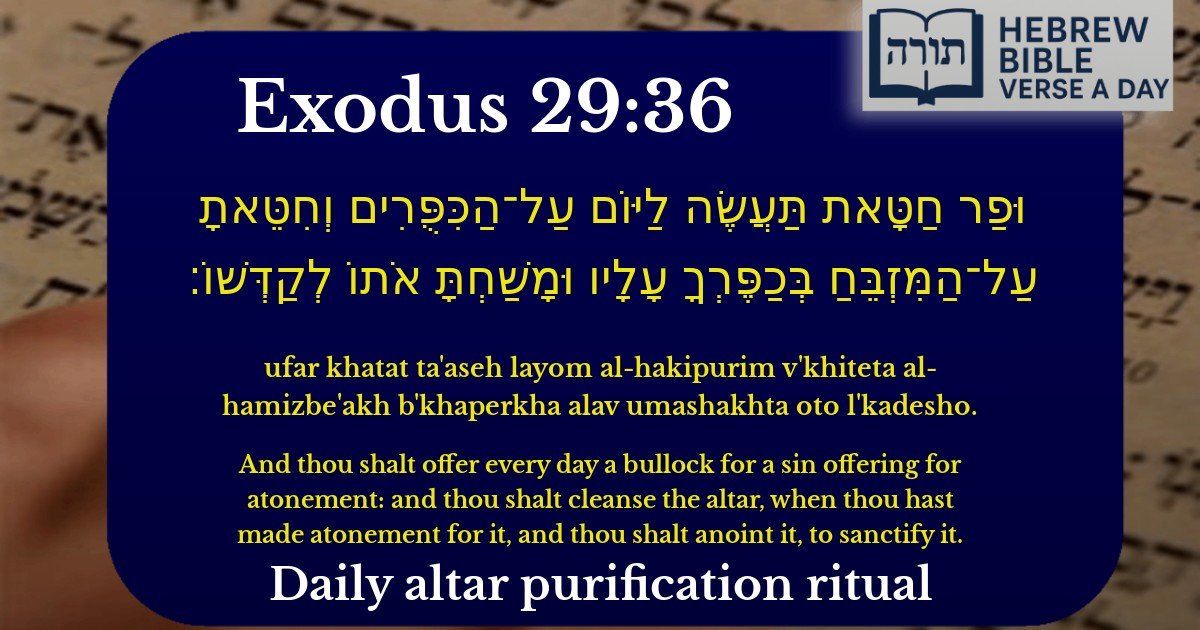
וּפַר חַטָּאת תַּעֲשֶׂה לַיּוֹם עַל־הַכִּפֻּרִים וְחִטֵּאתָ עַל־הַמִּזְבֵּחַ בְּכַפֶּרְךָ עָלָיו וּמָשַׁחְתָּ אֹתוֹ לְקַדְּשׁוֹ׃
English Translation
And thou shalt offer every day a bullock for a sin offering for atonement: and thou shalt cleanse the altar, when thou hast made atonement for it, and thou shalt anoint it, to sanctify it.
Transliteration
Ufar khatat ta'aseh layom al-hakipurim v'khiteta al-hamizbe'akh b'khaperkha alav umashakhta oto l'kadesho.
Hebrew Leining Text
וּפַ֨ר חַטָּ֜את תַּעֲשֶׂ֤ה לַיּוֹם֙ עַל־הַכִּפֻּרִ֔ים וְחִטֵּאתָ֙ עַל־הַמִּזְבֵּ֔חַ בְּכַפֶּרְךָ֖ עָלָ֑יו וּמָֽשַׁחְתָּ֥ אֹת֖וֹ לְקַדְּשֽׁוֹ׃
🎵 Listen to leining
Parasha Commentary
📚 Talmud Citations
This verse is quoted in the Talmud.
📖 Zevachim 42b
The verse is discussed in the context of the daily sin offering and the sanctification of the altar.
📖 Menachot 27b
Referenced in a discussion about the procedures for atonement and the sanctification of the altar.
Context in the Torah
The verse (Shemot 29:36) appears in the context of the consecration of the Mizbe'ach (altar) during the inauguration of the Mishkan (Tabernacle). It outlines the daily sin offering (par chatat) required for atonement and the purification and sanctification process of the altar.
Rashi's Explanation
Rashi explains that the phrase "וְחִטֵּאתָ עַל־הַמִּזְבֵּחַ" ("and thou shalt cleanse the altar") refers to the process of purifying the altar from any impurities that may have adhered to it during its construction or handling. The act of atonement (kaparah) is necessary even for inanimate objects like the altar to ensure its complete sanctity for divine service.
Rambam on Atonement for the Altar
Rambam (Hilchot Temidin u'Musafin 1:4) discusses the daily sin offering as part of the regular Temple service. He emphasizes that the altar, though holy, requires ongoing purification to maintain its sanctity. The anointing (u'mashachta oto) signifies its dedication exclusively for sacred use.
Midrashic Insights
Halachic Implications
The verse establishes a permanent obligation for the Kohen Gadol (High Priest) to offer a daily sin offering, as codified in the Mishnah (Yoma 4:6). The Talmud (Zevachim 88a) further elaborates that the anointing oil used in this process symbolizes the divine presence resting upon the altar, elevating its status to the highest level of sanctity (kedushat ha-mizbe'ach).