

Join Our Newsletter To Be Informed When New Videos Are Posted
Hebrew Text
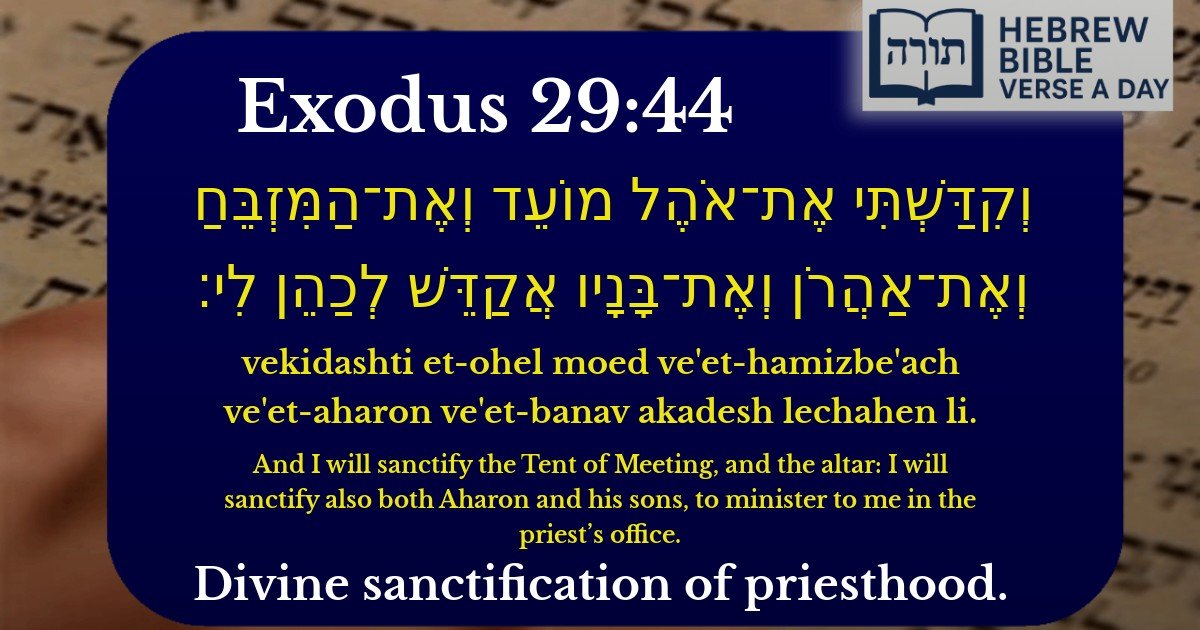
וְקִדַּשְׁתִּי אֶת־אֹהֶל מוֹעֵד וְאֶת־הַמִּזְבֵּחַ וְאֶת־אַהֲרֹן וְאֶת־בָּנָיו אֲקַדֵּשׁ לְכַהֵן לִי׃
English Translation
And I will sanctify the Tent of Meeting, and the altar: I will sanctify also both Aharon and his sons, to minister to me in the priest’s office.
Transliteration
Vekidashti et-ohel moed ve'et-hamizbe'ach ve'et-aharon ve'et-banav akadesh lechahen li.
Hebrew Leining Text
וְקִדַּשְׁתִּ֛י אֶת־אֹ֥הֶל מוֹעֵ֖ד וְאֶת־הַמִּזְבֵּ֑חַ וְאֶת־אַהֲרֹ֧ן וְאֶת־בָּנָ֛יו אֲקַדֵּ֖שׁ לְכַהֵ֥ן לִֽי׃
🎵 Listen to leining
Parasha Commentary
📚 Talmud Citations
This verse is quoted in the Talmud.
📖 Zevachim 19b
The verse is cited in a discussion about the sanctification of the priests and the altar, emphasizing the divine command for their consecration.
📖 Menachot 27b
Referenced in the context of discussing the sanctity of the altar and the priests, highlighting their roles in the sacrificial service.
Sanctification of the Mishkan and Kohanim
The verse (Shemot 29:44) states: "וְקִדַּשְׁתִּי אֶת־אֹהֶל מוֹעֵד וְאֶת־הַמִּזְבֵּחַ וְאֶת־אַהֲרֹן וְאֶת־בָּנָיו אֲקַדֵּשׁ לְכַהֵן לִי" ("And I will sanctify the Tent of Meeting, and the altar: I will sanctify also both Aharon and his sons, to minister to Me in the priest’s office"). This declaration emphasizes Hashem's direct role in sanctifying the Mishkan, its vessels, and the Kohanim.
Rashi's Explanation
Rashi explains that the sanctification mentioned here refers to the Shechinah (Divine Presence) resting upon the Mishkan and the altar. Regarding Aharon and his sons, Rashi notes that their sanctification comes through the anointing oil and the investiture garments, as described in the preceding verses (Shemot 29:1-37). The phrase "לְכַהֵן לִי" ("to minister to Me") underscores that their priesthood is an eternal covenant, as further elaborated in Shemot 40:15.
Rambam on the Role of the Kohanim
In Hilchot Klei HaMikdash (4:12), the Rambam teaches that the sanctity of the Kohanim is intrinsic and not dependent on human action. The verse highlights that Hashem Himself designates Aharon and his descendants for the priestly service, establishing an unbreakable bond between the Kohanim and their sacred duties.
Midrashic Insights
Halachic Implications
The Sefer HaChinuch (Mitzvah 99) derives from this verse the eternal obligation to honor the Kohanim, as their sanctity is divinely ordained. The Talmud (Yoma 72b) further expounds that the sanctity of the Mishkan and its vessels extends to future generations, reinforcing the permanence of the Temple service.