
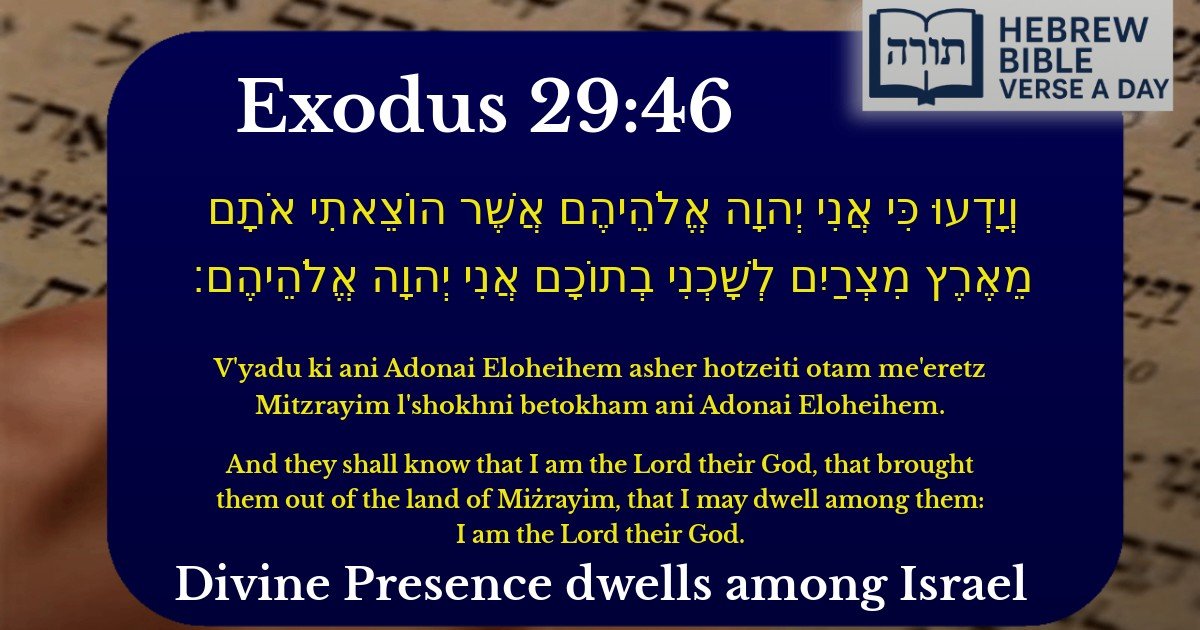

Exodus 29:46 - Divine Presence dwells among Israel

Exodus 29:46 - שמות 29:46

Hebrew Text

וְיָדְעוּ כִּי אֲנִי יְהוָה אֱלֹהֵיהֶם אֲשֶׁר הוֹצֵאתִי אֹתָם מֵאֶרֶץ מִצְרַיִם לְשָׁכְנִי בְתוֹכָם אֲנִי יְהוָה אֱלֹהֵיהֶם׃

English Translation

And they shall know that I am the Lord their God, that brought them out of the land of Miżrayim, that I may dwell among them: I am the Lord their God.

Transliteration

V'yadu ki ani Adonai Eloheihem asher hotzeiti otam me'eretz Mitzrayim l'shokhni betokham ani Adonai Eloheihem.

Hebrew Leining Text

וְיָדְע֗וּ כִּ֣י אֲנִ֤י יְהֹוָה֙ אֱלֹ֣הֵיהֶ֔ם אֲשֶׁ֨ר הוֹצֵ֧אתִי אֹתָ֛ם מֵאֶ֥רֶץ מִצְרַ֖יִם לְשׇׁכְנִ֣י בְתוֹכָ֑ם אֲנִ֖י יְהֹוָ֥ה אֱלֹהֵיהֶֽם׃ {פ}

🎵 Listen to leining

Parasha Commentary

Understanding the Verse

The verse states: "And they shall know that I am the Lord their God, that brought them out of the land of Egypt, that I may dwell among them: I am the Lord their God." (Exodus 29:46). This declaration emphasizes the foundational relationship between Hashem and the Jewish people, rooted in the Exodus and the Divine Presence dwelling among them.

Rashi's Explanation

Rashi (Exodus 29:46) explains that the phrase "And they shall know that I am the Lord their God" refers to the recognition of Hashem's sovereignty through the miracles of the Exodus. The purpose of the Exodus was not merely liberation but to establish an eternal bond, as symbolized by the Mishkan (Tabernacle), where the Shechinah (Divine Presence) would reside.

Rambam's Perspective

In Moreh Nevuchim (Guide for the Perplexed 3:32), Rambam teaches that the Exodus was a public demonstration of Hashem's power and providence, ensuring that future generations would recognize His role in history. The dwelling of the Shechinah among Bnei Yisrael further affirms this relationship, as it signifies ongoing Divine guidance and closeness.

Midrashic Insights

  • The Mechilta (Bo 12) states that the Exodus was a revelation of Hashem's unique relationship with Israel, distinguishing them from other nations.
  • The Sifrei (Devarim 6:4) connects this verse to the mitzvah of dwelling in Eretz Yisrael, as the Shechinah's presence is most manifest there.

Theological Implications

The verse underscores two key principles:

  • Yichud Hashem (Divine Unity): The repeated declaration "I am the Lord their God" reinforces monotheism and Hashem's exclusive relationship with Israel.
  • Hashgachah Pratit (Divine Providence): The Exodus and the Mishkan demonstrate that Hashem actively guides and dwells among His people.

Practical Lessons

This verse teaches that:

  • The Exodus is not just a historical event but a living testament to Hashem's involvement in Jewish destiny.
  • The Mishkan (and later the Beit HaMikdash) serves as a constant reminder of our mission to create a dwelling place for the Shechinah through Torah and mitzvot.

📚 Talmud Citations

This verse is quoted in the Talmud.

📖 Megillah 29a
The verse is referenced in the context of discussing the divine presence (Shekhinah) dwelling among Israel, particularly in relation to the Tabernacle and later the Temple.
📖 Sanhedrin 56b
The verse is cited in a discussion about the recognition of God's sovereignty and the covenant with Israel, emphasizing the Exodus as a foundational event.

Frequently Asked Questions

Q: What does the verse 'And they shall know that I am the Lord their God...' mean?
A: This verse emphasizes that the purpose of the Exodus from Egypt was for the Jewish people to recognize Hashem as their God and to establish a relationship with Him. Rashi explains that the miracles of the Exodus and the building of the Mishkan (Tabernacle) would make it clear that Hashem dwells among them.
Q: Why is it important that Hashem says 'I am the Lord their God' in this verse?
A: This declaration reinforces the covenant between Hashem and the Jewish people. The Rambam (Maimonides) teaches that recognizing Hashem as our God is the foundation of all mitzvot (commandments). This verse reminds us that our relationship with Hashem is based on His redemption of us from Egypt and His presence in our midst.
Q: How does this verse apply to us today?
A: Just as Hashem dwelled among the Jewish people in the Mishkan, today His presence rests in the study of Torah and performance of mitzvot. The Midrash teaches that every Jew should feel as if they personally left Egypt, reinforcing our ongoing connection to Hashem.
Q: What does it mean that Hashem 'brought them out of the land of Egypt to dwell among them'?
A: The Sforno explains that the Exodus wasn't just about physical freedom, but about creating a sanctified nation where Hashem's presence could reside. The purpose of redemption was to enable a divine-human relationship, symbolized by the Mishkan and later the Temple.
Q: Why does the verse repeat 'I am the Lord their God' at the end?
A: The repetition serves as emphasis, teaching that Hashem's role as our God is both as our redeemer (who took us from Egypt) and as the One who continues to be present with us. The Talmud (Berachos 9:5) sees this as showing that recognition of Hashem comes both through historical miracles and ongoing divine providence.