
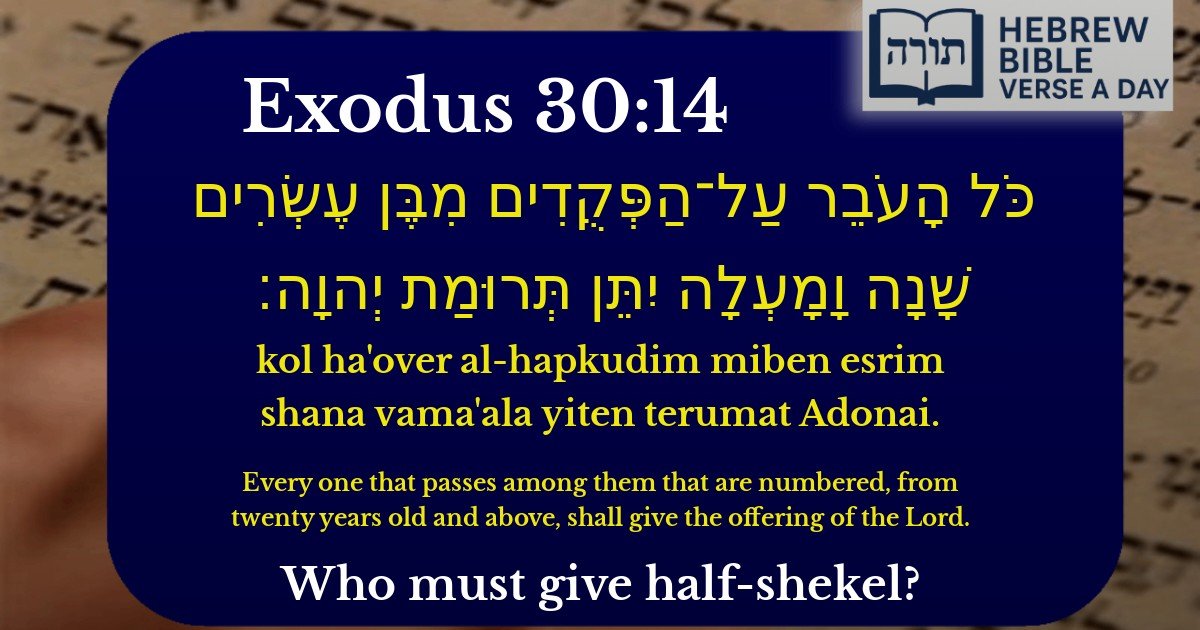

Exodus 30:14 - Who must give half-shekel?

Exodus 30:14 - שמות 30:14

Hebrew Text

כֹּל הָעֹבֵר עַל־הַפְּקֻדִים מִבֶּן עֶשְׂרִים שָׁנָה וָמָעְלָה יִתֵּן תְּרוּמַת יְהוָה׃

English Translation

Every one that passes among them that are numbered, from twenty years old and above, shall give the offering of the Lord.

Transliteration

Kol ha'over al-hapkudim miben esrim shana vama'ala yiten terumat Adonai.

Hebrew Leining Text

כֹּ֗ל הָעֹבֵר֙ עַל־הַפְּקֻדִ֔ים מִבֶּ֛ן עֶשְׂרִ֥ים שָׁנָ֖ה וָמָ֑עְלָה יִתֵּ֖ן תְּרוּמַ֥ת יְהֹוָֽה׃

🎵 Listen to leining

Parasha Commentary

Context in the Torah

The verse (Exodus 30:14) appears in the context of the machatzit hashekel (half-shekel) contribution, which was collected from all adult male Israelites for the maintenance of the Mishkan (Tabernacle) and later the Beit Hamikdash (Temple). This mitzvah was given after the sin of the Golden Calf, symbolizing unity and atonement.

Age Requirement: Twenty Years and Above

Rashi (Exodus 30:14) explains that the age of twenty is significant because it marks the beginning of full adulthood and accountability in Jewish law. This aligns with the census in Numbers 1:3, where only men above twenty were counted for military service. The Midrash (Tanchuma, Ki Tisa 10) connects this to the punishment of the Spies (Numbers 14:29), where those above twenty were held responsible for rejecting the Land of Israel.

The Nature of the Contribution

  • Equal Amount for All: Rambam (Hilchot Shekalim 1:7) emphasizes that every individual, regardless of wealth, gave exactly half a shekel—symbolizing equality before Hashem.
  • Purpose: The Talmud (Shekalim 16a) states these funds were used for communal sacrifices and maintaining the Beit Hamikdash, ensuring collective participation in divine service.

Spiritual Significance

The Kli Yakar (Exodus 30:12) teaches that the half-shekel represents humility—no one is complete alone, but together, the Jewish people form a whole. The Midrash (Exodus Rabbah 35:4) adds that this mitzvah atones for the sin of the Golden Calf, as it demonstrates commitment to Hashem’s service.

Halachic Implications

According to the Shulchan Aruch (Orach Chaim 694:1), the custom of reading Parshat Shekalim before Purim commemorates this mitzvah, reminding us of the importance of communal responsibility and tzedakah (charity).

📚 Talmud Citations

This verse is not quoted in the Talmud.

Frequently Asked Questions

Q: What does Exodus 30:14 mean?
A: Exodus 30:14 refers to the commandment that every Israelite male aged 20 and older must contribute a half-shekel as an offering to Hashem. This was part of the census taken in the desert and served as atonement (Rashi on Exodus 30:12). The money was used for the upkeep of the Mishkan (Tabernacle).
Q: Why was the half-shekel offering specifically for those 20 years and older?
A: According to Jewish tradition, the age of 20 marks the beginning of full accountability in serving Hashem and being part of the community's obligations (Rambam, Hilchot Shekalim 1:2). This is also the age when one becomes eligible for military service (Numbers 1:3).
Q: What is the significance of giving exactly a half-shekel and not a whole shekel?
A: The half-shekel teaches humility and unity—no one can fulfill their obligation alone, showing we are incomplete without connecting to others (Midrash Tanchuma, Ki Tisa 9). It also symbolizes that every Jew is equal in this mitzvah, whether rich or poor (Exodus 30:15).
Q: Does the half-shekel commandment apply today?
A: While we no longer bring the half-shekel for the Mishkan, the memory is preserved through the annual reading of Parshat Shekalim before Purim and the custom to give charity at that time (Mishnah Megillah 3:4). Some also have the minhag to donate half-units of local currency to tzedakah in remembrance.
Q: What lesson can we learn from Exodus 30:14?
A: This verse teaches that every individual has a responsibility to contribute to the community's spiritual needs. The fixed amount shows that in divine service, sincerity matters more than the quantity—what counts is that everyone participates equally (Sforno on Exodus 30:15).