

Join Our Newsletter To Be Informed When New Videos Are Posted
Hebrew Text
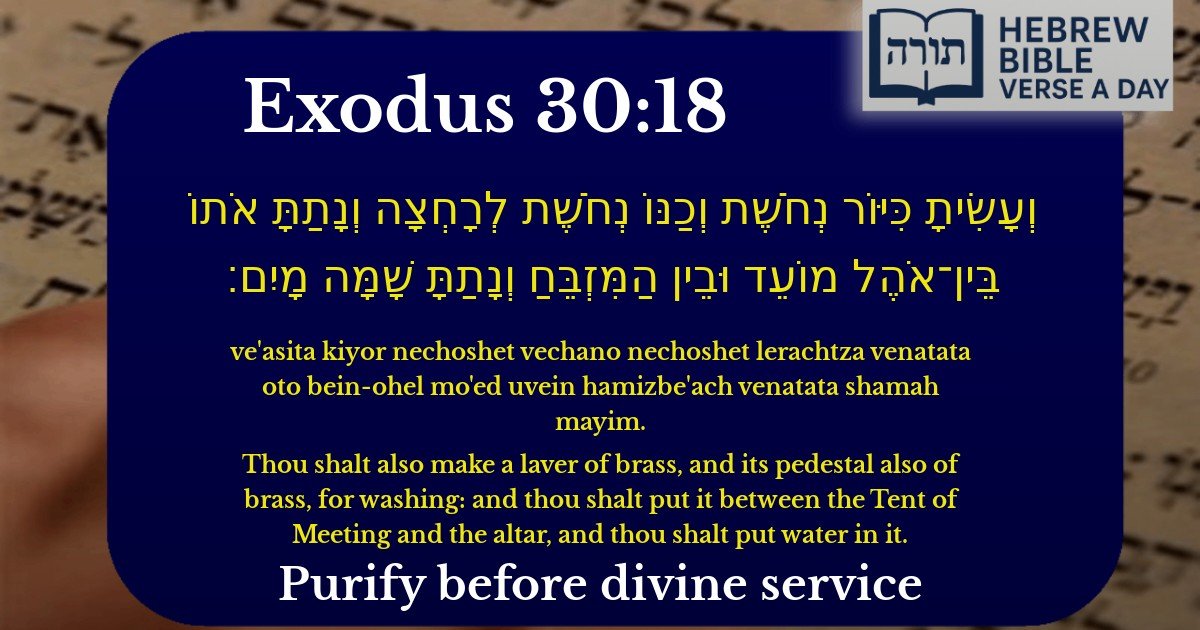
וְעָשִׂיתָ כִּיּוֹר נְחֹשֶׁת וְכַנּוֹ נְחֹשֶׁת לְרָחְצָה וְנָתַתָּ אֹתוֹ בֵּין־אֹהֶל מוֹעֵד וּבֵין הַמִּזְבֵּחַ וְנָתַתָּ שָׁמָּה מָיִם׃
English Translation
Thou shalt also make a laver of brass, and its pedestal also of brass, for washing: and thou shalt put it between the Tent of Meeting and the altar, and thou shalt put water in it.
Transliteration
Ve'asita kiyor nechoshet vechano nechoshet lerachtza venatata oto bein-ohel mo'ed uvein hamizbe'ach venatata shamah mayim.
Hebrew Leining Text
וְעָשִׂ֜יתָ כִּיּ֥וֹר נְחֹ֛שֶׁת וְכַנּ֥וֹ נְחֹ֖שֶׁת לְרׇחְצָ֑ה וְנָתַתָּ֣ אֹת֗וֹ בֵּֽין־אֹ֤הֶל מוֹעֵד֙ וּבֵ֣ין הַמִּזְבֵּ֔חַ וְנָתַתָּ֥ שָׁ֖מָּה מָֽיִם׃
🎵 Listen to leining
Parasha Commentary
📚 Talmud Citations
This verse is quoted in the Talmud.
📖 Zevachim 22a
The verse is referenced in a discussion about the placement and use of the laver in the Tabernacle, particularly in relation to the service of the priests.
📖 Yoma 37b
The verse is cited in the context of discussing the various vessels used in the Temple service and their significance.
The Purpose of the Kiyor (Laver)
The verse commands the construction of a kiyor (laver) made of copper, along with its base, for the purpose of washing. According to Rashi (Shemos 30:18), the kiyor was used by the kohanim (priests) to wash their hands and feet before performing the avodah (Temple service). This washing was not merely for physical cleanliness but symbolized spiritual purification before engaging in sacred duties.
Location Between the Ohel Moed and the Mizbeach
The placement of the kiyor "between the Tent of Meeting and the altar" is significant. The Rambam (Hilchos Beis HaBechirah 1:12) explains that this positioning ensured the kohanim would pass it when moving from the courtyard toward the Mishkan or the altar, reminding them to sanctify themselves before service. The Midrash Tanchuma (Tetzaveh 10) further emphasizes that this placement teaches that one must purify oneself before approaching the Divine presence.
The Material: Copper (Nechoshet)
Copper was chosen for the kiyor for specific reasons. The Talmud (Yoma 37a) notes that copper has reflective qualities, symbolizing self-reflection before serving Hashem. Additionally, the Kli Yakar (Shemos 30:18) suggests that copper, which can tarnish but be polished anew, represents the potential for repentance and renewal.
The Water as a Symbol of Torah
The instruction to "put water in it" carries deeper meaning. The Gemara (Bava Kama 82a) compares Torah to water, as both are essential for life. The kiyor thus alludes to the necessity of Torah study as preparation for divine service. The Sforno (Shemos 30:18) adds that just as water cleanses externally, Torah purifies the soul internally.
Halachic Requirements for the Kiyor