Frequently Asked Questions
Q: What is the significance of the measurements in Exodus 30:24?
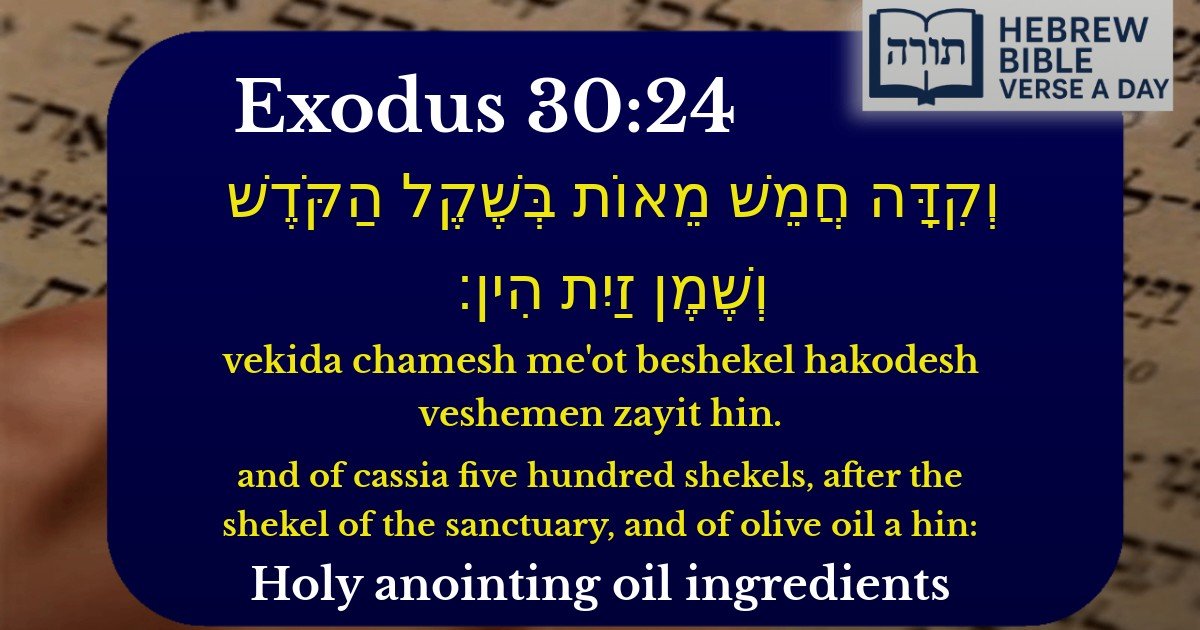
A: The measurements in Exodus 30:24 (500 shekels of cassia and a hin of olive oil) are part of the recipe for the sacred anointing oil used in the Mishkan (Tabernacle). The precise measurements teach us the importance of exactness in fulfilling mitzvot (commandments), especially those related to the Divine service. Rashi explains that these ingredients were carefully weighed and measured to ensure the oil's sanctity.
Q: Why was cassia included in the anointing oil?
A: Cassia (קִדָּה) was one of the four fragrant spices used in the sacred anointing oil (Exodus 30:23-24). The Talmud (Keritot 5a) and Midrash explain that each spice had a unique purpose, and cassia added a special fragrance. This teaches that every detail in Avodat Hashem (service of G-d) has meaning and beauty.
Q: What does 'shekel of the sanctuary' mean in Exodus 30:24?
A: The 'shekel of the sanctuary' refers to a standardized weight used for holy purposes in the Mishkan and Beit HaMikdash (Temple). Rambam (Hilchot Shekalim 1:2) explains that this measurement ensured fairness and consistency in donations and sacred items. It reminds us that matters of kedushah (holiness) require precision and sincerity.
Q: How does the olive oil mentioned in Exodus 30:24 connect to Jewish tradition?
A: Olive oil symbolizes purity and wisdom in Jewish tradition. The hin of olive oil in this verse was used to anoint the Mishkan's vessels and Kohanim (priests), representing dedication to holiness. The Midrash (Shemot Rabbah 36:1) compares Torah to olive oil—just as oil illuminates, so does Torah enlighten the soul.
Q: Can we make the anointing oil today?
A: No, the anointing oil described in Exodus 30:22-33 was unique and may not be replicated. The Talmud (Keritot 5a) states that this oil was prepared only once by Moshe Rabbeinu and lasted for generations. Today, since we lack the Beit HaMikdash, the mitzvah does not apply, but we learn from it the value of sacred dedication.


Context in the Torah
This verse (Shemot 30:24) appears in the context of the ingredients for the sacred anointing oil (Shemen HaMishcha), which was used to consecrate the Mishkan (Tabernacle), its vessels, and the Kohanim (priests). The verse specifies the precise measurements of cassia (קִדָּה) and olive oil (שֶׁמֶן זַיִת) required for this holy mixture.
Measurement of Cassia
The verse states that 500 shekels of cassia were required, measured "after the shekel of the sanctuary" (בְּשֶׁקֶל הַקֹּדֶשׁ). Rashi explains that this means the shekel weight used was the sacred standard kept in the Temple, ensuring uniformity and sanctity in measurements. The Rambam (Hilchot Klei HaMikdash 1:3) elaborates that all measurements for sacred purposes had to adhere strictly to this standard to maintain holiness.
Significance of Cassia
Cassia (קִדָּה) was one of the four fragrant spices in the anointing oil (along with myrrh, cinnamon, and aromatic cane). The Midrash (Shemot Rabbah 30:24) teaches that each spice in the anointing oil symbolizes different virtues of the Jewish people. Cassia, known for its pleasant aroma, represents the merit of good deeds that ascend before Hashem like a pleasing fragrance.
Olive Oil (שֶׁמֶן זַיִת)
The verse also specifies a hin of olive oil as the base for the anointing oil. The Talmud (Keritot 5a) explains that olive oil was chosen because it symbolizes wisdom and purity, as olive oil rises above other liquids. The hin measurement (approximately 12 log, or 3.6 liters) was a standard liquid measure used in the Temple service.
Spiritual Lessons