Frequently Asked Questions
Q: What does it mean to 'anoint the Tent of Meeting and the Ark of the Testimony'?
A: Anointing with the special oil (shemen hamishcha) was a way to sanctify and consecrate the Mishkan (Tabernacle) and its vessels for holy use. Rashi explains that this anointing set them apart for divine service, showing they were designated for sacred purposes (Exodus 30:26, Rashi).
Q: Why was the Ark of the Testimony anointed separately?
A: The Ark (Aron HaEdut) held the Tablets of the Covenant and was the holiest object in the Mishkan. The Ramban (Nachmanides) teaches that its separate mention highlights its supreme sanctity, as it symbolized the direct connection between Hashem and the Jewish people (Ramban on Exodus 30:26).
Q: What can we learn from the anointing of the Mishkan and its vessels?
A: The Midrash (Shemot Rabbah 36:1) teaches that this teaches the importance of preparing and sanctifying objects (and ourselves) for holy purposes. Just as the Mishkan needed special preparation to serve Hashem, we too must approach mitzvot with reverence and proper intent.
Q: Does anointing with oil have significance in Judaism today?
A: Yes! While we no longer anoint the Temple vessels, anointing with oil remains part of certain Jewish rituals. For example, kings were anointed at their coronation (based on 1 Kings 1:39), and some have the custom to anoint a bridegroom with oil under the chuppah (Ketubot 17a).
Q: What was the special oil used for anointing?
A: The Torah describes it as shemen hamishcha, a unique blend of olive oil and spices (Exodus 30:22-25). The Talmud (Keritot 5a) explains it was prepared with great care and used exclusively for sanctifying the Mishkan, its vessels, and the Kohanim (priests).

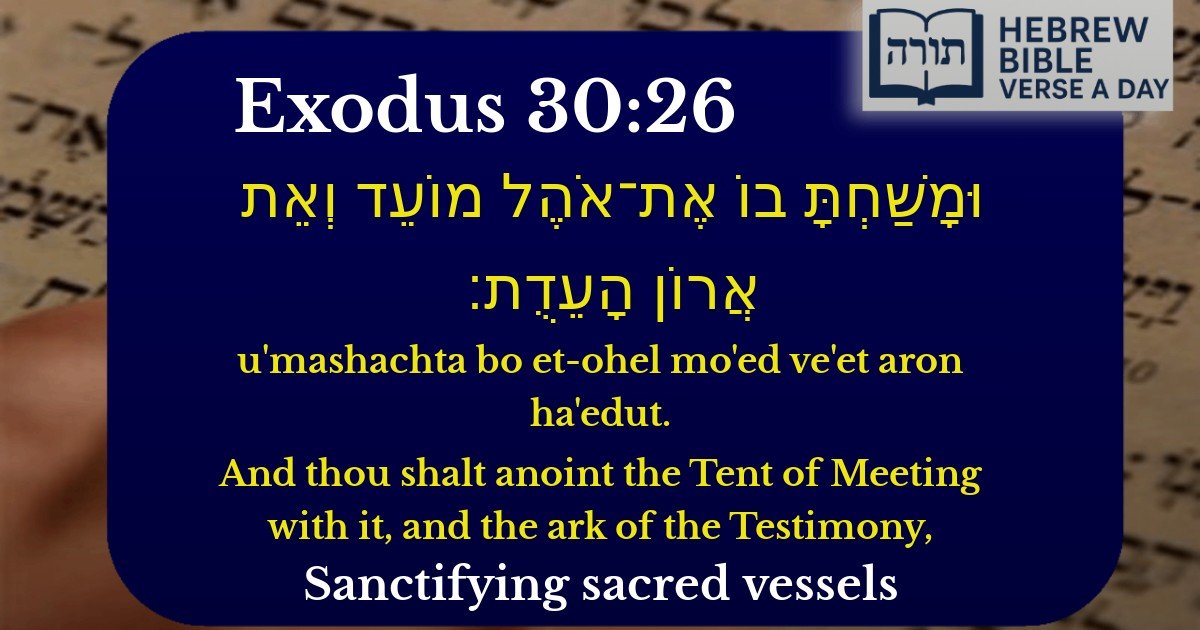

The Anointing of the Mishkan and the Aron
The verse (Shemot 30:26) commands the anointing of the Ohel Moed (Tent of Meeting) and the Aron HaEdut (Ark of the Testimony) with the sacred anointing oil. This act of anointing signifies their sanctification for divine service.
Rashi's Explanation
Rashi (on this verse) explains that the anointing oil was used to sanctify the vessels of the Mishkan, setting them apart for holy use. He notes that the term ומשחת בו ("and thou shalt anoint with it") refers to the special oil described earlier in the parsha, made from specific spices (Shemot 30:22-25).
Rambam's Perspective
In Hilchot Klei HaMikdash (1:3), the Rambam elaborates that the anointing of the Mishkan and its vessels was a one-time event performed by Moshe Rabbeinu, establishing their kedusha (holiness) for all future generations. This act parallels the anointing of kings and kohanim, marking their consecration for sacred roles.
Symbolism of Anointing
The Aron HaEdut in Particular
The Aron is singled out for anointing because it housed the Luchot HaEdut (Tablets of Testimony) and represented the covenant between Hashem and Klal Yisrael. The Sforno explains that its anointing emphasized its role as the focal point of divine communication in the Mishkan.