

Join Our Newsletter To Be Informed When New Videos Are Posted
Hebrew Text
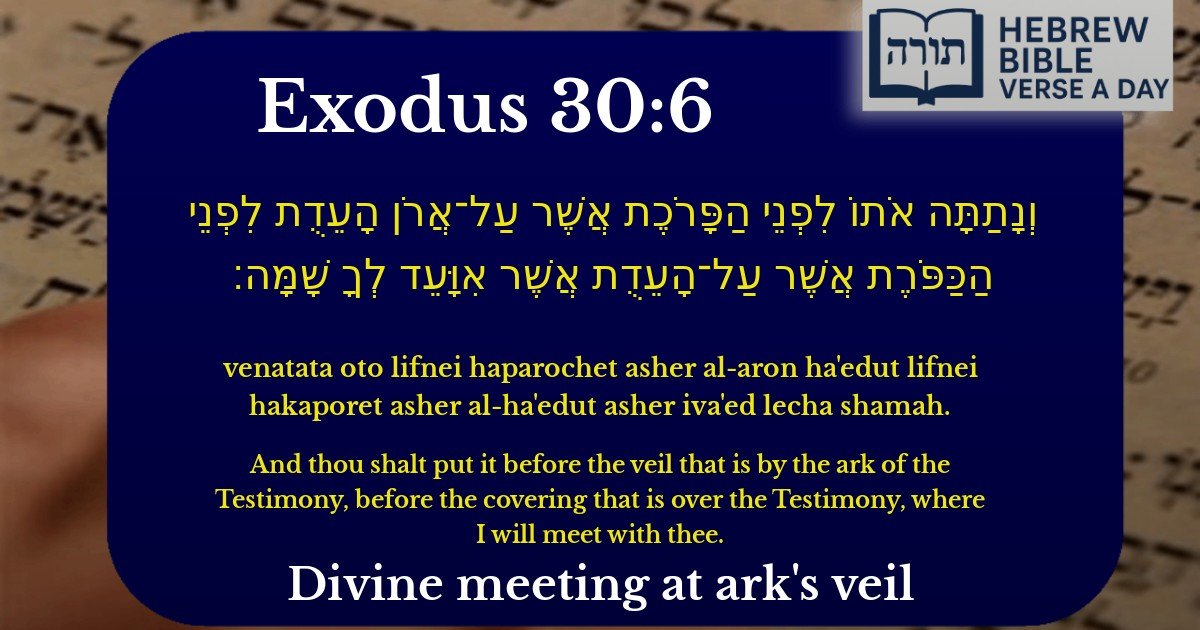
וְנָתַתָּה אֹתוֹ לִפְנֵי הַפָּרֹכֶת אֲשֶׁר עַל־אֲרֹן הָעֵדֻת לִפְנֵי הַכַּפֹּרֶת אֲשֶׁר עַל־הָעֵדֻת אֲשֶׁר אִוָּעֵד לְךָ שָׁמָּה׃
English Translation
And thou shalt put it before the veil that is by the ark of the Testimony, before the covering that is over the Testimony, where I will meet with thee.
Transliteration
Venatata oto lifnei haparochet asher al-aron ha'edut lifnei hakaporet asher al-ha'edut asher iva'ed lecha shamah.
Hebrew Leining Text
וְנָתַתָּ֤ה אֹתוֹ֙ לִפְנֵ֣י הַפָּרֹ֔כֶת אֲשֶׁ֖ר עַל־אֲרֹ֣ן הָעֵדֻ֑ת לִפְנֵ֣י הַכַּפֹּ֗רֶת אֲשֶׁר֙ עַל־הָ֣עֵדֻ֔ת אֲשֶׁ֛ר אִוָּעֵ֥ד לְךָ֖ שָֽׁמָּה׃
🎵 Listen to leining
Parasha Commentary
📚 Talmud Citations
This verse is quoted in the Talmud.
📖 Yoma 44a
The verse is referenced in the discussion about the placement of the incense altar in relation to the Ark of the Testimony and the veil in the Tabernacle.
📖 Menachot 98a
The verse is cited in the context of discussing the arrangement of the Tabernacle's furnishings and the significance of their placement.
Location of the Ark and Divine Communication
The verse (Shemot 30:6) describes the placement of the incense altar in relation to the Ark of the Testimony and the Parochet (veil). Rashi explains that this positioning signifies the importance of the Ketoret (incense) in facilitating divine communication. The phrase "אֲשֶׁר אִוָּעֵד לְךָ שָׁמָּה" ("where I will meet with thee") emphasizes that this is the designated place for Hashem's revelation to Moshe, as further elaborated in Shemot 25:22.
The Significance of the Parochet and Kaporet
Rambam (Hilchot Beit HaBechirah 4:1) discusses the Parochet as a separation between the Kodesh (Holy) and Kodesh HaKodashim (Holy of Holies). The incense altar's placement "before the veil" but outside the Holy of Holies indicates its role in preparing the Kohen Gadol for entry on Yom Kippur. The Midrash Tanchuma (Tetzaveh 15) adds that the Kaporet (covering of the Ark) symbolizes atonement, as the Ketoret atones for lashon hara (evil speech).
The Ark of the Testimony as the Focus
The Talmud (Yoma 52b) teaches that the Ark represents the Torah, and its placement in the Holy of Holies signifies that Torah is the foundation of the relationship between Hashem and Israel. The phrase "עֵדֻת" (Testimony) refers to the Luchot HaBrit (Tablets of the Covenant), as noted by Ibn Ezra, underscoring the eternal covenant between Hashem and His people.