

Join Our Newsletter To Be Informed When New Videos Are Posted
Hebrew Text
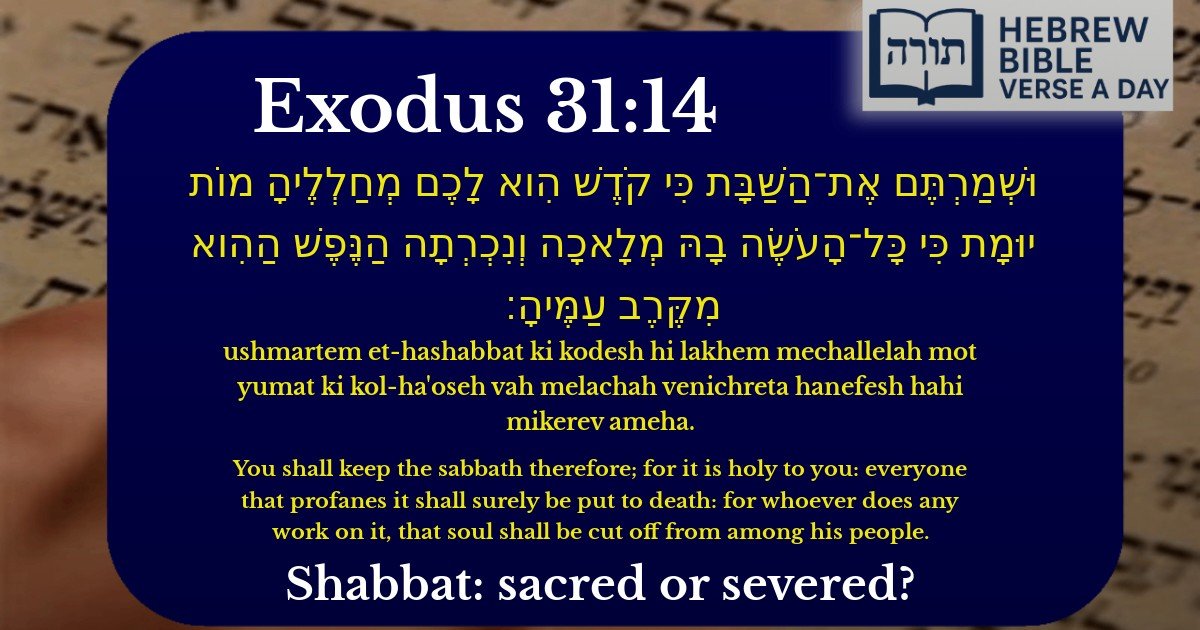
וּשְׁמַרְתֶּם אֶת־הַשַּׁבָּת כִּי קֹדֶשׁ הִוא לָכֶם מְחַלְלֶיהָ מוֹת יוּמָת כִּי כָּל־הָעֹשֶׂה בָהּ מְלָאכָה וְנִכְרְתָה הַנֶּפֶשׁ הַהִוא מִקֶּרֶב עַמֶּיהָ׃
English Translation
You shall keep the sabbath therefore; for it is holy to you: everyone that profanes it shall surely be put to death: for whoever does any work on it, that soul shall be cut off from among his people.
Transliteration
Ushmartem et-hashabbat ki kodesh hi lakhem mechallelah mot yumat ki kol-ha'oseh vah melachah venichreta hanefesh hahi mikerev ameha.
Hebrew Leining Text
וּשְׁמַרְתֶּם֙ אֶת־הַשַּׁבָּ֔ת כִּ֛י קֹ֥דֶשׁ הִ֖וא לָכֶ֑ם מְחַֽלְלֶ֙יהָ֙ מ֣וֹת יוּמָ֔ת כִּ֗י כׇּל־הָעֹשֶׂ֥ה בָהּ֙ מְלָאכָ֔ה וְנִכְרְתָ֛ה הַנֶּ֥פֶשׁ הַהִ֖וא מִקֶּ֥רֶב עַמֶּֽיהָ׃
🎵 Listen to leining
Parasha Commentary
📚 Talmud Citations
This verse is quoted in the Talmud.
📖 Shabbat 70a
The verse is cited in the discussion about the severity of Sabbath desecration and the penalties associated with it.
📖 Sanhedrin 58b
The verse is referenced in the context of discussing the laws applicable to non-Jews and the concept of Sabbath observance.
📖 Keritot 7a
The verse is mentioned in the discussion about the types of sins that incur the penalty of being 'cut off' (karet).
The Sanctity of Shabbat
The verse (Shemot 31:14) emphasizes the supreme holiness of Shabbat, stating "כִּי קֹדֶשׁ הִוא לָכֶם" ("for it is holy to you"). Rashi explains that Shabbat is designated as holy for the Jewish people, meaning it is set apart from the other days of the week for spiritual elevation and connection to Hashem. The Rambam (Hilchot Shabbat 30:15) elaborates that Shabbat is not merely a day of rest but a sacred gift, enabling Jews to emulate the Divine rest after Creation.
Severity of Profaning Shabbat
The Torah warns that "מְחַלְלֶיהָ מוֹת יוּמָת" ("everyone that profanes it shall surely be put to death"). According to the Talmud (Sanhedrin 7:4), this refers to one who intentionally desecrates Shabbat in public, which is considered akin to idolatry. The Midrash (Mechilta d'Rabbi Yishmael) teaches that Shabbat is so central to Jewish identity that violating it undermines the covenant between Hashem and Israel.
Karet for Melachah on Shabbat
The verse further states "כָּל־הָעֹשֶׂה בָהּ מְלָאכָה וְנִכְרְתָה הַנֶּפֶשׁ הַהִוא" ("whoever does any work on it, that soul shall be cut off"). The Talmud (Keritot 2a) clarifies that "karet" (being cut off) applies to intentional violations of Shabbat through one of the 39 categories of forbidden labor (Avot Melachah). Rambam (Hilchot Shabbat 1:1) explains that these melachot correspond to the creative acts performed in building the Mishkan, symbolizing that Shabbat is a day to refrain from human mastery over the world.
Key Teachings from Orthodox Commentators