

Join Our Newsletter To Be Informed When New Videos Are Posted
Hebrew Text
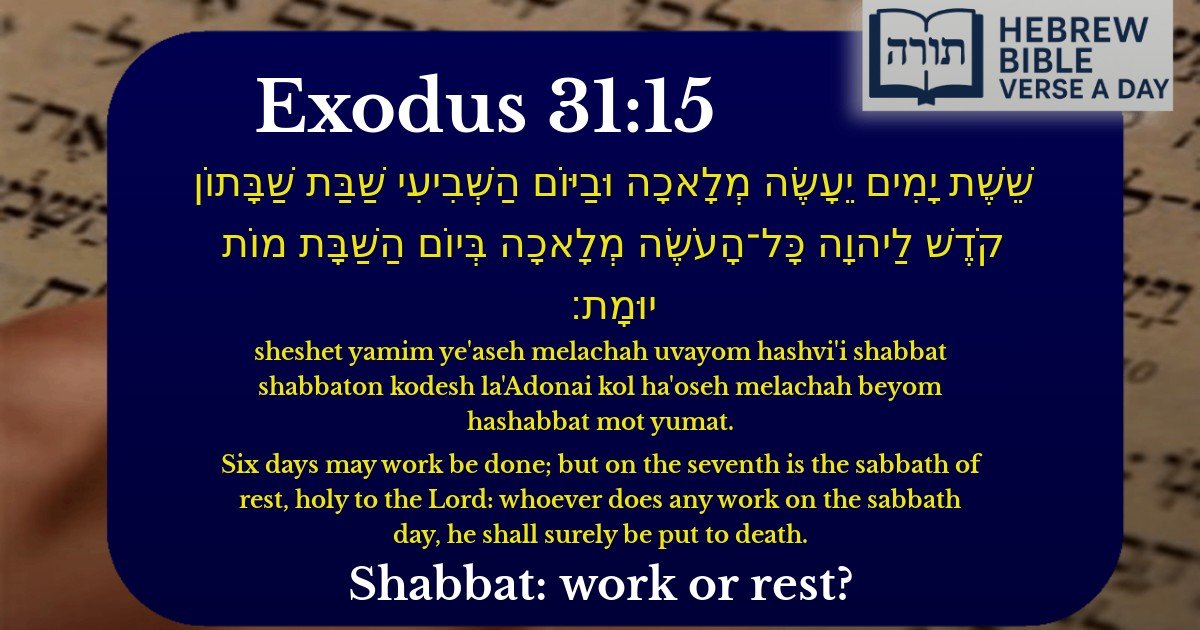
שֵׁשֶׁת יָמִים יֵעָשֶׂה מְלָאכָה וּבַיּוֹם הַשְּׁבִיעִי שַׁבַּת שַׁבָּתוֹן קֹדֶשׁ לַיהוָה כָּל־הָעֹשֶׂה מְלָאכָה בְּיוֹם הַשַּׁבָּת מוֹת יוּמָת׃
English Translation
Six days may work be done; but on the seventh is the sabbath of rest, holy to the Lord: whoever does any work on the sabbath day, he shall surely be put to death.
Transliteration
Sheshet yamim ye'aseh melachah uvayom hashvi'i shabbat shabbaton kodesh la'Adonai kol ha'oseh melachah beyom hashabbat mot yumat.
Hebrew Leining Text
שֵׁ֣שֶׁת יָמִים֮ יֵעָשֶׂ֣ה מְלָאכָה֒ וּבַיּ֣וֹם הַשְּׁבִיעִ֗י שַׁבַּ֧ת שַׁבָּת֛וֹן קֹ֖דֶשׁ לַיהֹוָ֑ה כׇּל־הָעֹשֶׂ֧ה מְלָאכָ֛ה בְּי֥וֹם הַשַּׁבָּ֖ת מ֥וֹת יוּמָֽת׃
🎵 Listen to leining
Parasha Commentary
📚 Talmud Citations
This verse is quoted in the Talmud.
📖 Shabbat 70a
The verse is referenced in the discussion about the prohibition of work on the Sabbath and the severity of violating this commandment.
📖 Sanhedrin 58b
The verse is cited in the context of discussing the laws applicable to non-Jews and the prohibition of Sabbath labor.
📖 Mekhilta d'Rabbi Yishmael Ki Tisa
Although not part of the Babylonian Talmud, the Mekhilta, a tannaitic midrash, discusses this verse extensively in relation to Sabbath laws.
The Commandment of Shabbat
The verse (Shemot 31:15) establishes the fundamental mitzvah of Shabbat, emphasizing its sanctity and the severe prohibition against performing melachah (work) on the seventh day. The Torah frames Shabbat as a day of rest ("שַׁבַּת שַׁבָּתוֹן") and holiness ("קֹדֶשׁ לַיהוָה"), setting it apart from the six days of labor.
Rashi's Explanation
Rashi comments on the phrase "שֵׁשֶׁת יָמִים יֵעָשֶׂה מְלָאכָה" by noting that the passive form ("יֵעָשֶׂה") implies that melachah is permitted during the six days, but not on Shabbat. He further explains that "שַׁבַּת שַׁבָּתוֹן" means a complete cessation from labor, a "rest of rests," underscoring the total abstention from creative work.
The Severity of Shabbat Violation
The verse concludes with the stern warning that "כָּל־הָעֹשֶׂה מְלָאכָה בְּיוֹם הַשַּׁבָּת מוֹת יוּמָת." The Rambam (Hilchot Shabbat 1:1) elaborates that this refers to one who intentionally violates Shabbat, as the punishment of death applies only to a meizid (one who acts willfully). The Talmud (Sanhedrin 73a) discusses the legal procedures for this capital case, emphasizing the gravity of Shabbat desecration.
The Concept of Melachah
The Mishnah (Shabbat 7:2) enumerates 39 categories of prohibited labor derived from the construction of the Mishkan, as the Torah links Shabbat observance to the Mishkan (Shemot 35:2). The Sages teach that these melachot represent creative acts akin to Hashem’s work in creation, and abstaining from them affirms belief in Hashem as the Creator.