Frequently Asked Questions
Q: What is the 'Tent of Meeting' mentioned in Exodus 31:7?
A: The 'Tent of Meeting' (אֹהֶל מוֹעֵד) refers to the Mishkan, the portable sanctuary built by the Israelites in the wilderness. According to Rashi, it was called the 'Tent of Meeting' because it was the place where Hashem would meet with Moshe to communicate His commandments to Bnei Yisrael (Exodus 25:22).
Q: What is the 'ark of the Testimony' in this verse?
A: The 'ark of the Testimony' (אָרֹן לָעֵדֻת) is the Aron HaKodesh, the sacred ark that held the two tablets of the Ten Commandments. The Rambam explains (Hilchot Beit HaBechirah 4:1) that it was called the 'Testimony' because the tablets inside testified to the covenant between Hashem and the Jewish people.
Q: What was the purpose of the 'covering' (kaporet) on the ark?
A: The kaporet (כַּפֹּרֶת) was the golden cover placed on top of the ark. According to the Talmud (Yoma 54a), it had two keruvim (cherubim) facing each other, and it was from between them that Hashem's voice would emanate when speaking to Moshe. The Midrash (Shemot Rabbah 34:2) teaches that the kaporet symbolized atonement and the special relationship between Hashem and His people.
Q: Why does the verse mention 'all the furniture of the Tent'?
A: This refers to all the sacred vessels used in the Mishkan, including the menorah, table for showbread, and altar. The Talmud (Menachot 29a) explains that each item had a specific spiritual purpose in facilitating the Divine service. Their detailed construction (as described in earlier chapters) teaches us the importance of hiddur mitzvah (beautifying commandments) when serving Hashem.
Q: What lesson can we learn today from these Mishkan items?
A: The Ramban (Exodus 25:1) teaches that the Mishkan was a microcosm of creation, showing how physical objects can become vessels for holiness. Today, though we lack the Mishkan, our homes and synagogues - called 'mikdash me'at' (small sanctuaries, Megillah 29a) - should emulate its sanctity by being places of Torah, prayer, and kindness.

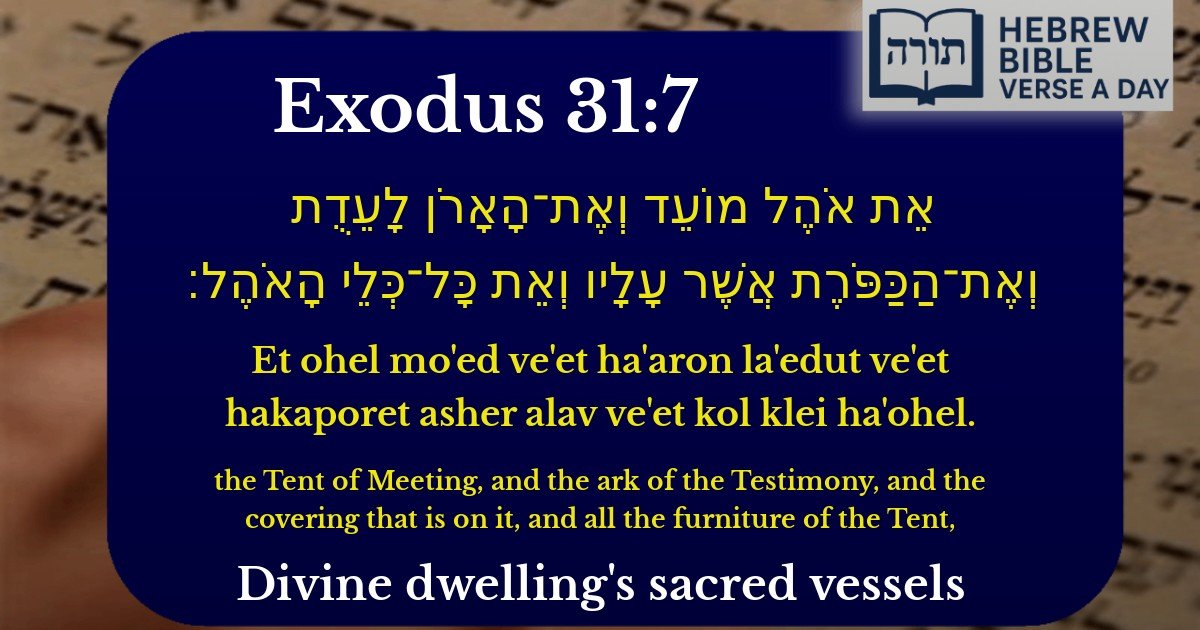

The Components of the Mishkan
The verse (Exodus 35:21) lists key elements of the Mishkan (Tabernacle), each holding profound significance in Jewish tradition:
Spiritual Significance
The Sforno teaches that this enumeration follows the order of descending holiness - from the Aron (containing Torah) outward. The Kli Yakar emphasizes how these physical items became vessels for ruchniyut (spirituality) through their exact construction according to divine specifications.
Contemporary Application
Rabbi Samson Raphael Hirsch notes the progression teaches that Torah (Aron) must be at the center, protected by atonement (Kaporet), within a community structure (Mishkan). The Chafetz Chaim applied this to synagogue design - the Aron Hakodesh should be the focal point, just as Torah must be central to Jewish life.