

Join Our Newsletter To Be Informed When New Videos Are Posted
Hebrew Text
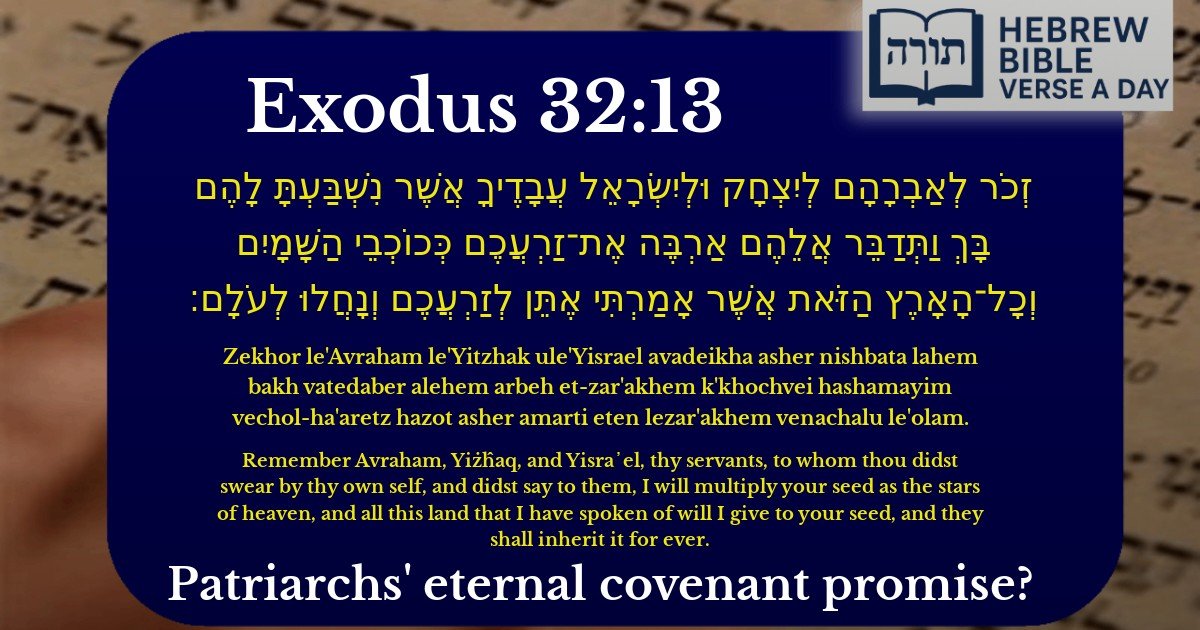
זְכֹר לְאַבְרָהָם לְיִצְחָק וּלְיִשְׂרָאֵל עֲבָדֶיךָ אֲשֶׁר נִשְׁבַּעְתָּ לָהֶם בָּךְ וַתְּדַבֵּר אֲלֵהֶם אַרְבֶּה אֶת־זַרְעֲכֶם כְּכוֹכְבֵי הַשָּׁמָיִם וְכָל־הָאָרֶץ הַזֹּאת אֲשֶׁר אָמַרְתִּי אֶתֵּן לְזַרְעֲכֶם וְנָחֲלוּ לְעֹלָם׃
English Translation
Remember Avraham, Yiżĥaq, and Yisra᾽el, thy servants, to whom thou didst swear by thy own self, and didst say to them, I will multiply your seed as the stars of heaven, and all this land that I have spoken of will I give to your seed, and they shall inherit it for ever.
Transliteration
Zekhor le'Avraham le'Yitzhak ule'Yisrael avadeikha asher nishbata lahem bakh vatedaber alehem arbeh et-zar'akhem k'khochvei hashamayim vechol-ha'aretz hazot asher amarti eten lezar'akhem venachalu le'olam.
Hebrew Leining Text
זְכֹ֡ר לְאַבְרָהָם֩ לְיִצְחָ֨ק וּלְיִשְׂרָאֵ֜ל עֲבָדֶ֗יךָ אֲשֶׁ֨ר נִשְׁבַּ֣עְתָּ לָהֶם֮ בָּךְ֒ וַתְּדַבֵּ֣ר אֲלֵהֶ֔ם אַרְבֶּה֙ אֶֽת־זַרְעֲכֶ֔ם כְּכוֹכְבֵ֖י הַשָּׁמָ֑יִם וְכׇל־הָאָ֨רֶץ הַזֹּ֜את אֲשֶׁ֣ר אָמַ֗רְתִּי אֶתֵּן֙ לְזַרְעֲכֶ֔ם וְנָחֲל֖וּ לְעֹלָֽם׃
🎵 Listen to leining
Parasha Commentary
📚 Talmud Citations
This verse is quoted in the Talmud.
The verse is referenced in the context of Moses' plea to God for mercy on behalf of the Israelites, illustrating the power of invoking the merit of the patriarchs.
📖 Rosh Hashanah 11a
The verse is mentioned in a discussion about the covenant with the patriarchs and its implications for their descendants.
Context of the Verse
This verse appears in Shemot (Exodus) 32:13, where Moshe Rabbeinu pleads with Hashem to spare Bnei Yisrael after the sin of the Golden Calf. Moshe invokes the merit of the Avot (Avraham, Yitzchak, and Yaakov) and the covenant Hashem made with them.
Invoking the Merit of the Avot
Rashi explains that Moshe mentions the Avot in this order—Avraham, Yitzchak, and Yisrael (Yaakov)—to emphasize the unique covenant Hashem made with each:
The Oath and the Promise
The phrase "asher nishba'ta lahem bach" ("to whom You swore by Yourself") highlights that Hashem's oath was unconditional, as He swore by His own Name (Ramban). The Midrash (Shemot Rabbah 44:1) teaches that Moshe appealed to this oath because a divine oath cannot be revoked.
Multiplication of Seed Like the Stars
The comparison to the stars ("k'kochevei hashamayim") appears multiple times in the Torah (e.g., Bereishit 15:5, 22:17). The Kli Yakar explains that just as stars appear small but are vast in reality, so too Bnei Yisrael may seem insignificant in exile but are destined for greatness.
Inheritance of the Land Forever
The phrase "v'nachalu l'olam" ("they shall inherit it forever") underscores the eternal nature of the covenant. The Sforno notes that this inheritance is conditional on Bnei Yisrael upholding the Torah, but Moshe here appeals to Hashem's original promise, which transcends temporary failures.
Moshe's Argument
According to the Ohr HaChaim, Moshe's plea was twofold:
Thus, Moshe successfully invoked the merit of the Avot to secure mercy for the nation.