

Join Our Newsletter To Be Informed When New Videos Are Posted
Hebrew Text
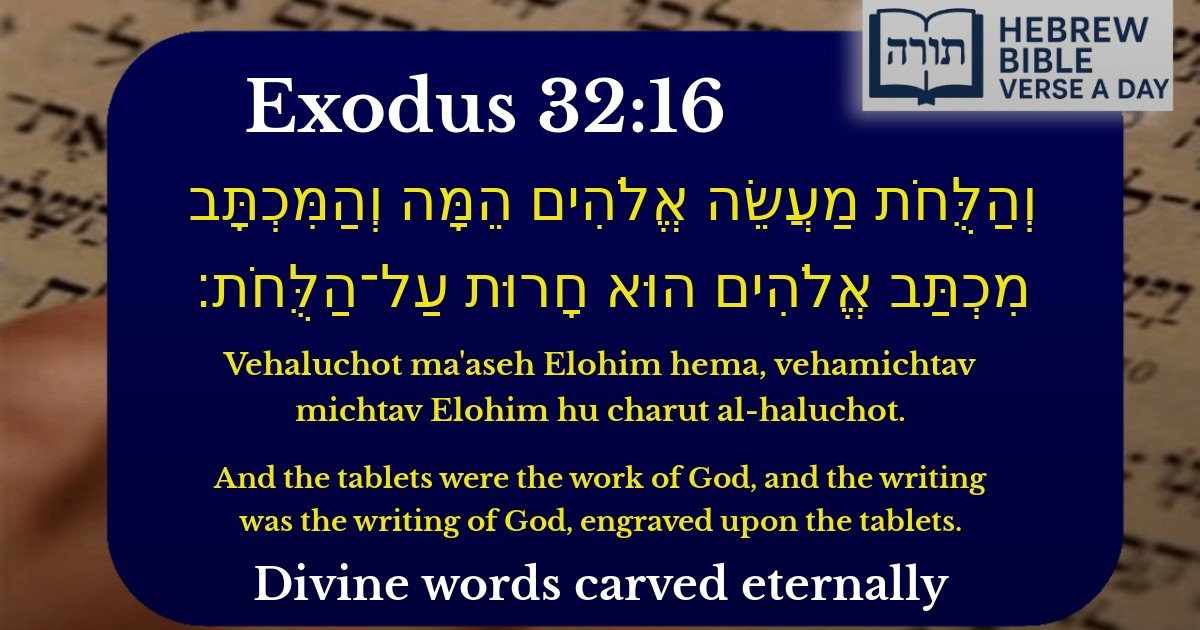
וְהַלֻּחֹת מַעֲשֵׂה אֱלֹהִים הֵמָּה וְהַמִּכְתָּב מִכְתַּב אֱלֹהִים הוּא חָרוּת עַל־הַלֻּחֹת׃
English Translation
And the tablets were the work of God, and the writing was the writing of God, engraved upon the tablets.
Transliteration
Vehaluchot ma'aseh Elohim hema, vehamichtav michtav Elohim hu charut al-haluchot.
Hebrew Leining Text
וְהַ֨לֻּחֹ֔ת מַעֲשֵׂ֥ה אֱלֹהִ֖ים הֵ֑מָּה וְהַמִּכְתָּ֗ב מִכְתַּ֤ב אֱלֹהִים֙ ה֔וּא חָר֖וּת עַל־הַלֻּחֹֽת׃
🎵 Listen to leining
Parasha Commentary
📚 Talmud Citations
This verse is quoted in the Talmud.
📖 Avodah Zarah 44a
The verse is referenced in a discussion about the nature of the tablets and the divine origin of the writing on them.
📖 Nedarim 38a
The verse is cited in a discussion about the unique qualities of the tablets and the writing as divine creations.
The Divine Origin of the Tablets
The verse (Shemot 32:16) emphasizes the supernatural nature of the Luchot (tablets) in two ways: their physical form and the writing upon them. Rashi explains that the phrase "מַעֲשֵׂה אֱלֹהִים הֵמָּה" ("the work of God they were") means the tablets themselves were created by God, not carved by human hands. Similarly, "מִכְתַּב אֱלֹהִים הוּא" ("the writing was the writing of God") indicates that the letters were divinely inscribed.
The Meaning of "Charut" (Engraved)
The Talmud (Eruvin 54a) derives a profound lesson from the word "חָרוּת" (engraved): Do not read it as "charut" (engraved), but rather as "cheirut" (freedom), for the only truly free person is one who engages in Torah study. Rambam (Hilchot Talmud Torah 3:1) expands on this, teaching that Torah liberates a person from subjugation to worldly desires.
The Miraculous Nature of the Writing
Midrash Tanchuma (Ki Tisa 16) describes how the writing on the tablets was miraculously legible from both sides, with letters like the מ"ם and ס"ף (final mem and samech) appearing to float in place. This demonstrated that the Torah's wisdom transcends natural limitations.
Symbolism of the Tablets