

Join Our Newsletter To Be Informed When New Videos Are Posted
Hebrew Text
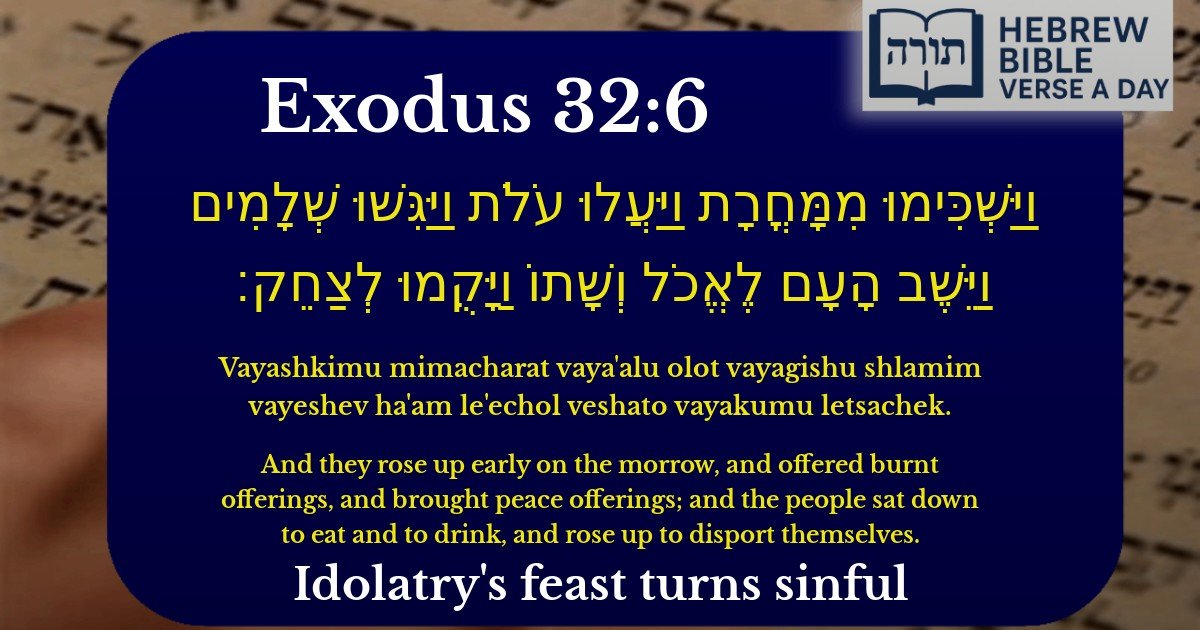
וַיַּשְׁכִּימוּ מִמָּחֳרָת וַיַּעֲלוּ עֹלֹת וַיַּגִּשׁוּ שְׁלָמִים וַיֵּשֶׁב הָעָם לֶאֱכֹל וְשָׁתוֹ וַיָּקֻמוּ לְצַחֵק׃
English Translation
And they rose up early on the morrow, and offered burnt offerings, and brought peace offerings; and the people sat down to eat and to drink, and rose up to disport themselves.
Transliteration
Vayashkimu mimacharat vaya'alu olot vayagishu shlamim vayeshev ha'am le'echol veshato vayakumu letsachek.
Hebrew Leining Text
וַיַּשְׁכִּ֙ימוּ֙ מִֽמׇּחֳרָ֔ת וַיַּעֲל֣וּ עֹלֹ֔ת וַיַּגִּ֖שׁוּ שְׁלָמִ֑ים וַיֵּ֤שֶׁב הָעָם֙ לֶֽאֱכֹ֣ל וְשָׁת֔וֹ וַיָּקֻ֖מוּ לְצַחֵֽק׃ {פ}
🎵 Listen to leining
Parasha Commentary
📚 Talmud Citations
This verse is quoted in the Talmud.
📖 Avodah Zarah 25b
The verse is referenced in the context of discussing idolatrous practices and the behavior of the people during the incident of the Golden Calf.
📖 Sanhedrin 63a
The verse is cited in a discussion about the nature of idolatry and the actions of the Israelites during the Golden Calf episode.
Context in the Torah
This verse (Shemot 32:6) appears in the narrative of the Golden Calf (עֵגֶל הַזָּהָב), describing the actions of Bnei Yisrael the morning after creating the idol. The people engage in sacrificial worship, feasting, and ultimately "disporting themselves" (לְצַחֵק), which Chazal interpret as involving grave sins.
Rashi's Commentary
Rashi explains that "וַיָּקֻמוּ לְצַחֵק" ("rose up to disport themselves") includes three severe transgressions:
Ibn Ezra's Perspective
Ibn Ezra notes the progression in the verse shows how quickly improper worship leads to moral decay. The offerings (עֹלֹת and שְׁלָמִים) might have initially seemed like service to Hashem, but degenerated into idolatrous celebration.
Rambam's Analysis
In Moreh Nevuchim (1:36), Rambam explains that the people sought a physical representation of divinity, mistakenly believing this was permitted since they had just heard "we will do and we will hear" (Shemot 24:7). Their early rising (וַיַּשְׁכִּימוּ) shows enthusiasm, but tragically misdirected.
Talmudic Interpretation
Sanhedrin 63a analyzes the phrase "וַיָּקֻמוּ לְצַחֵק" as demonstrating how idolatry leads to the nullification of moral restraints. The Talmud states this incident occurred on the 17th of Tammuz, establishing it as a fast day commemorating this tragedy.
Chassidic Insight
The Sefat Emet notes the contrast between their earlier declaration "נעשה ונשמע" (we will do and we will hear) and this episode. Their mistake was seeking immediate physical connection (eating, drinking, visible worship) rather than maintaining faith in the invisible Divine.