

Join Our Newsletter To Be Informed When New Videos Are Posted
Hebrew Text
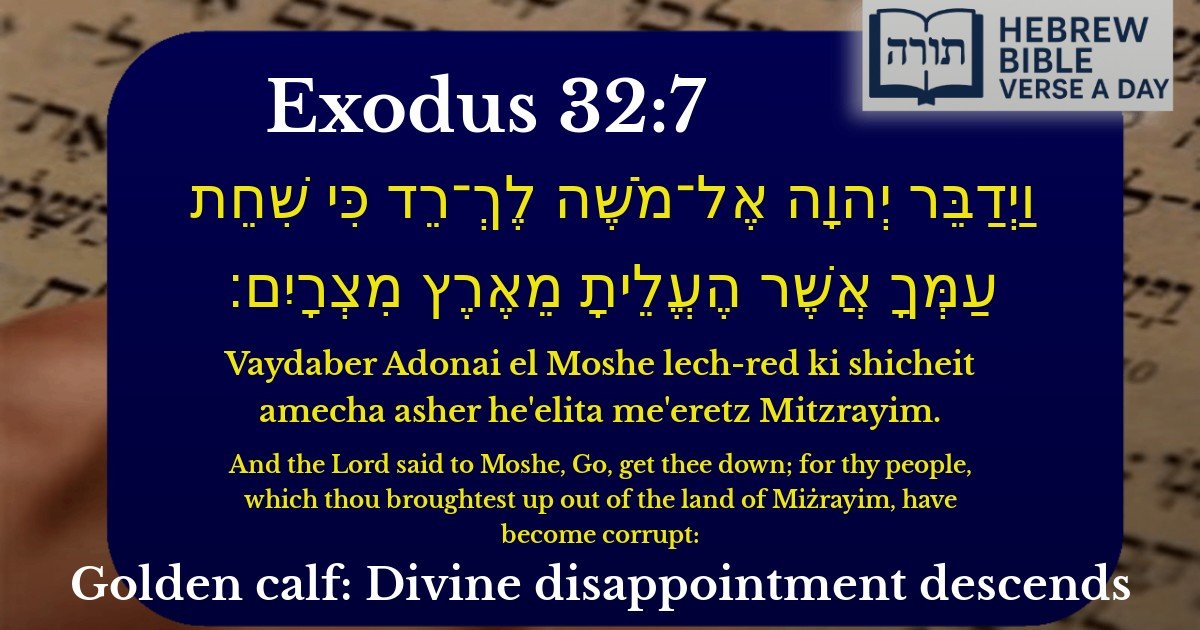
וַיְדַבֵּר יְהוָה אֶל־מֹשֶׁה לֶךְ־רֵד כִּי שִׁחֵת עַמְּךָ אֲשֶׁר הֶעֱלֵיתָ מֵאֶרֶץ מִצְרָיִם׃
English Translation
And the Lord said to Moshe, Go, get thee down; for thy people, which thou broughtest up out of the land of Miżrayim, have become corrupt:
Transliteration
Vaydaber Adonai el Moshe lech-red ki shicheit amecha asher he'elita me'eretz Mitzrayim.
Hebrew Leining Text
וַיְדַבֵּ֥ר יְהֹוָ֖ה אֶל־מֹשֶׁ֑ה לֶךְ־רֵ֕ד כִּ֚י שִׁחֵ֣ת עַמְּךָ֔ אֲשֶׁ֥ר הֶעֱלֵ֖יתָ מֵאֶ֥רֶץ מִצְרָֽיִם׃
🎵 Listen to leining
Parasha Commentary
📚 Talmud Citations
This verse is quoted in the Talmud.
📖 Berakhot 32a
The verse is cited in a discussion about Moses' intercession for Israel after the sin of the golden calf, illustrating the relationship between Moses and God.
📖 Avodah Zarah 4b
The verse is referenced in a discussion about the Israelites' idolatry and the consequences of their actions, highlighting the severity of their sin.
Context of the Verse
This verse (Shemot 32:7) appears during the episode of the Golden Calf (עגל הזהב), when Bnei Yisrael, fearing Moshe's delay in returning from Har Sinai, created an idol. Hashem informs Moshe of their corruption and commands him to descend from the mountain immediately.
Rashi's Explanation
Rashi notes the phrase "לֶךְ־רֵד" ("Go, get thee down") carries a tone of dismissal, as if Hashem is telling Moshe that his elevated status is now diminished due to the people's sin. Additionally, Rashi highlights the phrasing "עַמְּךָ" ("thy people")—implying Hashem distances Himself from Bnei Yisrael at this moment, attributing them to Moshe rather than Himself.
Rambam's Perspective
In Moreh Nevuchim (1:23), Rambam explains that the anthropomorphic language ("go down") is metaphorical, as Hashem has no physical form. Rather, it signifies Moshe's transition from a state of divine prophecy to addressing the people's immediate crisis.
Midrashic Insights
Talmudic Interpretation
The Talmud (Berachot 32a) discusses Moshe's response to this moment, emphasizing his role as an advocate for Bnei Yisrael. Despite Hashem's distancing language ("thy people"), Moshe later pleads for their forgiveness, demonstrating his unwavering leadership.
Ibn Ezra's Commentary
Ibn Ezra observes that the phrase "אֲשֶׁר הֶעֱלֵיתָ" ("which thou broughtest up") underscores Moshe's personal role in the Exodus, reminding him of his responsibility for the people's conduct—a theme later echoed in Moshe's prayers for their atonement.