

Join Our Newsletter To Be Informed When New Videos Are Posted
Hebrew Text
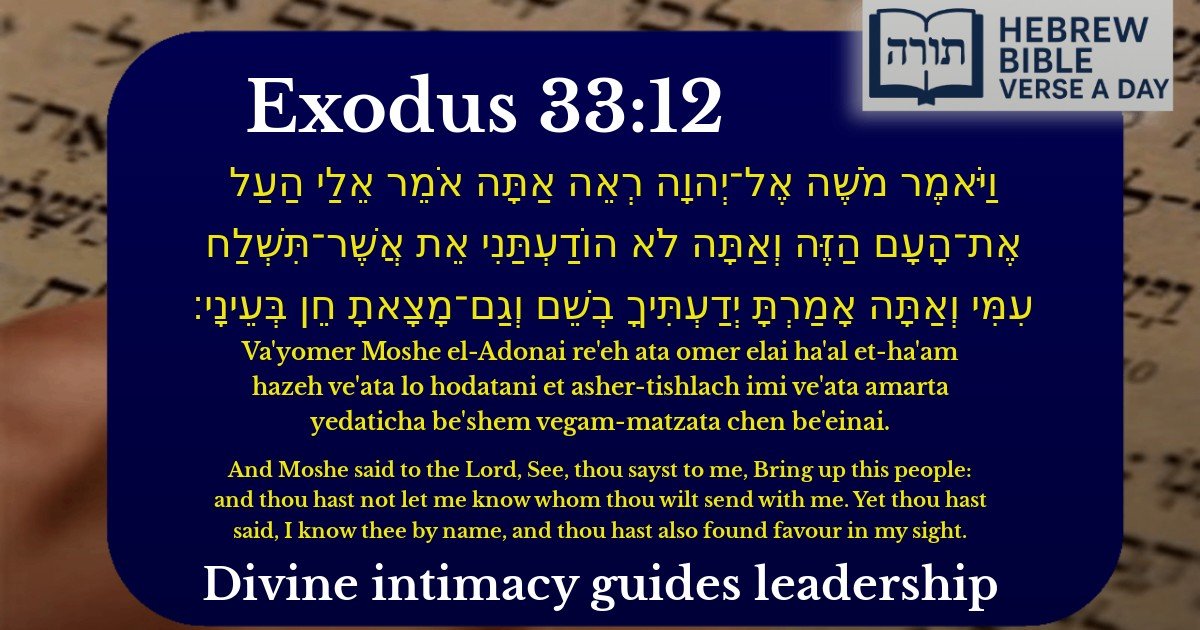
וַיֹּאמֶר מֹשֶׁה אֶל־יְהוָה רְאֵה אַתָּה אֹמֵר אֵלַי הַעַל אֶת־הָעָם הַזֶּה וְאַתָּה לֹא הוֹדַעְתַּנִי אֵת אֲשֶׁר־תִּשְׁלַח עִמִּי וְאַתָּה אָמַרְתָּ יְדַעְתִּיךָ בְשֵׁם וְגַם־מָצָאתָ חֵן בְּעֵינָי׃
English Translation
And Moshe said to the Lord, See, thou sayst to me, Bring up this people: and thou hast not let me know whom thou wilt send with me. Yet thou hast said, I know thee by name, and thou hast also found favour in my sight.
Transliteration
Va'yomer Moshe el-Adonai re'eh ata omer elai ha'al et-ha'am hazeh ve'ata lo hodatani et asher-tishlach imi ve'ata amarta yedaticha be'shem vegam-matzata chen be'einai.
Hebrew Leining Text
וַיֹּ֨אמֶר מֹשֶׁ֜ה אֶל־יְהֹוָ֗ה רְ֠אֵ֠ה אַתָּ֞ה אֹמֵ֤ר אֵלַי֙ הַ֚עַל אֶת־הָעָ֣ם הַזֶּ֔ה וְאַתָּה֙ לֹ֣א הֽוֹדַעְתַּ֔נִי אֵ֥ת אֲשֶׁר־תִּשְׁלַ֖ח עִמִּ֑י וְאַתָּ֤ה אָמַ֙רְתָּ֙ יְדַעְתִּ֣יךָֽ בְשֵׁ֔ם וְגַם־מָצָ֥אתָ חֵ֖ן בְּעֵינָֽי׃
🎵 Listen to leining
Parasha Commentary
📚 Talmud Citations
This verse is quoted in the Talmud.
📖 Berakhot 7a
The verse is discussed in the context of Moses' dialogue with God, emphasizing the special relationship and favor Moses had with God.
📖 Sanhedrin 111a
The verse is referenced in a discussion about the merits of Moses and his unique status among prophets.
Context of the Verse
This verse (Shemot 33:12) occurs after the sin of the Golden Calf, when Moshe is pleading with Hashem to continue guiding Bnei Yisrael despite their transgression. Moshe expresses his concern about leading the people without clear assurance of Divine accompaniment.
Moshe's Request for Clarity
Rashi explains that Moshe is asking for a definitive sign of Hashem's presence accompanying them on their journey. The phrase "וְאַתָּה לֹא הוֹדַעְתַּנִי אֵת אֲשֶׁר־תִּשְׁלַח עִמִּי" ("you have not let me know whom you will send with me") reflects Moshe's desire for tangible Divine leadership, as he fears the people may falter without it.
The Significance of "I Know You by Name"
Ramban interprets "יְדַעְתִּיךָ בְשֵׁם" ("I know you by name") as an indication of Moshe's unique, intimate relationship with Hashem. Unlike other prophets who received visions in riddles, Moshe communicated with Hashem directly (Bamidbar 12:8). This phrase reassures Moshe that his leadership is Divinely ordained.
Finding Favor in Hashem's Eyes
The Sforno explains that "וְגַם־מָצָאתָ חֵן בְּעֵינָי" ("you have also found favor in My sight") refers to Moshe's special merit, which allowed him to successfully intercede on behalf of Bnei Yisrael after the sin of the Golden Calf. This favor granted him the ability to request and receive Divine assurances.
Moshe's Role as Intercessor
The Midrash Tanchuma (Ki Tisa 27) highlights Moshe's role as a compassionate leader. His plea was not for personal benefit but for the welfare of Klal Yisrael. His request for Divine accompaniment stemmed from concern that without it, the people would not survive the challenges ahead.
Key Themes