

Join Our Newsletter To Be Informed When New Videos Are Posted
Hebrew Text
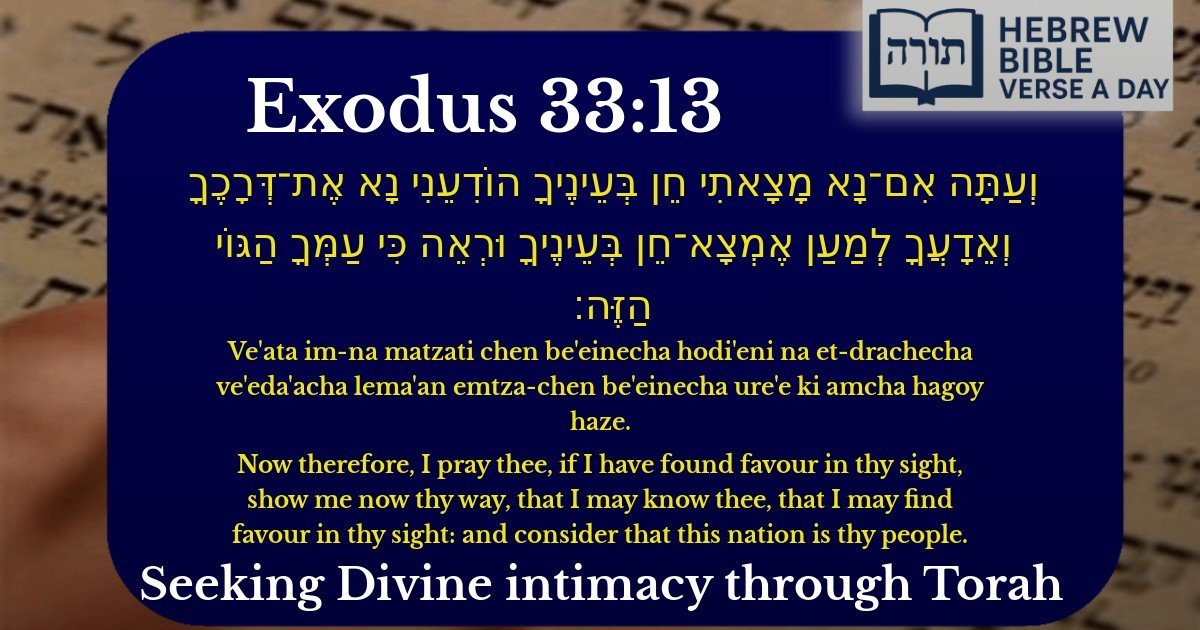
וְעַתָּה אִם־נָא מָצָאתִי חֵן בְּעֵינֶיךָ הוֹדִעֵנִי נָא אֶת־דְּרָכֶךָ וְאֵדָעֲךָ לְמַעַן אֶמְצָא־חֵן בְּעֵינֶיךָ וּרְאֵה כִּי עַמְּךָ הַגּוֹי הַזֶּה׃
English Translation
Now therefore, I pray thee, if I have found favour in thy sight, show me now thy way, that I may know thee, that I may find favour in thy sight: and consider that this nation is thy people.
Transliteration
Ve'ata im-na matzati chen be'einecha hodi'eni na et-drachecha ve'eda'acha lema'an emtza-chen be'einecha ure'e ki amcha hagoy haze.
Hebrew Leining Text
וְעַתָּ֡ה אִם־נָא֩ מָצָ֨אתִי חֵ֜ן בְּעֵינֶ֗יךָ הוֹדִעֵ֤נִי נָא֙ אֶת־דְּרָכֶ֔ךָ וְאֵדָ֣עֲךָ֔ לְמַ֥עַן אֶמְצָא־חֵ֖ן בְּעֵינֶ֑יךָ וּרְאֵ֕ה כִּ֥י עַמְּךָ֖ הַגּ֥וֹי הַזֶּֽה׃
🎵 Listen to leining
Parasha Commentary
📚 Talmud Citations
This verse is quoted in the Talmud.
📖 Berakhot 7a
The verse is referenced in a discussion about Moses' request to know God's ways and how God responds to such requests.
📖 Sanhedrin 111a
The verse is cited in a discussion about the merit of the Jewish people and their relationship with God.
Context of the Verse
This verse (Shemot 33:13) is part of Moshe Rabbeinu's plea to Hashem after the sin of the Golden Calf. Following the breaking of the first Luchot and the subsequent forgiveness, Moshe seeks deeper understanding of Hashem's ways to properly lead Bnei Yisrael.
Moshe's Request for Divine Knowledge
Rashi explains that Moshe was asking for two things:
The Ramban adds that Moshe wanted to comprehend why the righteous sometimes suffer while the wicked prosper - the fundamental question of divine justice.
The Phrase "לְמַעַן אֶמְצָא־חֵן בְּעֵינֶיךָ"
The Sforno explains that Moshe was requesting this knowledge not for personal benefit, but:
"וּרְאֵה כִּי עַמְּךָ הַגּוֹי הַזֶּה"
The Ohr HaChaim highlights that Moshe was reminding Hashem of His special relationship with Klal Yisrael. Even after their sin, they remained His chosen nation. The Midrash Tanchuma notes that Moshe was advocating for them, emphasizing their status as Hashem's people despite their mistakes.
Practical Lessons
The Malbim derives several important principles from this verse: