
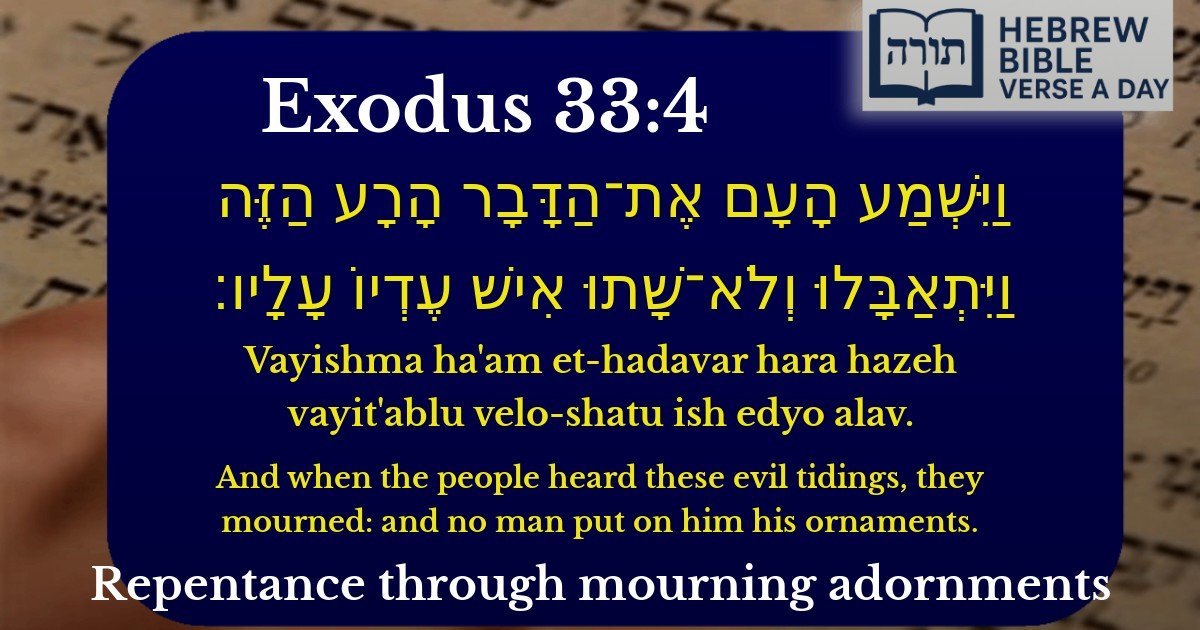

Exodus 33:4 - Repentance through mourning adornments

Exodus 33:4 - שמות 33:4

Hebrew Text

וַיִּשְׁמַע הָעָם אֶת־הַדָּבָר הָרָע הַזֶּה וַיִּתְאַבָּלוּ וְלֹא־שָׁתוּ אִישׁ עֶדְיוֹ עָלָיו׃

English Translation

And when the people heard these evil tidings, they mourned: and no man put on him his ornaments.

Transliteration

Vayishma ha'am et-hadavar hara hazeh vayit'ablu velo-shatu ish edyo alav.

Hebrew Leining Text

וַיִּשְׁמַ֣ע הָעָ֗ם אֶת־הַדָּבָ֥ר הָרָ֛ע הַזֶּ֖ה וַיִּתְאַבָּ֑לוּ וְלֹא־שָׁ֛תוּ אִ֥ישׁ עֶדְי֖וֹ עָלָֽיו׃

🎵 Listen to leining

Parasha Commentary

Context of the Verse

This verse (Exodus 33:4) appears after the sin of the Golden Calf, when Hashem informs Bnei Yisrael that due to their transgression, He will not accompany them personally into Eretz Yisrael. The "evil tidings" refer to this devastating decree.

Rashi's Explanation

Rashi explains that "the evil tidings" specifically refer to Hashem's statement (in the previous verse) that "I will not go up in your midst." The people understood this to mean the withdrawal of the Divine Presence (Shechinah) from among them, which caused profound mourning.

Removal of Ornaments

The removal of ornaments carries deep significance:

  • Symbol of Repentance: The Talmud (Yoma 66b) teaches that removing ornaments represents a state of mourning and repentance, as the people sought to demonstrate their remorse.
  • Connection to the Golden Calf: Ramban notes that these very ornaments had been used to create the Golden Calf (Exodus 32:3), so removing them symbolized rejecting their earlier sin.
  • Permanent Prohibition: The Midrash (Tanchuma Ki Sisa 30) states that these ornaments were later permanently forbidden for general use and were instead dedicated to the Mishkan.

The Nature of Their Mourning

The Sforno explains that their mourning was particularly intense because they understood the gravity of losing the direct protection of the Shechinah. This wasn't merely about punishment, but about the profound spiritual loss of Divine intimacy.

Halachic Implications

The Rambam (Hilchos Teshuvah 2:7) derives from this episode that true repentance requires:

  • Abandoning the sin completely
  • Regretting past actions
  • Resolving never to repeat the transgression
  • Changing one's behavior when faced with the same situation

The people's removal of ornaments demonstrated these elements of complete repentance.

📚 Talmud Citations

This verse is not quoted in the Talmud.

Frequently Asked Questions

Q: What does Exodus 33:4 mean when it says the people 'mourned' after hearing 'evil tidings'?
A: According to Rashi, the 'evil tidings' refer to Hashem's command for Bnei Yisrael to continue their journey to Eretz Yisrael without His direct presence (after the sin of the Golden Calf). The people mourned because they understood the gravity of losing this special closeness with Hashem.
Q: Why didn't the Israelites wear their ornaments in Exodus 33:4?
A: The Ramban explains that removing ornaments was an outward sign of mourning and repentance. Just as mourners traditionally refrain from wearing fine clothing, Bnei Yisrael removed their jewelry to show sincere remorse after the sin of the Golden Calf.
Q: What lesson can we learn from Exodus 33:4 about repentance?
A: The Talmud (Yoma 86b) teaches that this verse demonstrates proper teshuva (repentance). The Israelites showed true remorse through both internal mourning (their sadness) and external actions (removing ornaments). This teaches us that complete repentance requires both heartfelt regret and visible changes in behavior.