

Join Our Newsletter To Be Informed When New Videos Are Posted
Hebrew Text
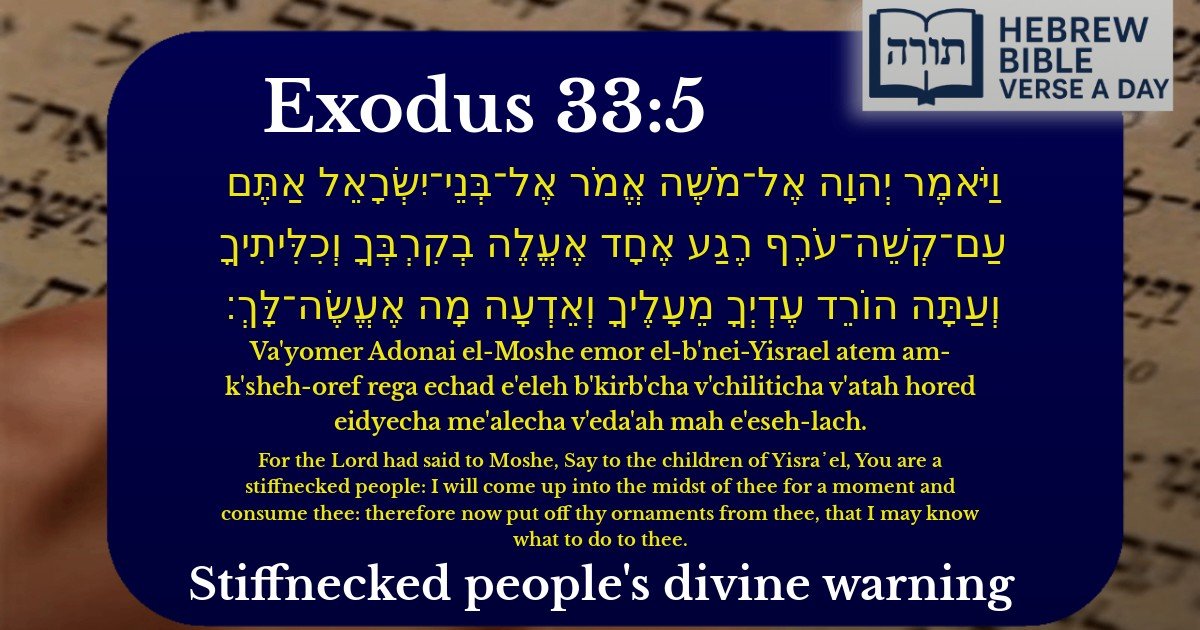
וַיֹּאמֶר יְהוָה אֶל־מֹשֶׁה אֱמֹר אֶל־בְּנֵי־יִשְׂרָאֵל אַתֶּם עַם־קְשֵׁה־עֹרֶף רֶגַע אֶחָד אֶעֱלֶה בְקִרְבְּךָ וְכִלִּיתִיךָ וְעַתָּה הוֹרֵד עֶדְיְךָ מֵעָלֶיךָ וְאֵדְעָה מָה אֶעֱשֶׂה־לָּךְ׃
English Translation
For the Lord had said to Moshe, Say to the children of Yisra᾽el, You are a stiffnecked people: I will come up into the midst of thee for a moment and consume thee: therefore now put off thy ornaments from thee, that I may know what to do to thee.
Transliteration
Va'yomer Adonai el-Moshe emor el-b'nei-Yisrael atem am-k'sheh-oref rega echad e'eleh b'kirb'cha v'chiliticha v'atah hored eidyecha me'alecha v'eda'ah mah e'eseh-lach.
Hebrew Leining Text
וַיֹּ֨אמֶר יְהֹוָ֜ה אֶל־מֹשֶׁ֗ה אֱמֹ֤ר אֶל־בְּנֵֽי־יִשְׂרָאֵל֙ אַתֶּ֣ם עַם־קְשֵׁה־עֹ֔רֶף רֶ֧גַע אֶחָ֛ד אֶֽעֱלֶ֥ה בְקִרְבְּךָ֖ וְכִלִּיתִ֑יךָ וְעַתָּ֗ה הוֹרֵ֤ד עֶדְיְךָ֙ מֵֽעָלֶ֔יךָ וְאֵדְעָ֖ה מָ֥ה אֶֽעֱשֶׂה־לָּֽךְ׃
🎵 Listen to leining
Parasha Commentary
📚 Talmud Citations
This verse is quoted in the Talmud.
📖 Yoma 66b
The verse is referenced in the context of discussing the removal of ornaments as a sign of repentance and mourning.
📖 Shabbat 88a
The verse is cited in a discussion about the Israelites' stubbornness and their relationship with God during the revelation at Sinai.
Context of the Verse
This verse (Shemot 33:5) appears after the sin of the Golden Calf, when Hashem expresses His displeasure with Bnei Yisrael for their stubbornness and rebellion. The phrase "עַם־קְשֵׁה־עֹרֶף" ("a stiffnecked people") underscores their resistance to divine guidance, as explained by Rashi, who notes that this metaphor compares them to an ox that refuses to turn its neck when plowing, symbolizing obstinacy.
Hashem's Warning
Hashem warns that He might "come up into the midst of thee for a moment and consume thee", indicating a potential immediate punishment. Ramban explains that this reflects Hashem's justice—He cannot tolerate idolatry in His presence. However, the phrasing "רֶגַע אֶחָד" ("for a moment") suggests a temporary withdrawal of divine protection rather than total annihilation, as the Midrash (Shemot Rabbah 42:9) teaches that Hashem's anger is fleeting, but His mercy endures.
The Command to Remove Ornaments
Hashem instructs Bnei Yisrael to "put off thy ornaments" ("הוֹרֵד עֶדְיְךָ"). Rashi explains that this was a sign of mourning and repentance, as they had previously used these ornaments to create the Golden Calf (Shemot 32:2-3). The Talmud (Yoma 66b) further connects this to the concept of תשובה (repentance), where outward actions reflect inner remorse.
Divine Deliberation
The phrase "וְאֵדְעָה מָה אֶעֱשֶׂה־לָּךְ" ("that I may know what to do to thee") is interpreted by the Sforno as an expression of divine deliberation—Hashem weighing whether to punish or show mercy. The Midrash Tanchuma (Ki Tisa 27) suggests that this demonstrates Hashem’s patience, allowing time for repentance before final judgment.
Key Lessons