

Join Our Newsletter To Be Informed When New Videos Are Posted
Hebrew Text
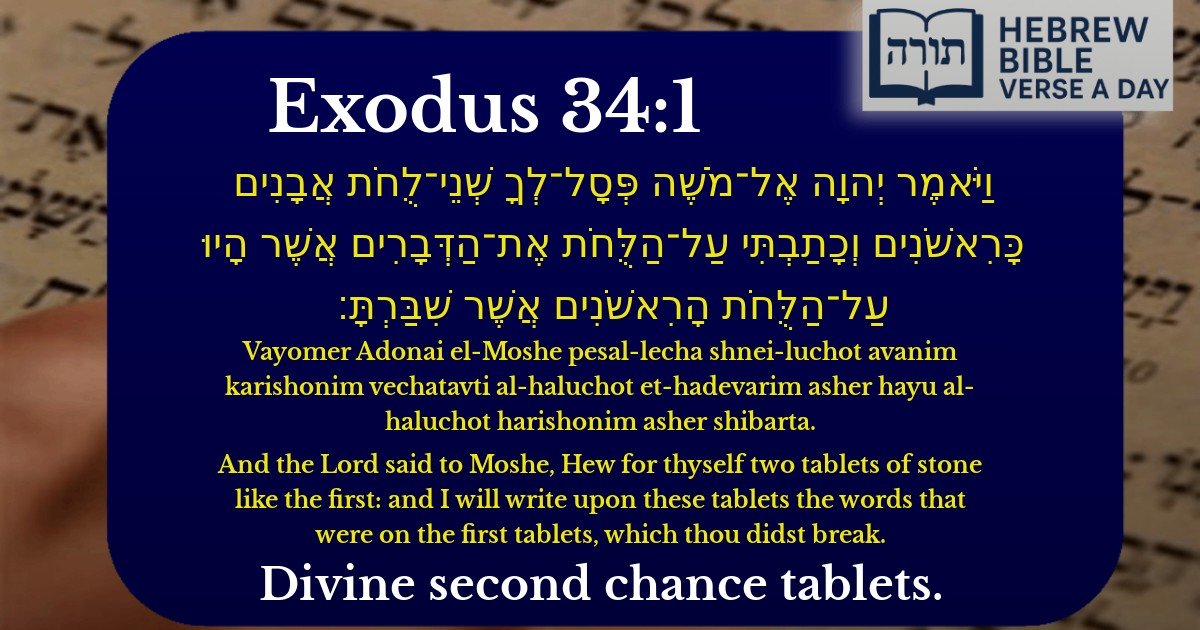
וַיֹּאמֶר יְהוָה אֶל־מֹשֶׁה פְּסָל־לְךָ שְׁנֵי־לֻחֹת אֲבָנִים כָּרִאשֹׁנִים וְכָתַבְתִּי עַל־הַלֻּחֹת אֶת־הַדְּבָרִים אֲשֶׁר הָיוּ עַל־הַלֻּחֹת הָרִאשֹׁנִים אֲשֶׁר שִׁבַּרְתָּ׃
English Translation
And the Lord said to Moshe, Hew for thyself two tablets of stone like the first: and I will write upon these tablets the words that were on the first tablets, which thou didst break.
Transliteration
Vayomer Adonai el-Moshe pesal-lecha shnei-luchot avanim karishonim vechatavti al-haluchot et-hadevarim asher hayu al-haluchot harishonim asher shibarta.
Hebrew Leining Text
וַיֹּ֤אמֶר יְהֹוָה֙ אֶל־מֹשֶׁ֔ה פְּסׇל־לְךָ֛ שְׁנֵֽי־לֻחֹ֥ת אֲבָנִ֖ים כָּרִאשֹׁנִ֑ים וְכָתַבְתִּי֙ עַל־הַלֻּחֹ֔ת אֶ֨ת־הַדְּבָרִ֔ים אֲשֶׁ֥ר הָי֛וּ עַל־הַלֻּחֹ֥ת הָרִאשֹׁנִ֖ים אֲשֶׁ֥ר שִׁבַּֽרְתָּ׃
🎵 Listen to leining
Parasha Commentary
📚 Talmud Citations
This verse is quoted in the Talmud.
📖 Shabbat 87a
The verse is referenced in the discussion about Moses breaking the first tablets and receiving the second set, highlighting God's instruction to Moses to carve new tablets.
📖 Taanit 26b
The verse is mentioned in the context of the events surrounding the giving of the Torah and the breaking of the first tablets, emphasizing the renewal of the covenant.
The Command to Hew New Tablets
The verse (Shemot 34:1) describes Hashem instructing Moshe to carve new tablets after the breaking of the first set. Rashi explains that the phrase "פְּסָל־לְךָ" ("hew for yourself") implies that the remnants of the first tablets were to be kept in Moshe's possession as a merit, as the Gemara (Bava Batra 14b) states that the broken tablets were later stored in the Aron alongside the new ones. This teaches that Torah scholars who have stumbled in learning should not be disregarded, as their past efforts retain value.
Comparison to the First Tablets
Hashem specifies that the new tablets should be "כָּרִאשֹׁנִים" ("like the first ones"). The Midrash Tanchuma (Ki Tisa 30) notes that this refers not only to their physical dimensions but also to their spiritual quality. However, Ramban points out a key difference: the first tablets were entirely crafted by Hashem (Shemot 32:16), while these required Moshe's participation. This reflects the principle that after sin, human effort becomes necessary in the teshuvah process.
Divine Inscription on the Second Tablets
The verse emphasizes that Hashem would inscribe "אֶת־הַדְּבָרִים אֲשֶׁר הָיוּ עַל־הַלֻּחֹת הָרִאשֹׁנִים" - the same words as the first tablets. The Sforno explains this demonstrates that despite the sin of the golden calf, the Torah's content remained unchanged. The Ohr HaChaim adds that this reaffirmed the eternal covenant, showing that Hashem's commitment to Israel endured even after their failure.
Mention of the Broken Tablets
By referencing "אֲשֶׁר שִׁבַּרְתָּ" ("which you broke"), the Torah highlights Moshe's decisive action. The Talmud Yerushalmi (Taanit 4:5) praises Moshe's breaking of the tablets as justified, comparing it to a king who tears up the marriage contract when his bride proves unfaithful. Rambam (Hilchot Teshuvah 7:4) derives from this episode that sincere repentance can elevate a person to even greater spiritual heights than before the sin.