Frequently Asked Questions
Q: What does 'molten gods' mean in Exodus 34:17?
A: The term 'molten gods' (אֱלֹהֵי מַסֵּכָה) refers to idols made by melting metal and pouring it into molds to form statues or images that people worship. This is strictly forbidden in Judaism, as it violates the prohibition against idolatry, one of the most serious sins in the Torah. Rashi explains that this verse reinforces the commandment against creating any physical representation of a deity.
Q: Why is the prohibition against molten gods important in Judaism?
A: The prohibition against molten gods is fundamental because Judaism emphasizes the worship of the one, invisible, and incorporeal God. Creating physical representations of deities leads to idolatry, which distorts the true belief in Hashem. The Rambam (Maimonides) teaches in Hilchot Avodah Zarah that idolatry was the primary mistake of earlier generations, and the Torah comes to purify this error.
Q: Does this verse apply to making statues or artwork today?
A: While the verse specifically forbids creating molten idols for worship, Jewish law (Halacha) generally prohibits making human or divine figures in sculpture or artwork to avoid any resemblance to idolatrous practices. However, artistic representations for decorative or educational purposes (not for worship) may be permitted under certain conditions, as discussed in the Shulchan Aruch (Yoreh De'ah 141).
Q: How does this commandment relate to modern times?
A: Although literal molten idols are rare today, the Torah's warning remains relevant. The Talmud (Sanhedrin 63b) teaches that idolatry can also include excessive devotion to material possessions, ideologies, or even one's own desires—anything that takes the place of serving Hashem. This verse reminds us to focus on spiritual devotion rather than physical or worldly substitutes for God.
Q: What is the difference between 'molten gods' and other forms of idolatry?
A: The term 'molten gods' specifies idols made by melting and casting metal, but the Torah also prohibits other forms of idolatry, such as carved wooden or stone idols (pesel). The Midrash (Mechilta) explains that the Torah mentions different types to emphasize that all forms of physical representations intended for worship are forbidden, regardless of how they are made.

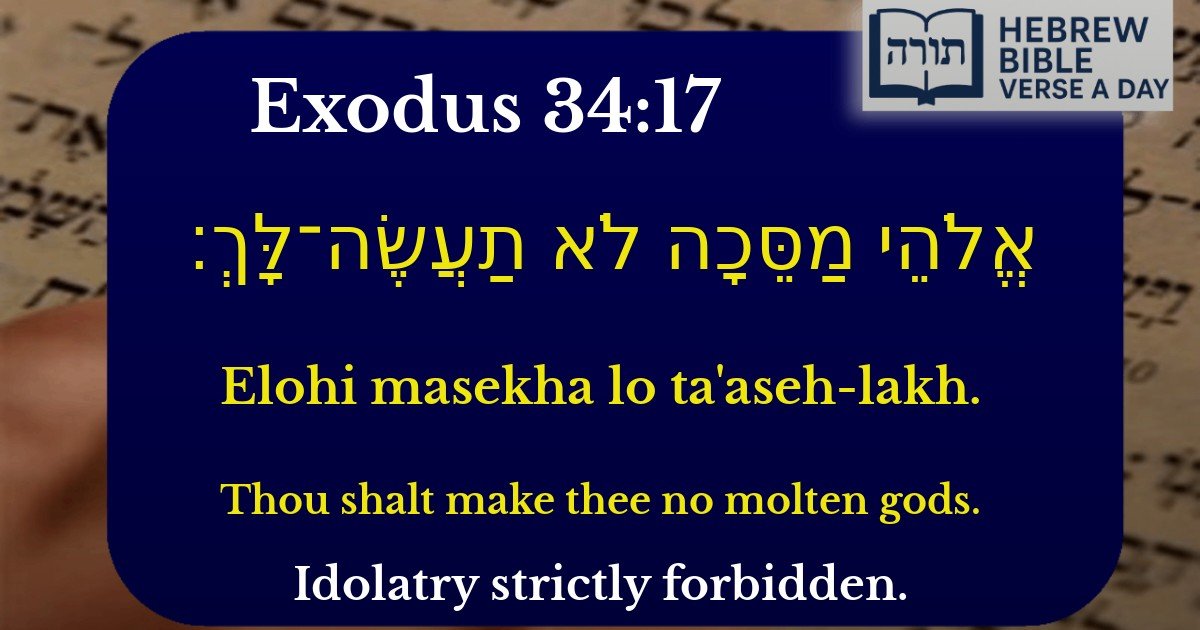

Prohibition of Molten Gods (Exodus 34:17)
The verse "אֱלֹהֵי מַסֵּכָה לֹא תַעֲשֶׂה־לָּךְ" ("Thou shalt make thee no molten gods") is a reiteration of the prohibition against idolatry, specifically addressing the creation of deities cast from molten metal. This commandment appears in the broader context of the renewal of the covenant after the sin of the Golden Calf (עֵגֶל הַזָּהָב).
Rashi's Explanation
Rashi (Exodus 34:17) clarifies that this prohibition extends beyond molten images to all forms of idolatry. He emphasizes that the term "מַסֵּכָה" (molten) is used here because the Golden Calf was made through melting gold, serving as a direct reminder of that transgression. Rashi also notes that this verse reinforces the earlier commandment in Exodus 20:4, which forbids graven images.
Rambam's Perspective (Hilchot Avodah Zarah)
In Mishneh Torah (Hilchot Avodah Zarah 3:1-3), Rambam (Maimonides) elaborates on the severity of creating or worshipping molten gods. He explains that this prohibition includes not only the act of fashioning idols but also any form of reverence or service directed toward them. Rambam categorizes idolatry as a rejection of the fundamental principle of monotheism, as it attributes divine power to man-made objects.
Midrashic Insights
The Mechilta (a halachic Midrash on Exodus) connects this verse to the broader theme of rejecting foreign influences. It teaches that the prohibition against molten gods serves as a safeguard against assimilation into pagan cultures, which often used molten idols in their worship. The Midrash underscores that loyalty to Hashem requires complete separation from idolatrous practices.
Practical Implications