

Join Our Newsletter To Be Informed When New Videos Are Posted
Hebrew Text
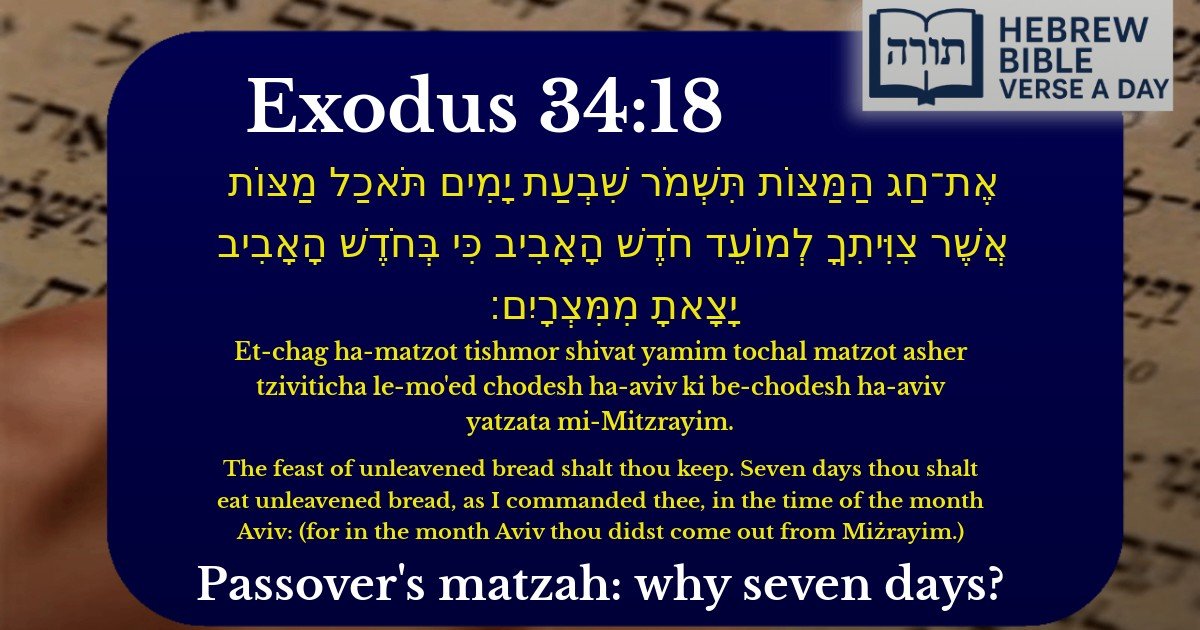
אֶת־חַג הַמַּצּוֹת תִּשְׁמֹר שִׁבְעַת יָמִים תֹּאכַל מַצּוֹת אֲשֶׁר צִוִּיתִךָ לְמוֹעֵד חֹדֶשׁ הָאָבִיב כִּי בְּחֹדֶשׁ הָאָבִיב יָצָאתָ מִמִּצְרָיִם׃
English Translation
The feast of unleavened bread shalt thou keep. Seven days thou shalt eat unleavened bread, as I commanded thee, in the time of the month Aviv: (for in the month Aviv thou didst come out from Miżrayim.)
Transliteration
Et-chag ha-matzot tishmor shivat yamim tochal matzot asher tziviticha le-mo'ed chodesh ha-aviv ki be-chodesh ha-aviv yatzata mi-Mitzrayim.
Hebrew Leining Text
אֶת־חַ֣ג הַמַּצּוֹת֮ תִּשְׁמֹר֒ שִׁבְעַ֨ת יָמִ֜ים תֹּאכַ֤ל מַצּוֹת֙ אֲשֶׁ֣ר צִוִּיתִ֔ךָ לְמוֹעֵ֖ד חֹ֣דֶשׁ הָאָבִ֑יב כִּ֚י בְּחֹ֣דֶשׁ הָֽאָבִ֔יב יָצָ֖אתָ מִמִּצְרָֽיִם׃
🎵 Listen to leining
Parasha Commentary
📚 Talmud Citations
This verse is quoted in the Talmud.
📖 Pesachim 6a
The verse is referenced in the discussion about the timing of the Passover sacrifice and the obligation to eat unleavened bread during the festival.
📖 Megillah 31a
The verse is mentioned in the context of the Torah readings for the festivals, particularly Passover.
📖 Rosh Hashanah 7a
The verse is cited in a discussion about the months of the year and the significance of the month of Aviv in relation to the Exodus from Egypt.
The Mitzvah of Matzah and Its Significance
The verse commands the observance of Chag HaMatzot (the Festival of Unleavened Bread) for seven days, during which matzah must be eaten. This mitzvah is intrinsically linked to the Exodus from Egypt, as stated: "for in the month of Aviv you went out from Egypt." Rashi (Exodus 23:15) emphasizes that matzah symbolizes the haste of the Exodus—Bnei Yisrael left so quickly that their dough did not have time to rise. The Rambam (Hilchot Chametz U'Matzah 6:1) further explains that eating matzah is an act of remembrance, ensuring that future generations internalize the miracle of Yetziat Mitzrayim.
The Month of Aviv and Its Timing
The Torah specifies that this mitzvah must be observed "in the time of the month Aviv" (חֹדֶשׁ הָאָבִיב). The Sages (Mishnah Rosh Hashanah 1:1) teach that Aviv refers to the spring season, when barley ripens. The Sanhedrin would sanctify the new moon based on witnesses who saw the new crescent, ensuring Pesach always fell in spring. The Ramban (Exodus 12:2) connects this to Hashem’s mastery over nature—the Exodus occurred when life renews, symbolizing the rebirth of the Jewish people.
The Duration: Seven Days
The seven-day duration reflects completeness, as seen in creation. The Talmud (Pesachim 120a) discusses whether the obligation to eat matzah applies all seven days or only the first night. Halachically, the first night is a Torah obligation, while the remaining days are rabbinically mandated (Shulchan Aruch, Orach Chaim 475:1). The Midrash (Mechilta Bo 12) adds that seven days correspond to the seven divine attributes, teaching that redemption permeates all aspects of existence.
Spiritual Lessons from Matzah