

Join Our Newsletter To Be Informed When New Videos Are Posted
Hebrew Text
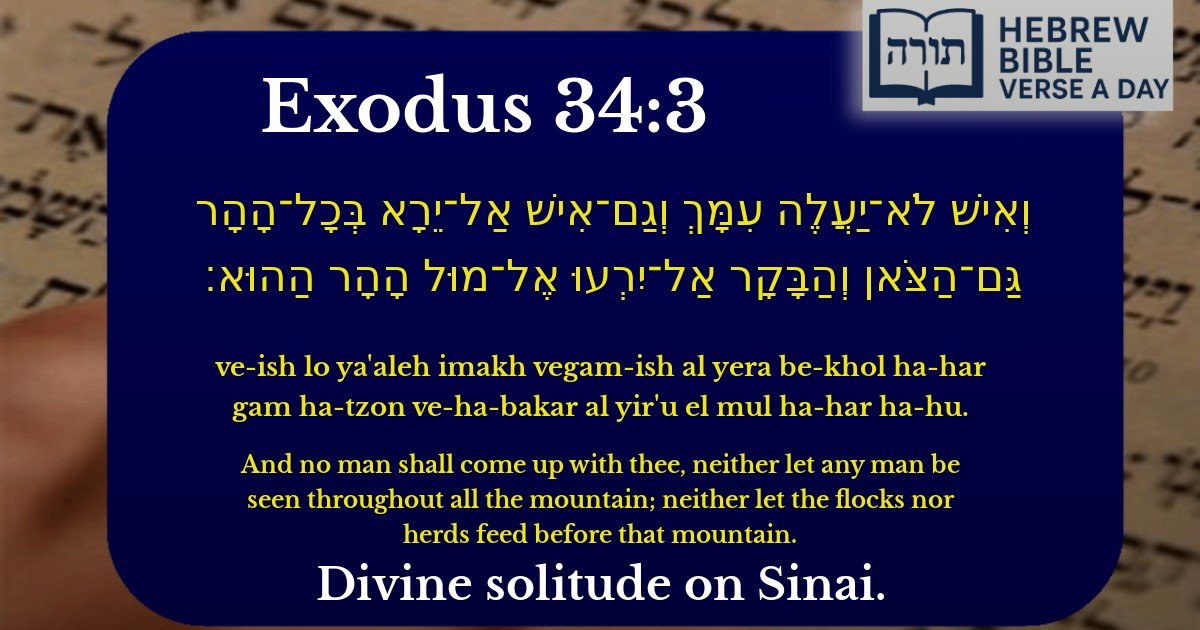
וְאִישׁ לֹא־יַעֲלֶה עִמָּךְ וְגַם־אִישׁ אַל־יֵרָא בְּכָל־הָהָר גַּם־הַצֹּאן וְהַבָּקָר אַל־יִרְעוּ אֶל־מוּל הָהָר הַהוּא׃
English Translation
And no man shall come up with thee, neither let any man be seen throughout all the mountain; neither let the flocks nor herds feed before that mountain.
Transliteration
Ve-ish lo ya'aleh imakh vegam-ish al yera be-khol ha-har gam ha-tzon ve-ha-bakar al yir'u el mul ha-har ha-hu.
Hebrew Leining Text
וְאִישׁ֙ לֹֽא־יַעֲלֶ֣ה עִמָּ֔ךְ וְגַם־אִ֥ישׁ אַל־יֵרָ֖א בְּכׇל־הָהָ֑ר גַּם־הַצֹּ֤אן וְהַבָּקָר֙ אַל־יִרְע֔וּ אֶל־מ֖וּל הָהָ֥ר הַהֽוּא׃
🎵 Listen to leining
Parasha Commentary
📚 Talmud Citations
This verse is not quoted in the Talmud.
Context of the Verse
This verse (Exodus 34:3) appears in the context of Moshe Rabbeinu ascending Har Sinai to receive the second set of Luchos (Tablets of the Covenant) after the sin of the Golden Calf. Hashem instructs Moshe that no person or animal should be present on the mountain during this sacred event.
Rashi's Explanation
Rashi (Exodus 34:3) explains that this prohibition extends even to the flocks and herds to emphasize the complete sanctity of the mountain during this time. He notes that this was a temporary restriction only for the duration of Moshe's ascent, unlike the earlier permanent prohibition (Exodus 19:12-13) when the Torah was first given.
Rambam's Perspective
The Rambam (Moreh Nevuchim 1:8) discusses how this separation reflects the unique prophetic level of Moshe. The complete isolation underscores that Moshe's communication with the Divine was unparalleled - no other being, human or animal, could be present during this encounter.
Midrashic Insights
Halachic Implications
The Sefer HaChinuch (Mitzvah 96) derives from this verse the principle of maintaining proper boundaries around sacred spaces and times. Just as Har Sinai required separation during this holy event, so too must we establish proper boundaries (such as mechitzos in shuls) for our own sacred spaces.
Kabbalistic Interpretation
The Zohar (Shemos 84b) explains that the complete removal of all living beings created a pure vessel for the transmission of the Divine word. This teaches that true spiritual reception sometimes requires complete separation from worldly matters.