

Join Our Newsletter To Be Informed When New Videos Are Posted
Hebrew Text
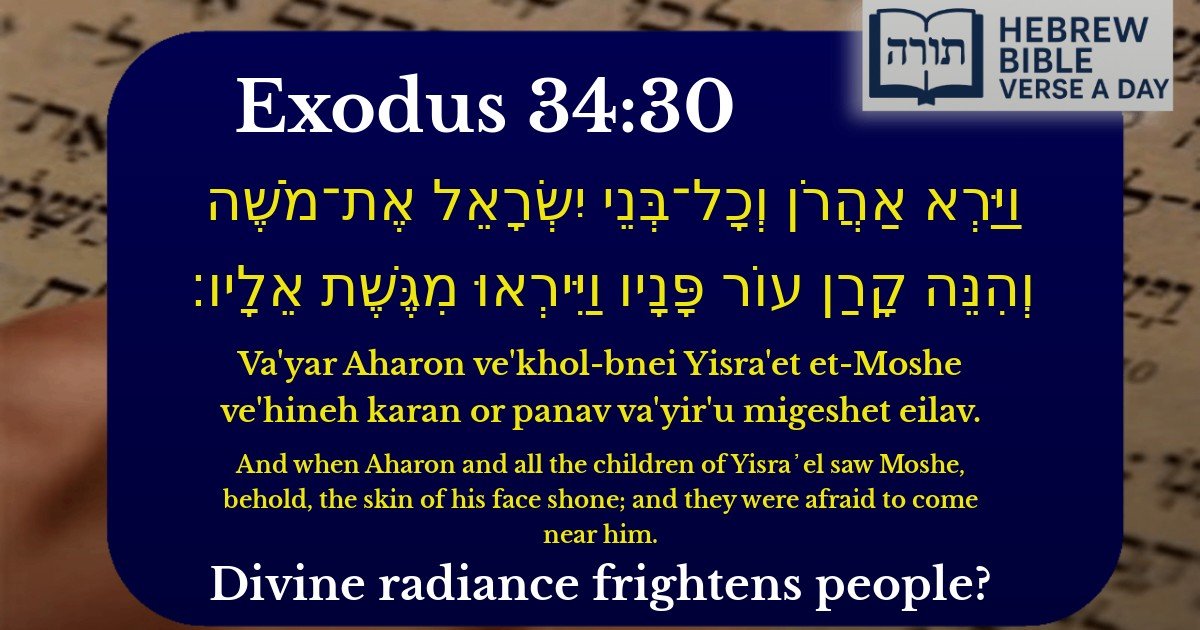
וַיַּרְא אַהֲרֹן וְכָל־בְּנֵי יִשְׂרָאֵל אֶת־מֹשֶׁה וְהִנֵּה קָרַן עוֹר פָּנָיו וַיִּירְאוּ מִגֶּשֶׁת אֵלָיו׃
English Translation
And when Aharon and all the children of Yisra᾽el saw Moshe, behold, the skin of his face shone; and they were afraid to come near him.
Transliteration
Va'yar Aharon ve'khol-bnei Yisra'et et-Moshe ve'hineh karan or panav va'yir'u migeshet eilav.
Hebrew Leining Text
וַיַּ֨רְא אַהֲרֹ֜ן וְכׇל־בְּנֵ֤י יִשְׂרָאֵל֙ אֶת־מֹשֶׁ֔ה וְהִנֵּ֥ה קָרַ֖ן ע֣וֹר פָּנָ֑יו וַיִּֽירְא֖וּ מִגֶּ֥שֶׁת אֵלָֽיו׃
🎵 Listen to leining
Parasha Commentary
📚 Talmud Citations
This verse is quoted in the Talmud.
📖 Berakhot 7a
The verse is referenced in a discussion about the radiance of Moses' face and its implications for leadership and divine communication.
📖 Shabbat 88b
The verse is cited in the context of discussing the giving of the Torah and the unique relationship between Moses and the Israelites.
The Radiance of Moshe's Face
The verse (Shemot 34:30) describes how Moshe's face shone after receiving the second set of Luchot (tablets) from Hashem. Rashi explains that this radiance (karan or panav) was a physical manifestation of the divine light Moshe absorbed during his 40 days on Har Sinai. The word karan is related to keren (horn), symbolizing rays of light projecting outward like horns.
Sources of the Radiance
Why Did Bnei Yisrael Fear Approaching?
The Talmud (Berachot 7a) explains their fear stemmed from the overwhelming sanctity they perceived. The Kli Yakar notes this was particularly striking because Aharon - who regularly experienced divine encounters - also hesitated. This demonstrates the unique level of Moshe's prophecy (navi lehavdil).
The Mask of Moshe
Rashi (34:33) explains Moshe began wearing a veil (masveh) when not communicating divine words, both to make his radiance bearable for the people and to preserve its sanctity. The Ohr HaChaim adds that the veil served as a boundary between the mundane and holy, teaching that divine revelation must be properly contained.