Frequently Asked Questions
Q: What does it mean that 'the Lord descended in the cloud' in Exodus 34:5?
A: According to Rashi, the 'cloud' represents the Divine Presence (Shechinah) descending to communicate with Moshe (Moses). This was a sign of Hashem's closeness and readiness to reveal His attributes of mercy to Moshe after the sin of the Golden Calf.
Q: Why did Hashem 'proclaim the name of the Lord' in this verse?
A: The Midrash explains that Hashem was teaching Moshe the '13 Attributes of Mercy' (Shelosh Esrei Middot), which are a central formula of Divine compassion recited during prayers, especially on Yom Kippur. This was to show that even after Israel sinned, Hashem is merciful to those who repent.
Q: What lesson can we learn from Exodus 34:5 today?
A: The Talmud (Rosh Hashanah 17b) teaches that this verse establishes the power of teshuvah (repentance). Just as Hashem showed mercy to Israel after the Golden Calf, He is always ready to accept sincere repentance. This teaches us that no matter our mistakes, we can always return to Hashem.
Q: How does this verse connect to the giving of the second tablets?
A: Ramban explains that this Divine revelation (Exodus 34:5) preceded the giving of the second tablets, showing that Hashem forgave Israel and was renewing His covenant with them. The 'cloud' symbolizes the restored relationship between Hashem and His people.
Q: Why is the phrase 'stood with him there' significant in this verse?
A: The Ohr HaChaim explains that 'stood with him there' emphasizes that Hashem's presence remained with Moshe during this revelation. This teaches that when we seek Hashem sincerely, He makes His presence known to us in our current situation ('there'), wherever we may be spiritually.

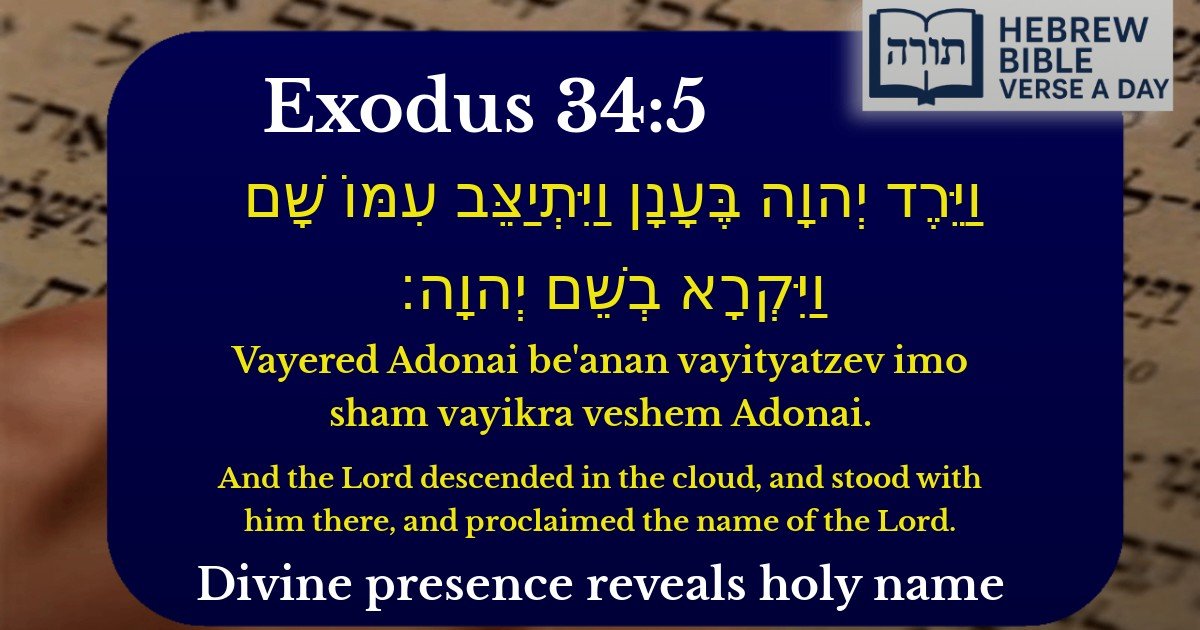

The Descent of Hashem in the Cloud
The verse states, "And the Lord descended in the cloud" (Shemot 34:5). Rashi explains that this cloud represents the Anan HaKavod (the Cloud of Glory), which accompanied Bnei Yisrael in the wilderness as a sign of Hashem's presence. The descent here signifies Hashem's closeness to Moshe, demonstrating His willingness to reveal Himself in a tangible way to facilitate Moshe's request for a deeper understanding of Divine providence.
Standing with Moshe
"And stood with him there" indicates a moment of intimate connection. The Rambam (Moreh Nevuchim 1:54) teaches that such revelations were tailored to Moshe's elevated spiritual level. Unlike other prophets who received visions in dreams or metaphors, Moshe experienced direct communication (peh el peh). The Sforno adds that this standing symbolized Hashem's patience and readiness to teach Moshe the Thirteen Attributes of Mercy.
Proclaiming the Name of Hashem
"And proclaimed the name of the Lord" refers to the revelation of the Thirteen Attributes (Shemot 34:6-7), as cited in the Talmud (Rosh Hashanah 17b). The Midrash (Shemot Rabbah 45:6) elaborates that Hashem "wrapped Himself like a shaliach tzibur"—showing Moshe how to invoke these attributes in prayer. This moment became the foundation for Jewish liturgy, particularly during the Yamim Noraim.