
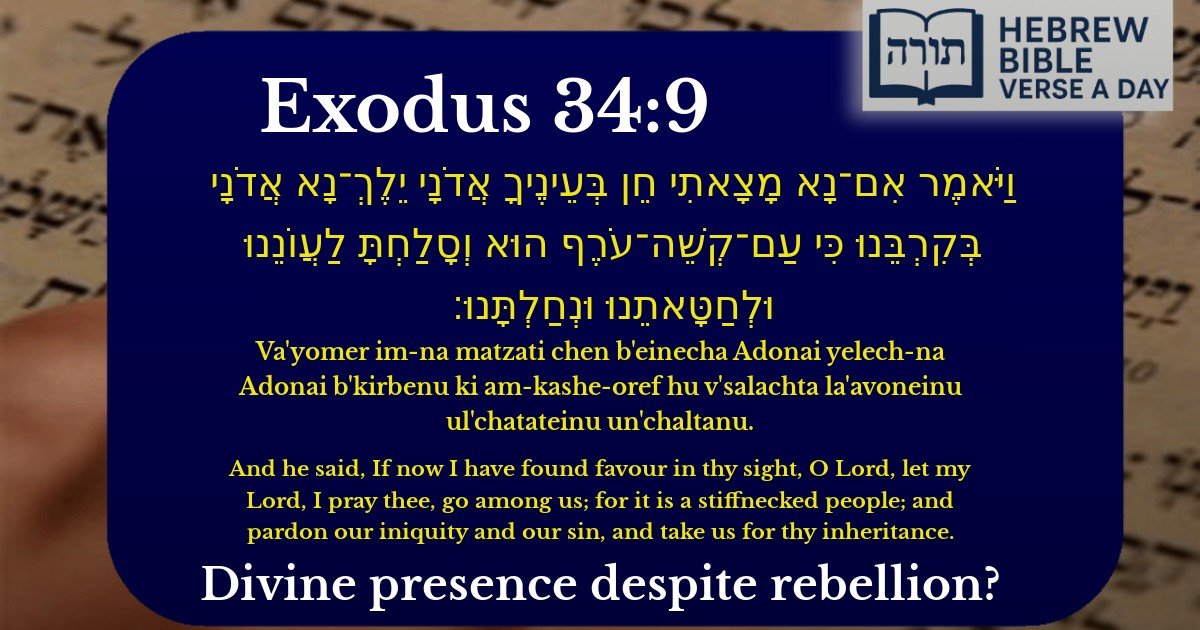

Exodus 34:9 - Divine presence despite rebellion?

Exodus 34:9 - שמות 34:9

Hebrew Text

וַיֹּאמֶר אִם־נָא מָצָאתִי חֵן בְּעֵינֶיךָ אֲדֹנָי יֵלֶךְ־נָא אֲדֹנָי בְּקִרְבֵּנוּ כִּי עַם־קְשֵׁה־עֹרֶף הוּא וְסָלַחְתָּ לַעֲוֺנֵנוּ וּלְחַטָּאתֵנוּ וּנְחַלְתָּנוּ׃

English Translation

And he said, If now I have found favour in thy sight, O Lord, let my Lord, I pray thee, go among us; for it is a stiffnecked people; and pardon our iniquity and our sin, and take us for thy inheritance.

Transliteration

Va'yomer im-na matzati chen b'einecha Adonai yelech-na Adonai b'kirbenu ki am-kashe-oref hu v'salachta la'avoneinu ul'chatateinu un'chaltanu.

Hebrew Leining Text

וַיֹּ֡אמֶר אִם־נָא֩ מָצָ֨אתִי חֵ֤ן בְּעֵינֶ֙יךָ֙ אֲדֹנָ֔י יֵֽלֶךְ־נָ֥א אֲדֹנָ֖י בְּקִרְבֵּ֑נוּ כִּ֤י עַם־קְשֵׁה־עֹ֙רֶף֙ ה֔וּא וְסָלַחְתָּ֛ לַעֲוֺנֵ֥נוּ וּלְחַטָּאתֵ֖נוּ וּנְחַלְתָּֽנוּ׃

🎵 Listen to leining

Parasha Commentary

Context of the Verse

This verse (Shemot 34:9) is part of Moshe Rabbeinu's plea to Hashem after the sin of the Golden Calf. Following the breaking of the first Luchot, Moshe ascends Har Sinai again to seek atonement for Bnei Yisrael. The verse captures Moshe's heartfelt request for Divine forgiveness and continued presence among the people.

Analysis of the Phrase "Am Kshei Oref"

Moshe describes Bnei Yisrael as "עַם־קְשֵׁה־עֹרֶף" - a stiff-necked people. Rashi explains that this metaphor indicates stubbornness, like an animal that refuses to turn its neck when guided. Remarkably, Moshe uses this characterization not as criticism but as a reason for Divine mercy - since their stubborn nature makes them prone to sin, they require extra forgiveness.

The Threefold Request

  • "יֵלֶךְ־נָא אֲדֹנָי בְּקִרְבֵּנוּ" - Ramban explains this as a plea for the Shechinah to continue dwelling among them despite their unworthiness.
  • "וְסָלַחְתָּ לַעֲוֺנֵנוּ וּלְחַטָּאתֵנוּ" - The dual terms "avon" (iniquity) and "chet" (sin) refer respectively to intentional and unintentional transgressions, as per Ibn Ezra.
  • "וּנְחַלְתָּנוּ" - Sforno interprets this as a request that Hashem should consider us His eternal inheritance, maintaining the special bond despite their failings.

Moshe's Advocacy Strategy

The Midrash Tanchuma notes that Moshe employs clever diplomacy here: By acknowledging the people's flaws rather than defending them, he makes his case more persuasive to the Divine court. This follows the Talmudic principle (Berachot 10a) that one should "cast one's burden upon Hashem" by honestly admitting shortcomings while seeking mercy.

Theological Implications

The Kli Yakar highlights how this verse establishes the paradigm of teshuva - that sincere repentance coupled with Moshe's advocacy can achieve forgiveness even for grave sins. This becomes foundational for understanding the Thirteen Attributes of Mercy revealed in the preceding verses.

📚 Talmud Citations

This verse is quoted in the Talmud.

The verse is referenced in the context of discussing God's attributes of mercy and forgiveness, illustrating how Moses interceded for the Israelites.
📖 Yoma 86b
The verse is cited in a discussion about repentance and God's willingness to forgive sins, emphasizing the power of sincere prayer.

Frequently Asked Questions

Q: What does 'stiffnecked people' mean in Exodus 34:9?
A: The term 'stiffnecked' (קְשֵׁה־עֹרֶף) refers to the Jewish people being stubborn or resistant to change, like an ox that refuses to turn its neck when guided. Rashi explains that this describes the Israelites' tendency to resist following Hashem's commandments, especially after incidents like the Golden Calf (Exodus 32:9). Despite this, Moshe (Moses) pleads for Hashem's forgiveness and continued presence among them.
Q: Why does Moshe ask Hashem to 'go among us' in Exodus 34:9?
A: Moshe is asking Hashem not to abandon the Jewish people despite their sins. The Midrash (Shemot Rabbah 45:6) teaches that Moshe understood that Hashem's presence (the Shechinah) was essential for their survival and spiritual growth. By saying 'go among us,' Moshe is pleading for divine guidance and closeness, even though the people are imperfect.
Q: What does 'take us for Your inheritance' mean in this verse?
A: When Moshe says 'take us for Your inheritance,' he is asking Hashem to maintain His special relationship with the Jewish people. The Ramban (Nachmanides) explains that this phrase emphasizes the eternal covenant between Hashem and Israel—that despite their mistakes, they remain His chosen nation. This echoes the idea that the Jewish people are a 'treasured possession' (Exodus 19:5).
Q: How does this verse teach us about repentance (teshuvah)?
A: This verse highlights the power of sincere repentance. Moshe acknowledges the people's sins but asks for forgiveness, showing that even a 'stiffnecked' people can return to Hashem. The Talmud (Yoma 86a) teaches that true repentance can transform sins into merits, and Moshe’s plea demonstrates that Hashem is always ready to forgive when we sincerely seek it.
Q: Why is this verse important in Jewish tradition?
A: This verse is central because it reaffirms the bond between Hashem and the Jewish people after the sin of the Golden Calf. The Talmud (Berachot 32a) notes that Moshe’s prayer here was so powerful that it secured Hashem’s continued presence with Israel. It also teaches the importance of humility, repentance, and trusting in Hashem’s mercy—principles that remain essential in Jewish life today.