

Join Our Newsletter To Be Informed When New Videos Are Posted
Hebrew Text
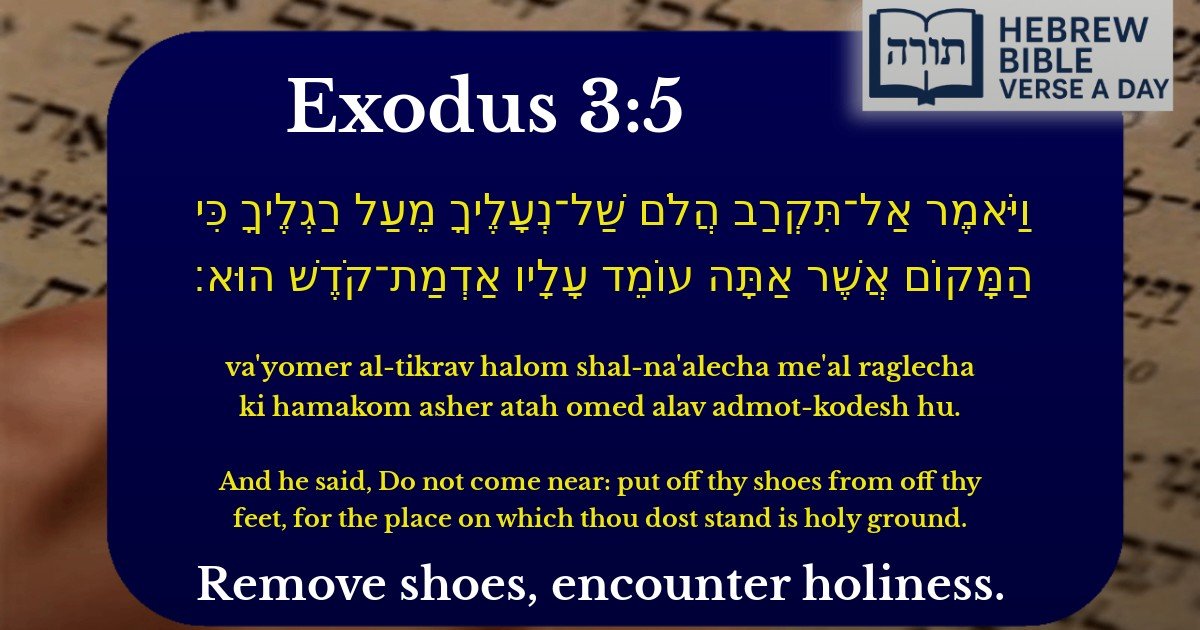
וַיֹּאמֶר אַל־תִּקְרַב הֲלֹם שַׁל־נְעָלֶיךָ מֵעַל רַגְלֶיךָ כִּי הַמָּקוֹם אֲשֶׁר אַתָּה עוֹמֵד עָלָיו אַדְמַת־קֹדֶשׁ הוּא׃
English Translation
And he said, Do not come near: put off thy shoes from off thy feet, for the place on which thou dost stand is holy ground.
Transliteration
Va'yomer al-tikrav halom shal-na'alecha me'al raglecha ki hamakom asher atah omed alav admot-kodesh hu.
Hebrew Leining Text
וַיֹּ֖אמֶר אַל־תִּקְרַ֣ב הֲלֹ֑ם שַׁל־נְעָלֶ֙יךָ֙ מֵעַ֣ל רַגְלֶ֔יךָ כִּ֣י הַמָּק֗וֹם אֲשֶׁ֤ר אַתָּה֙ עוֹמֵ֣ד עָלָ֔יו אַדְמַת־קֹ֖דֶשׁ הֽוּא׃
🎵 Listen to leining
Parasha Commentary
📚 Talmud Citations
This verse is quoted in the Talmud.
📖 Berakhot 62b
The verse is referenced in a discussion about the proper conduct in holy places, drawing a parallel between the sanctity of the ground where Moses stood and the sanctity of a synagogue.
📖 Shabbat 30a
The verse is mentioned in the context of discussing the reverence one must show in holy places, using Moses' experience as an example.
📖 Megillah 29a
The verse is cited to illustrate the concept of holiness in specific locations, comparing the sanctity of the ground where Moses stood to the sanctity of synagogues and study halls.
The Sanctity of the Location
The verse (Shemot 3:5) describes Hashem instructing Moshe to remove his shoes because he is standing on holy ground. Rashi explains that the holiness of the place stems from the Divine Presence (Shechinah) being revealed there. The Midrash (Shemot Rabbah 2:6) further elaborates that this was the same location where the Akeidah (binding of Yitzchak) took place, making it inherently sacred.
Removing Shoes as a Sign of Reverence
Rambam (Hilchot Beit HaBechirah 7:2) notes that removing shoes is a sign of respect and humility when standing in a holy place, akin to the Kohanim serving barefoot in the Beit HaMikdash. The Talmud (Berachot 62b) derives from this verse that one should not enter a synagogue or study hall wearing shoes, as these places are also sanctified.
The Concept of "Admat Kodesh" (Holy Ground)
The term "Admat Kodesh" is interpreted by the Kli Yakar as indicating that the very earth itself became sanctified due to the revelation of the Shechinah. The Or HaChaim adds that this holiness was not permanent but was a temporary elevation for the duration of the Divine communication.