

Join Our Newsletter To Be Informed When New Videos Are Posted
Hebrew Text
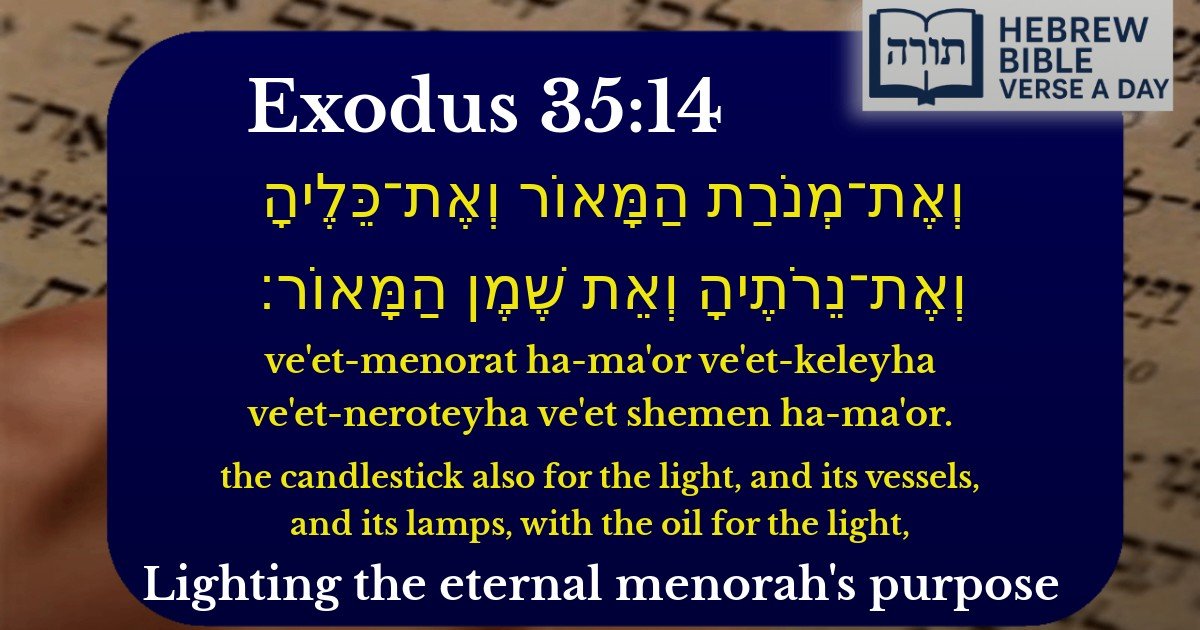
וְאֶת־מְנֹרַת הַמָּאוֹר וְאֶת־כֵּלֶיהָ וְאֶת־נֵרֹתֶיהָ וְאֵת שֶׁמֶן הַמָּאוֹר׃
English Translation
the candlestick also for the light, and its vessels, and its lamps, with the oil for the light,
Transliteration
Ve'et-menorat ha-ma'or ve'et-keleyha ve'et-neroteyha ve'et shemen ha-ma'or.
Hebrew Leining Text
וְאֶת־מְנֹרַ֧ת הַמָּא֛וֹר וְאֶת־כֵּלֶ֖יהָ וְאֶת־נֵרֹתֶ֑יהָ וְאֵ֖ת שֶׁ֥מֶן הַמָּאֽוֹר׃
🎵 Listen to leining
Parasha Commentary
📚 Talmud Citations
This verse is quoted in the Talmud.
📖 Menachot 88b
The verse is referenced in a discussion about the components and maintenance of the menorah in the Temple, particularly focusing on the vessels and oil for the light.
📖 Shabbat 22b
The verse is cited in a discussion about the proper materials and methods for lighting the menorah, emphasizing the importance of using pure olive oil as specified in the verse.
The Menorah and Its Components
The verse describes the Menorah (מְנֹרַת הַמָּאוֹר) and its accompanying vessels, lamps, and oil. According to Rashi (Shemot 25:37), the Menorah was designed to illuminate the Mishkan (Tabernacle), symbolizing the Divine presence and the spiritual light of Torah. The Rambam (Hilchot Beit HaBechirah 3:12) emphasizes that the Menorah's light was not merely functional but represented the eternal flame of wisdom and mitzvot.
The Significance of the Vessels and Lamps
The "כֵּלֶיהָ" (its vessels) refer to the tongs and snuffers used to maintain the Menorah, as detailed in Shemot 25:38. The Talmud (Menachot 28b) explains that these vessels were essential for the proper functioning of the Menorah, teaching that even the seemingly minor details of avodah (service) are crucial. The "נֵרֹתֶיהָ" (its lamps) represent the seven branches of the Menorah, which, according to the Midrash (Bamidbar Rabbah 15:7), correspond to the seven days of creation and the seven wisdoms of the world.
The Oil for the Light
The "שֶׁמֶן הַמָּאוֹר" (oil for the light) was specially prepared from pure, beaten olives (Shemot 27:20). The Talmud (Menachot 86a) states that this oil had to meet the highest standards of purity, symbolizing the clarity and sincerity required in serving Hashem. The Ramban (Shemot 25:6) adds that the oil represents the Divine wisdom that illuminates the soul, akin to the light of the Menorah.
Spiritual Lessons