

Join Our Newsletter To Be Informed When New Videos Are Posted
Hebrew Text
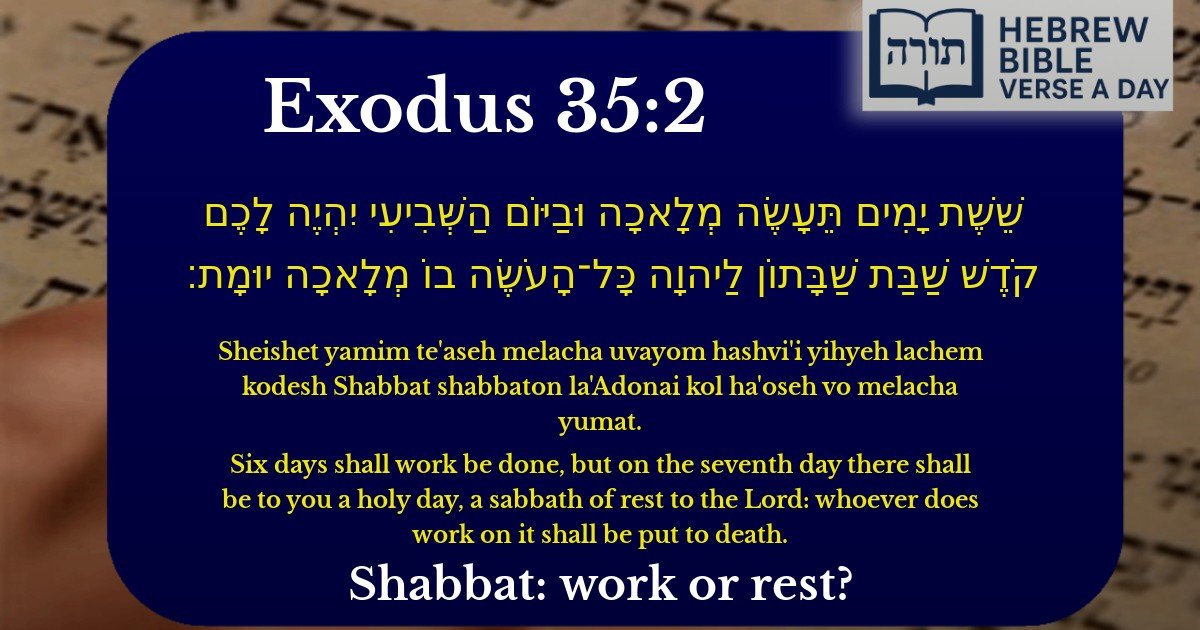
שֵׁשֶׁת יָמִים תֵּעָשֶׂה מְלָאכָה וּבַיּוֹם הַשְּׁבִיעִי יִהְיֶה לָכֶם קֹדֶשׁ שַׁבַּת שַׁבָּתוֹן לַיהוָה כָּל־הָעֹשֶׂה בוֹ מְלָאכָה יוּמָת׃
English Translation
Six days shall work be done, but on the seventh day there shall be to you a holy day, a sabbath of rest to the Lord: whoever does work on it shall be put to death.
Transliteration
Sheishet yamim te'aseh melacha uvayom hashvi'i yihyeh lachem kodesh Shabbat shabbaton la'Adonai kol ha'oseh vo melacha yumat.
Hebrew Leining Text
שֵׁ֣שֶׁת יָמִים֮ תֵּעָשֶׂ֣ה מְלָאכָה֒ וּבַיּ֣וֹם הַשְּׁבִיעִ֗י יִהְיֶ֨ה לָכֶ֥ם קֹ֛דֶשׁ שַׁבַּ֥ת שַׁבָּת֖וֹן לַיהֹוָ֑ה כׇּל־הָעֹשֶׂ֥ה ב֛וֹ מְלָאכָ֖ה יוּמָֽת׃
🎵 Listen to leining
Parasha Commentary
📚 Talmud Citations
This verse is quoted in the Talmud.
📖 Shabbat 70a
The verse is discussed in the context of defining what constitutes prohibited labor on the Sabbath.
📖 Sanhedrin 56b
The verse is referenced in the discussion of the Noahide laws and the prohibition of labor on the Sabbath.
📖 Mekhilta d'Rabbi Yishmael Ki Tisa
The verse is cited in the midrashic discussion on the observance and sanctity of the Sabbath.
The Commandment of Shabbat
The verse (Shemot 35:2) establishes the foundational mitzvah of Shabbat, emphasizing its sanctity and the severe prohibition against performing melachah (work) on the seventh day. The Torah designates Shabbat as a day of rest and holiness, dedicated to Hashem.
Rashi's Explanation
Rashi comments on the phrase "שֵׁשֶׁת יָמִים תֵּעָשֶׂה מְלָאכָה" ("Six days shall work be done") by noting that the passive form ("תֵּעָשֶׂה") implies that work is permitted during the six days, but on Shabbat, it is as if the work is done on its own—meaning one must refrain from active labor. This teaches that Shabbat is a day when we acknowledge Hashem as the true provider, and our abstention from work reflects this belief.
The Severity of Violating Shabbat
The verse concludes with "כָּל־הָעֹשֶׂה בוֹ מְלָאכָה יוּמָת" ("whoever does work on it shall be put to death"). The Rambam (Hilchot Shabbat 1:1) explains that this refers to the capital punishment of skilah (stoning) for intentional desecration of Shabbat. The Talmud (Sanhedrin 73a) clarifies that this applies only to one who knowingly and willfully violates Shabbat after proper warning.
Shabbat as a "Shabbat Shabbaton"
The term "שַׁבַּת שַׁבָּתוֹן" ("a sabbath of rest") is interpreted by the Mechilta as indicating a complete cessation from labor, beyond the ordinary prohibitions. The Sforno adds that this phrase underscores Shabbat's unique status as a day of spiritual elevation, where physical rest facilitates deeper connection with Hashem.
Melachah Defined
The Mishnah (Shabbat 7:2) enumerates 39 categories of prohibited labor (avot melachah), derived from the types of work performed in constructing the Mishkan. The Gemara (Shabbat 49b) explains that these activities are forbidden because they represent creative human effort, and Shabbat is a day to refrain from such exertion in emulation of Hashem's rest on the seventh day of Creation.
Spiritual Purpose of Shabbat
The Midrash (Bereishit Rabbah 11:2) teaches that Shabbat is a matanah tovah (a precious gift) from Hashem to the Jewish people. By abstaining from melachah, we testify to Hashem's creation of the world and affirm our role as His chosen nation. The Kli Yakar emphasizes that Shabbat is not merely a day of physical rest but an opportunity for spiritual renewal and Torah study.