

Join Our Newsletter To Be Informed When New Videos Are Posted
Hebrew Text
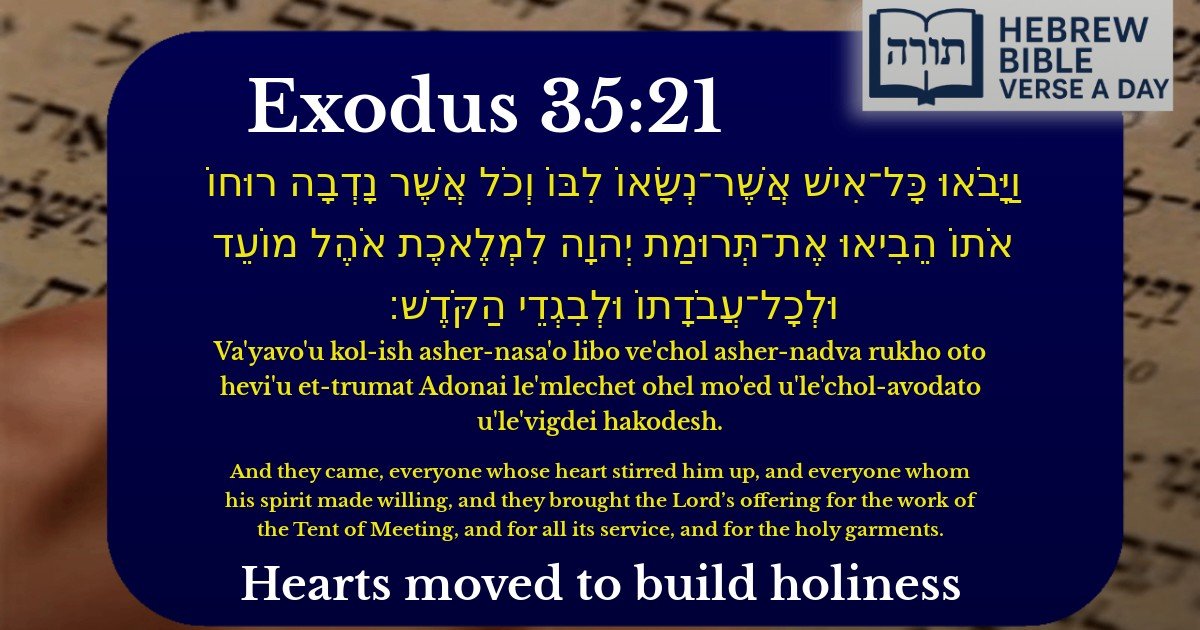
וַיָּבֹאוּ כָּל־אִישׁ אֲשֶׁר־נְשָׂאוֹ לִבּוֹ וְכֹל אֲשֶׁר נָדְבָה רוּחוֹ אֹתוֹ הֵבִיאוּ אֶת־תְּרוּמַת יְהוָה לִמְלֶאכֶת אֹהֶל מוֹעֵד וּלְכָל־עֲבֹדָתוֹ וּלְבִגְדֵי הַקֹּדֶשׁ׃
English Translation
And they came, everyone whose heart stirred him up, and everyone whom his spirit made willing, and they brought the Lord’s offering for the work of the Tent of Meeting, and for all its service, and for the holy garments.
Transliteration
Va'yavo'u kol-ish asher-nasa'o libo ve'chol asher-nadva rukho oto hevi'u et-trumat Adonai le'mlechet ohel mo'ed u'le'chol-avodato u'le'vigdei hakodesh.
Hebrew Leining Text
וַיָּבֹ֕אוּ כׇּל־אִ֖ישׁ אֲשֶׁר־נְשָׂא֣וֹ לִבּ֑וֹ וְכֹ֡ל אֲשֶׁר֩ נָדְבָ֨ה רוּח֜וֹ אֹת֗וֹ הֵ֠בִ֠יאוּ אֶת־תְּרוּמַ֨ת יְהֹוָ֜ה לִמְלֶ֨אכֶת אֹ֤הֶל מוֹעֵד֙ וּלְכׇל־עֲבֹ֣דָת֔וֹ וּלְבִגְדֵ֖י הַקֹּֽדֶשׁ׃
🎵 Listen to leining
Parasha Commentary
📚 Talmud Citations
This verse is quoted in the Talmud.
📖 Yoma 72a
The verse is referenced in the context of discussing the voluntary contributions made by the Israelites for the construction of the Tabernacle, emphasizing the importance of willingness and heartfelt participation in sacred work.
📖 Arachin 11a
The verse is cited to illustrate the principle of voluntary offerings and the spirit of generosity among the Israelites, particularly in relation to contributions for the Tabernacle and its services.
The Voluntary Nature of the Contributions
The verse emphasizes that the donations for the Mishkan (Tabernacle) were given willingly—"everyone whose heart stirred him up" and "everyone whom his spirit made willing." Rashi (Exodus 35:21) explains that this highlights the importance of nedivut lev (generosity of heart) in serving Hashem. Unlike obligatory commandments, the contributions to the Mishkan were entirely voluntary, demonstrating the people's love and devotion to the Divine Presence.
The Threefold Purpose of the Offerings
The verse lists three purposes for the contributions:
- For the work of the Tent of Meeting: This refers to the construction of the Mishkan itself, including its beams, coverings, and structure (Ramban, Exodus 35:21).
- For all its service: This includes the vessels and utensils used in the Mishkan, such as the Ark, Menorah, and Altar (Ibn Ezra).
- For the holy garments: These were the priestly vestments worn by the Kohanim during their service (Sforno).
The Midrash (Tanchuma, Terumah 5) teaches that each contribution corresponded to a spiritual need—just as the Mishkan housed the Shechinah, the service maintained the connection between Israel and Hashem, and the garments elevated the Kohanim to their sacred role.The Spiritual Significance of Willingness
The Talmud (Arachin 11a) derives from this verse that avodat Hashem (service of G-d) must come from inner motivation, not coercion. The Rambam (Hilchot Matnot Aniyim 8:10) expands on this principle, stating that acts of charity and kindness are most meritorious when performed with joy and a generous spirit. The phrase "whose heart stirred him up" suggests an awakening of spiritual passion, as the Ohr HaChaim explains—the people were moved by a deep desire to participate in the sanctity of the Mishkan.
The Unity of the People
The phrase "they came, everyone" underscores the collective participation of the nation. The Kli Yakar notes that while the contributions were voluntary, the entire community united in this sacred endeavor. This mirrors the unity at Har Sinai and foreshadows the ideal of klal Yisrael working together for a higher purpose. The Midrash (Shemot Rabbah 33:8) adds that even those who could not contribute materially assisted through encouragement and labor, showing that every Jew had a role in building the Mishkan.