

Join Our Newsletter To Be Informed When New Videos Are Posted
Hebrew Text
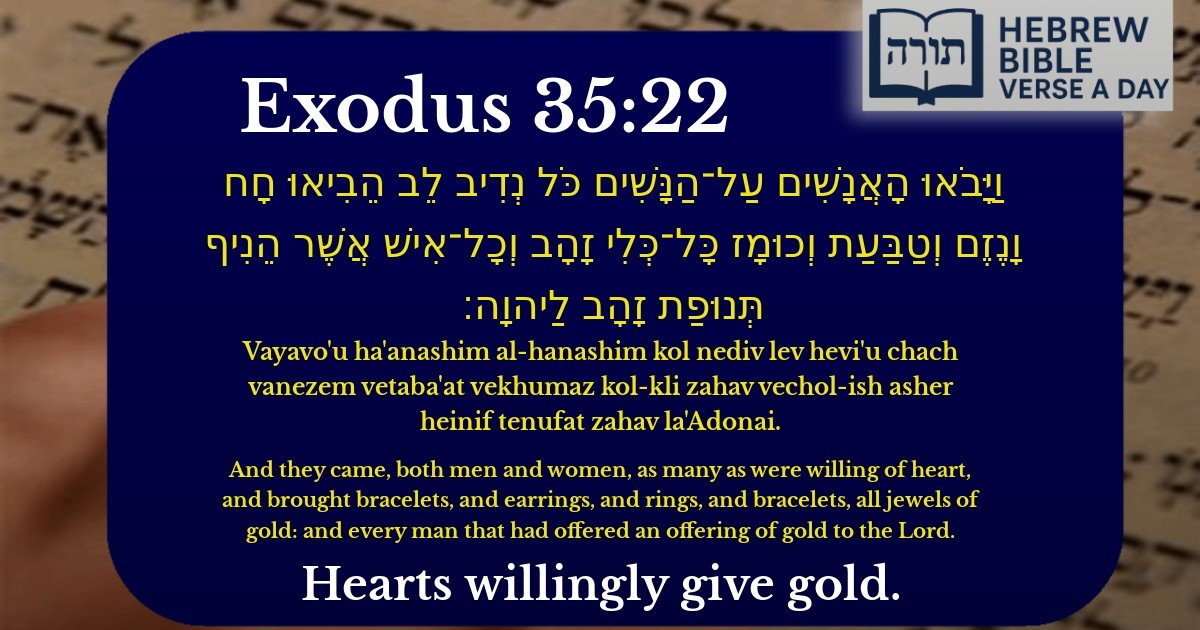
וַיָּבֹאוּ הָאֲנָשִׁים עַל־הַנָּשִׁים כֹּל נְדִיב לֵב הֵבִיאוּ חָח וָנֶזֶם וְטַבַּעַת וְכוּמָז כָּל־כְּלִי זָהָב וְכָל־אִישׁ אֲשֶׁר הֵנִיף תְּנוּפַת זָהָב לַיהוָה׃
English Translation
And they came, both men and women, as many as were willing of heart, and brought bracelets, and earrings, and rings, and bracelets, all jewels of gold: and every man that had offered an offering of gold to the Lord.
Transliteration
Vayavo'u ha'anashim al-hanashim kol nediv lev hevi'u chach vanezem vetaba'at vekhumaz kol-kli zahav vechol-ish asher heinif tenufat zahav la'Adonai.
Hebrew Leining Text
וַיָּבֹ֥אוּ הָאֲנָשִׁ֖ים עַל־הַנָּשִׁ֑ים כֹּ֣ל&thinsp
🎵 Listen to leining
Parasha Commentary
📚 Talmud Citations
This verse is not quoted in the Talmud.
The Generosity of Willing Hearts
The verse (Shemot 35:22) describes the voluntary contributions of the Israelites toward the construction of the Mishkan (Tabernacle). Rashi explains that the phrase "כֹּל נְדִיב לֵב" ("as many as were willing of heart") emphasizes that these donations were given with complete sincerity and enthusiasm, not out of obligation. The Midrash Tanchuma (Pekudei 4) further notes that this willingness reflected their desire to atone for the sin of the Golden Calf, demonstrating repentance through acts of generosity.
The Nature of the Donations
The verse lists specific items brought by the people: חָח וָנֶזֶם וְטַבַּעַת וְכוּמָז ("bracelets, earrings, rings, and bracelets"). The Talmud (Shabbat 64a) discusses the meaning of כּוּמָז (kumaz), suggesting it refers to a type of golden ornament, possibly a belt or girdle. Ramban (Nachmanides) adds that these items were personal adornments, indicating that the people gave from their most cherished possessions, not merely surplus wealth.
The Significance of the Gold Offering
The verse concludes with "וְכָל־אִישׁ אֲשֶׁר הֵנִיף תְּנוּפַת זָהָב לַיהוָה" ("and every man that had offered an offering of gold to the Lord"). The term תְּנוּפָה (tenufah, "wave offering") is significant. Ibn Ezra explains that this refers to a ceremonial lifting of the offering, symbolizing its dedication to Hashem. The Kli Yakar (R' Shlomo Ephraim of Luntschitz) teaches that this act demonstrated the people's recognition that all wealth ultimately belongs to G-d, and they were merely returning a portion of what He had given them.
Spiritual Lessons from the Verse