Frequently Asked Questions
Q: What is the significance of the spices, oil, and incense mentioned in Exodus 35:28?
A: In Exodus 35:28, the spices, oil, and incense were essential materials used in the Mishkan (Tabernacle) for sacred purposes. The oil was used to light the Menorah (Exodus 27:20), the anointing oil was for consecrating the vessels and Kohanim (priests) (Exodus 30:22-33), and the incense was burned on the Golden Altar (Exodus 30:34-38). Rashi explains that these items symbolize holiness and devotion in serving Hashem.
Q: Why were these specific items (spices, oil, incense) chosen for the Mishkan?
A: These items were chosen because they represent different aspects of Avodah (service to Hashem). The oil for light (Menorah) symbolizes wisdom (Talmud, Shabbat 22b), the anointing oil represents sanctification (Rambam, Hilchot Klei HaMikdash 1:7), and the incense (Ketoret) signifies prayer and atonement (Talmud, Zevachim 88b). The Midrash (Shemot Rabbah 35:1) teaches that these materials elevate the physical into the realm of the sacred.
Q: How does the anointing oil mentioned in this verse apply to Judaism today?
A: Although the original anointing oil (Shemen HaMishchah) was used only in biblical times for consecrating the Mishkan, its vessels, and the Kohanim, its spiritual lessons remain relevant. Rambam (Hilchot Klei HaMikdash 1:7) states that this oil was uniquely holy and could not be replicated. Today, we learn from it the importance of dedicating objects and people (like Torah scholars) for sacred purposes with reverence.
Q: What can we learn from the incense (Ketoret) mentioned in Exodus 35:28?
A: The Ketoret (incense) teaches the power of unity and prayer. The Talmud (Keritot 6b) says it was made from 11 spices, symbolizing different types of people coming together in service to Hashem. Additionally, the Ketoret brought atonement (Talmud, Yoma 44a) and was offered daily, reminding us of the importance of consistent devotion. The Midrash (Tanchuma, Tetzaveh 15) also highlights that its sweet fragrance represents mitzvot elevating our lives.

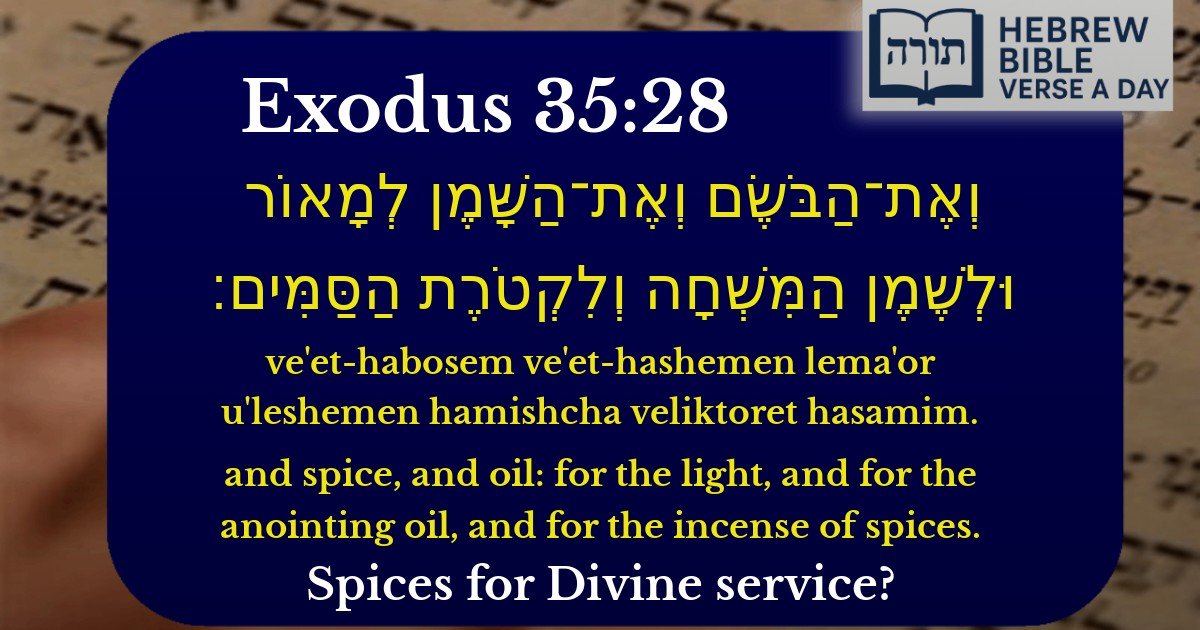

Explanation of the Verse
The verse (Exodus 35:28) lists materials donated for the Mishkan (Tabernacle), specifically mentioning spice (בֹּשֶׂם), oil (שֶׁמֶן), light (מָאוֹר), anointing oil (שֶׁמֶן הַמִּשְׁחָה), and incense (קְטֹרֶת הַסַּמִּים). These items were essential for the sacred service in the Mishkan.
Rashi's Commentary
Rashi (Exodus 35:28) explains that "spice" (בֹּשֶׂם) refers to the ingredients used in the incense (קְטֹרֶת), while "oil" (שֶׁמֶן) was used for both the Menorah (מָאוֹר) and the anointing oil (שֶׁמֶן הַמִּשְׁחָה). He emphasizes that these materials were voluntarily donated by the Israelites with pure intentions.
Rambam's Perspective
In Hilchot Klei HaMikdash (Laws of Temple Vessels), Rambam (Maimonides) elaborates on the significance of these items:
Midrashic Insights
The Midrash Tanchuma (Terumah 5) teaches that these materials represent different aspects of divine service:
Halachic Significance
The Shulchan Aruch (Orach Chaim 154) derives from this verse that just as the Mishkan required pure materials, so too must one ensure that items used for mitzvot—such as Torah scrolls, tefillin, and mezuzot—are of the highest quality.