

Join Our Newsletter To Be Informed When New Videos Are Posted
Hebrew Text
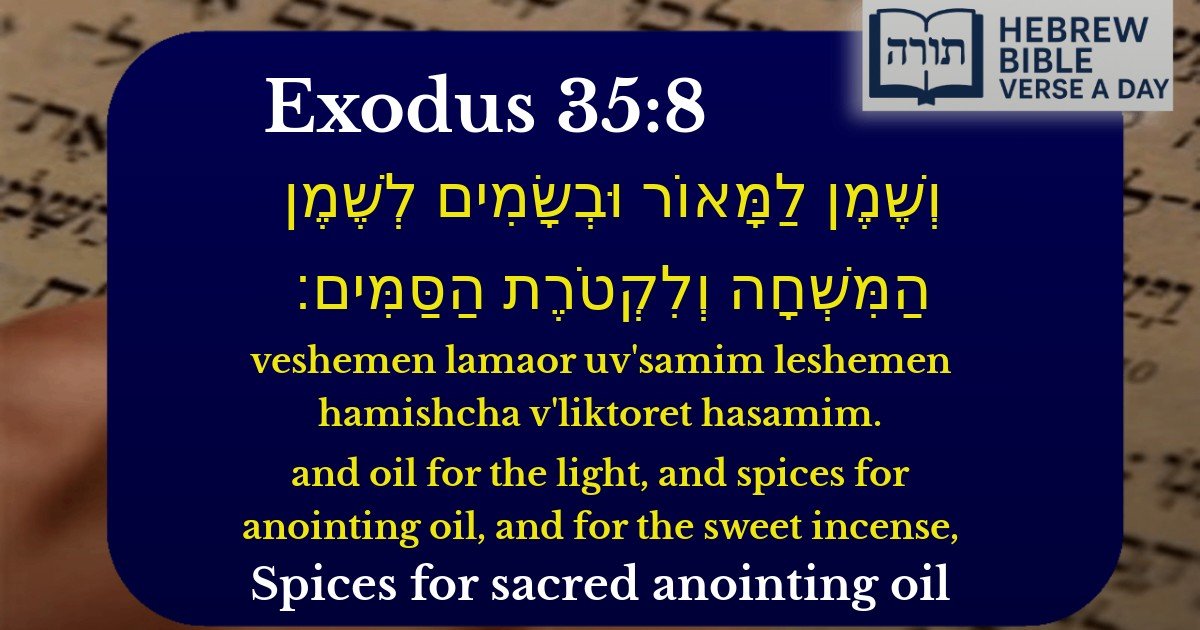
וְשֶׁמֶן לַמָּאוֹר וּבְשָׂמִים לְשֶׁמֶן הַמִּשְׁחָה וְלִקְטֹרֶת הַסַּמִּים׃
English Translation
and oil for the light, and spices for anointing oil, and for the sweet incense,
Transliteration
Veshemen lamaor uv'samim leshemen hamishcha v'liktoret hasamim.
Hebrew Leining Text
וְשֶׁ֖מֶן לַמָּא֑וֹר וּבְשָׂמִים֙ לְשֶׁ֣מֶן הַמִּשְׁחָ֔ה וְלִקְטֹ֖רֶת הַסַּמִּֽים׃
🎵 Listen to leining
Parasha Commentary
📚 Talmud Citations
This verse is quoted in the Talmud.
📖 Yoma 45a
The verse is referenced in the discussion about the preparation of the anointing oil and incense for the Temple service.
📖 Keritot 5a
Mentioned in the context of the ingredients used for the anointing oil and incense, highlighting their sacred use.
Overview of the Verse
The verse (Shemot 35:28) lists three essential materials donated for the Mishkan (Tabernacle): oil for the Menorah, spices for the anointing oil, and spices for the Ketoret (incense). Each of these items held deep spiritual significance in the service of the Mishkan.
Oil for the Light (וְשֶׁמֶן לַמָּאוֹר)
Rashi (Shemot 35:28) explains that this refers to pure olive oil, specifically for the Menorah in the Mishkan. The Menorah symbolizes divine wisdom and the light of Torah (see Ramban on Shemot 25:31). The Talmud (Menachot 86a) elaborates that only the highest quality oil, pressed from olives and not ground, was used for the Menorah, representing the purity required in divine service.
Spices for the Anointing Oil (וּבְשָׂמִים לְשֶׁמֶן הַמִּשְׁחָה)
The anointing oil (Shemen HaMishcha) was used to sanctify the vessels of the Mishkan and to anoint the Kohanim and kings. Rambam (Hilchot Klei HaMikdash 1:3) details the precise mixture of spices, including myrrh, cinnamon, and cassia, as listed in Shemot 30:23-24. The Midrash (Shemot Rabbah 35:5) teaches that the anointing oil represents kedusha (holiness) and the divine selection of leaders and sacred objects.
Spices for the Ketoret (וְלִקְטֹרֶת הַסַּמִּים)
The Ketoret (incense) was burned twice daily on the golden altar. The Talmud (Keritot 6a) lists eleven spices used in its preparation, emphasizing the importance of exact measurements. The Zohar (Vayikra 16a) connects the Ketoret to atonement and divine favor, as its smoke ascended straight upward, symbolizing the prayers of Israel rising to heaven.
Spiritual Lessons