

Join Our Newsletter To Be Informed When New Videos Are Posted
Hebrew Text
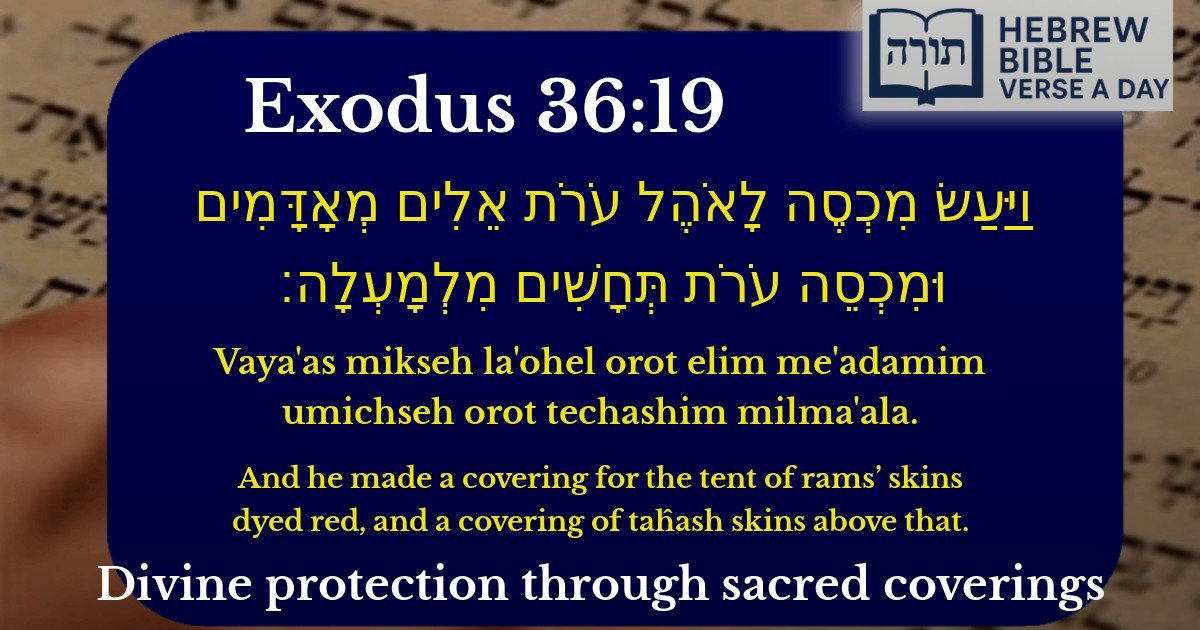
וַיַּעַשׂ מִכְסֶה לָאֹהֶל עֹרֹת אֵלִים מְאָדָּמִים וּמִכְסֵה עֹרֹת תְּחָשִׁים מִלְמָעְלָה׃
English Translation
And he made a covering for the tent of rams’ skins dyed red, and a covering of taĥash skins above that.
Transliteration
Vaya'as mikseh la'ohel orot elim me'adamim umichseh orot techashim milma'ala.
Hebrew Leining Text
וַיַּ֤עַשׂ מִכְסֶה֙ לָאֹ֔הֶל עֹרֹ֥ת אֵילִ֖ם מְאׇדָּמִ֑ים וּמִכְסֵ֛ה עֹרֹ֥ת תְּחָשִׁ֖ים מִלְמָֽעְלָה׃ {ס}
🎵 Listen to leining
Parasha Commentary
📚 Talmud Citations
This verse is quoted in the Talmud.
📖 Shabbat 28a
The verse is referenced in a discussion about the materials used for the Tabernacle's covering, particularly the nature of the 'taĥash' skins.
📖 Yoma 72a
The verse is cited in a discussion about the different coverings of the Tabernacle and their symbolic significance.
The Coverings of the Mishkan
The verse (Shemot 36:19) describes two coverings for the Mishkan: the lower covering made of dyed ram skins and the upper covering made of tachash skins. These materials served both practical and symbolic purposes in the construction of the Tabernacle.
The Lower Covering: Ram Skins Dyed Red
Rashi explains that the ram skins were dyed red to beautify the Mishkan, as the red color enhanced their appearance. The Ramban adds that these skins came from the rams sacrificed during the consecration of the Kohanim (Shemot 29), symbolizing atonement and dedication to divine service. The red dye may also allude to the concept of mesirut nefesh (self-sacrifice), as red is associated with blood and life.
The Upper Covering: Tachash Skins
The identity of the tachash is debated among commentators. According to the Talmud (Shabbat 28a), it was a rare, multicolored animal that appeared specifically for the Mishkan’s construction and then vanished. The Midrash (Bamidbar Rabbah 12:4) describes its skin as radiant, symbolizing the divine presence that rested upon the Mishkan. The Rambam (Hilchot Kelei HaMikdash 8:11) notes that its uniqueness emphasized the sanctity of the Mishkan.
Symbolic Layers of Protection