

Join Our Newsletter To Be Informed When New Videos Are Posted
Hebrew Text
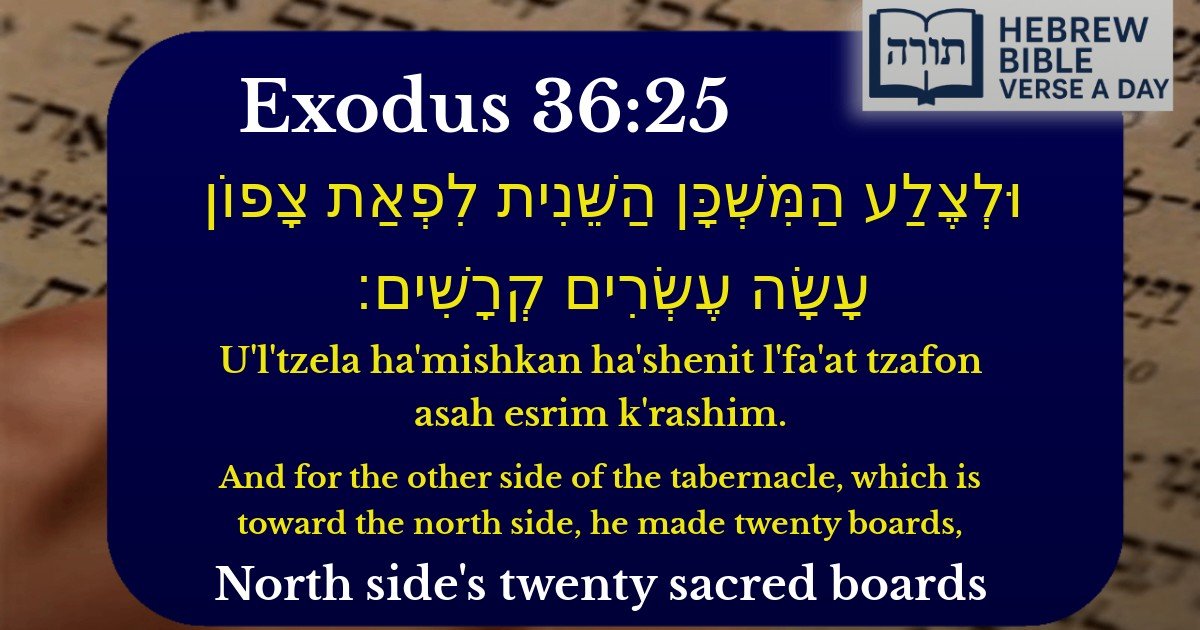
וּלְצֶלַע הַמִּשְׁכָּן הַשֵּׁנִית לִפְאַת צָפוֹן עָשָׂה עֶשְׂרִים קְרָשִׁים׃
English Translation
And for the other side of the tabernacle, which is toward the north side, he made twenty boards,
Transliteration
U'l'tzela ha'mishkan ha'shenit l'fa'at tzafon asah esrim k'rashim.
Hebrew Leining Text
וּלְצֶ֧לַע הַמִּשְׁכָּ֛ן הַשֵּׁנִ֖ית לִפְאַ֣ת צָפ֑וֹן עָשָׂ֖ה עֶשְׂרִ֥ים קְרָשִֽׁים׃
🎵 Listen to leining
Parasha Commentary
📚 Talmud Citations
This verse is not quoted in the Talmud.
Structural Significance of the North Side
The verse (Exodus 36:25) describes the construction of the Mishkan's northern wall with twenty boards (kerashim). Rashi (Exodus 26:20) explains that the north side, like the south, required twenty boards, each measuring ten cubits in height and one and a half cubits in width. This symmetry reflects the precision demanded in the Mishkan's construction, as it symbolizes the divine order and balance in Hashem's sanctuary.
Symbolism of the North in Jewish Thought
The Midrash (Bamidbar Rabbah 2:10) associates the north side with material wealth and prosperity, as it was the location of the Shulchan (Table of Showbread), which held the twelve loaves representing sustenance. The Vilna Gaon notes that the north's darker, colder nature (as opposed to the south's light) alludes to the concealment of divine providence in worldly matters, requiring faith even when blessings are not immediately apparent.
Halachic Insights from the Kerashim
Rambam (Hilchot Beit HaBechirah 1:15) derives architectural principles from the Mishkan's construction, emphasizing that sacred structures must be built with exactitude. The twenty boards on the north side teach:
Kabbalistic Dimensions
The Zohar (Terumah 2:126a) interprets the north side as representing the sefirah of Gevurah (strength/restraint), balancing the south's Chesed (kindness). The twenty boards thus embody the divine attribute of judgment tempered by mercy, as the Mishkan unified opposing forces to create a dwelling place for the Shechinah.