

Join Our Newsletter To Be Informed When New Videos Are Posted
Hebrew Text
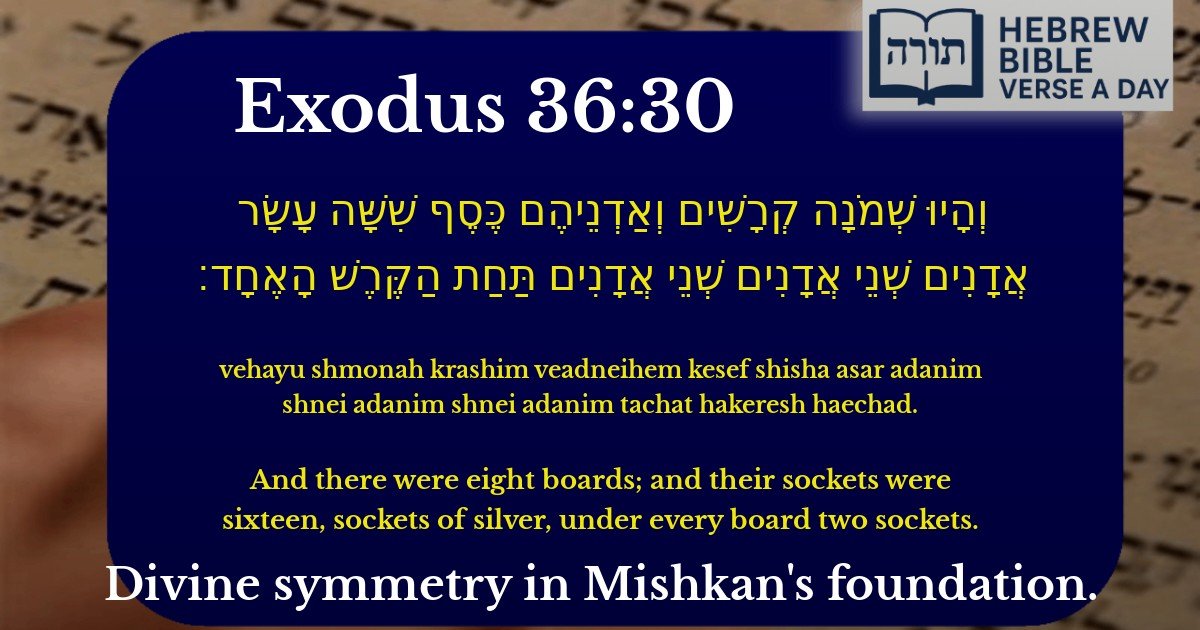
וְהָיוּ שְׁמֹנָה קְרָשִׁים וְאַדְנֵיהֶם כֶּסֶף שִׁשָּׁה עָשָׂר אֲדָנִים שְׁנֵי אֲדָנִים שְׁנֵי אֲדָנִים תַּחַת הַקֶּרֶשׁ הָאֶחָד׃
English Translation
And there were eight boards; and their sockets were sixteen, sockets of silver, under every board two sockets.
Transliteration
Vehayu shmonah krashim veadneihem kesef shisha asar adanim shnei adanim shnei adanim tachat hakeresh haechad.
Hebrew Leining Text
וְהָיוּ֙ שְׁמֹנָ֣ה קְרָשִׁ֔ים וְאַדְנֵיהֶ֣ם כֶּ֔סֶף שִׁשָּׁ֥ה עָשָׂ֖ר אֲדָנִ֑ים שְׁנֵ֤י אֲדָנִים֙ שְׁנֵ֣י אֲדָנִ֔ים תַּ֖חַת הַקֶּ֥רֶשׁ הָאֶחָֽד׃
🎵 Listen to leining
Parasha Commentary
📚 Talmud Citations
This verse is not quoted in the Talmud.
The Structure of the Mishkan's Walls
The verse (Shemot 26:25) describes the construction of the western wall of the Mishkan, consisting of eight boards (kerashim) with sixteen silver sockets (adanim), two sockets per board. Rashi explains that this arrangement ensured stability, as each board was firmly anchored by two sockets to prevent shifting. The number eight is significant—Rabbeinu Bachya notes that it symbolizes transcendence beyond nature (represented by the number seven), reflecting the Mishkan's role as a dwelling place for the Divine Presence beyond natural limitations.
The Symbolism of Silver Sockets
The sockets were made of silver (kesef), which the Midrash (Tanchuma, Terumah 11) connects to the merit of charity (tzedakah), as kesef also implies yearning (from the root kissuf). The Kli Yakar elaborates that the silver sockets represent the foundation of the Jewish people's devotion to Hashem, just as charity sustains the world. The doubling of sockets (two per board) alludes to the dual foundations of Torah and mitzvot, as taught in Pirkei Avot (1:2).
Numerical Precision in the Mishkan
The Talmud (Shabbat 98b) emphasizes that every detail of the Mishkan's construction was exact, reflecting divine wisdom. The sixteen sockets correspond to the sixteen adanim mentioned earlier (Shemot 26:19-21) for the southern and northern walls, totaling 48 sockets for all walls—a number the Zohar links to the 48 ways through which Torah is acquired (Avot 6:6). This precision teaches that holiness requires meticulous attention to detail in serving Hashem.
Practical Lessons from the Kerashim