Frequently Asked Questions
Q: What materials were used to make the curtains of the Mishkan (Tabernacle)?
A: The curtains of the Mishkan were made from four materials: fine twined linen (שֵׁשׁ מָשְׁזָר), blue wool (תְּכֵלֶת), purple wool (אַרְגָּמָן), and scarlet wool (תּוֹלַעַת שָׁנִי). These materials were woven together with artistic designs of keruvim (cherubim), as described in Exodus 36:8. Rashi explains that these colors and materials symbolized honor and beauty for the Mishkan, the dwelling place of the Divine Presence.
Q: Why were the keruvim (cherubim) included in the Mishkan's curtains?
A: The keruvim woven into the Mishkan's curtains symbolized the heavenly beings that serve Hashem, as mentioned in the Talmud (Chagigah 13b). Their presence on the curtains was a reminder of the spiritual connection between the Jewish people and the Divine, even in the physical structure of the Mishkan. The Rambam (Hilchos Beis HaBechirah 1:4) teaches that such artistic details were meant to inspire awe and reverence for the sacred space.
Q: Who were the 'wisehearted men' who made the Mishkan?
A: The 'wisehearted men' (חֲכַם־לֵב) were skilled artisans endowed by Hashem with wisdom and talent to construct the Mishkan (Exodus 36:8). The Midrash (Shemos Rabbah 48:4) explains that these individuals were not just naturally talented but were Divinely inspired to understand the intricate details of the Mishkan's construction. Their work was an act of devotion, combining craftsmanship with spiritual intent.
Q: What is the significance of the Mishkan having ten curtains?
A: The ten curtains of the Mishkan (Exodus 36:8) correspond to the Ten Commandments, as taught in the Midrash (Bamidbar Rabbah 12:13). Just as the Ten Commandments are the foundation of Torah, the ten curtains formed the foundational covering of the Mishkan. Additionally, the number ten represents completeness in Jewish tradition, as seen in the Ten Utterances of Creation (Avos 5:1).
Q: How does the construction of the Mishkan apply to us today?
A: The construction of the Mishkan teaches us the importance of dedicating our skills and resources to holy purposes. Just as the wisehearted men used their talents to build a dwelling place for the Divine Presence (Exodus 36:8), we are encouraged to use our abilities to serve Hashem and contribute to the community. The Talmud (Berachos 8a) compares the study of Torah to the Mishkan, emphasizing that every Jew can create a 'miniature sanctuary' through Torah and mitzvos.

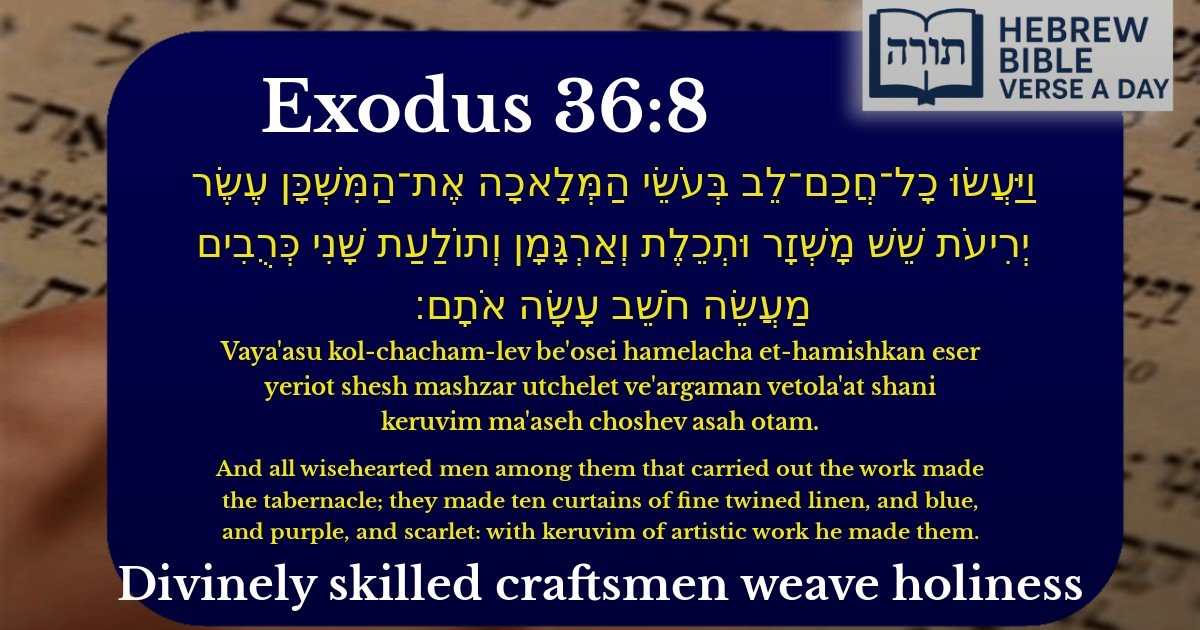

The Wisehearted Craftsmen and Their Work
The verse describes the skilled artisans who constructed the Mishkan (Tabernacle), emphasizing their wisdom and divine inspiration. Rashi (Exodus 36:8) explains that "wisehearted" (chachmei lev) refers to those who were endowed with exceptional wisdom and understanding in craftsmanship, granted by Hashem for this sacred task. The Ramban (Nachmanides) adds that their wisdom was not merely technical but also spiritual, enabling them to infuse their work with kedushah (holiness).
The Materials and Their Symbolism
The ten curtains were made of four materials: fine twined linen (shesh), blue (techelet), purple (argaman), and scarlet (tola'at shani). These materials carry deep symbolic meanings:
The Keruvim and Their Significance
The verse mentions that the curtains were adorned with keruvim (cherubim) of artistic work. The Talmud (Sukkah 5b) teaches that the keruvim symbolized the relationship between Hashem and Klal Yisrael, like the bond between a parent and child. The Rambam (Moreh Nevuchim 3:45) explains that their presence served as a reminder of the heavenly realm and the need for spiritual elevation.
The Unity of the Craftsmen
The phrase "they made ten curtains" is written in the plural, yet "he made them" appears in the singular. The Midrash (Shemot Rabbah 52:4) resolves this by teaching that although many individuals contributed, their unity of purpose made it as if one person had completed the work. This reflects the ideal of communal harmony in serving Hashem.