Frequently Asked Questions
Q: What is being described in Exodus 37:11?
A: This verse describes the construction of the Shulchan (Table) in the Mishkan (Tabernacle). Betzalel, the craftsman, overlaid the wooden table with pure gold and added a golden rim around it, following Hashem's detailed instructions for the Mishkan's holy vessels.
Q: Why was the Shulchan covered in gold?
A: Gold symbolizes purity and royalty in Jewish tradition. Covering the Shulchan in pure gold showed its holiness as one of the key vessels in the Mishkan used for the Lechem HaPanim (Showbread). Rashi explains that the gold overlay protected the wood and elevated its sanctity.
Q: What is the significance of the golden rim ('zeir zahav') mentioned in this verse?
A: The golden rim served both a practical and spiritual purpose. Practically, it strengthened the table's structure. Spiritually, the Rambam teaches that the rim symbolized a 'crown,' representing the material blessings (parnassah) that come from Hashem, as the table held the bread symbolizing sustenance.
Q: How does the Shulchan's design apply to us today?
A: The Shulchan teaches us to elevate physical sustenance (like food) for holy purposes. Just as the table held sacred bread in the Mishkan, we sanctify our meals through brachot (blessings), hospitality, and using our resources for mitzvot—turning our 'tables' into altars of kindness (as taught in Avot 3:3).
Q: Why does the Torah give such detailed descriptions of the Mishkan's vessels?
A: The Midrash (Tanchuma Terumah 8) explains that every detail of the Mishkan mirrors spiritual concepts. The gold-covered Shulchan, for example, reminds us that even material possessions become holy when used properly. The Ramban adds that these details are eternal lessons—the Mishkan's holiness exists in microcosm in every Jewish home.

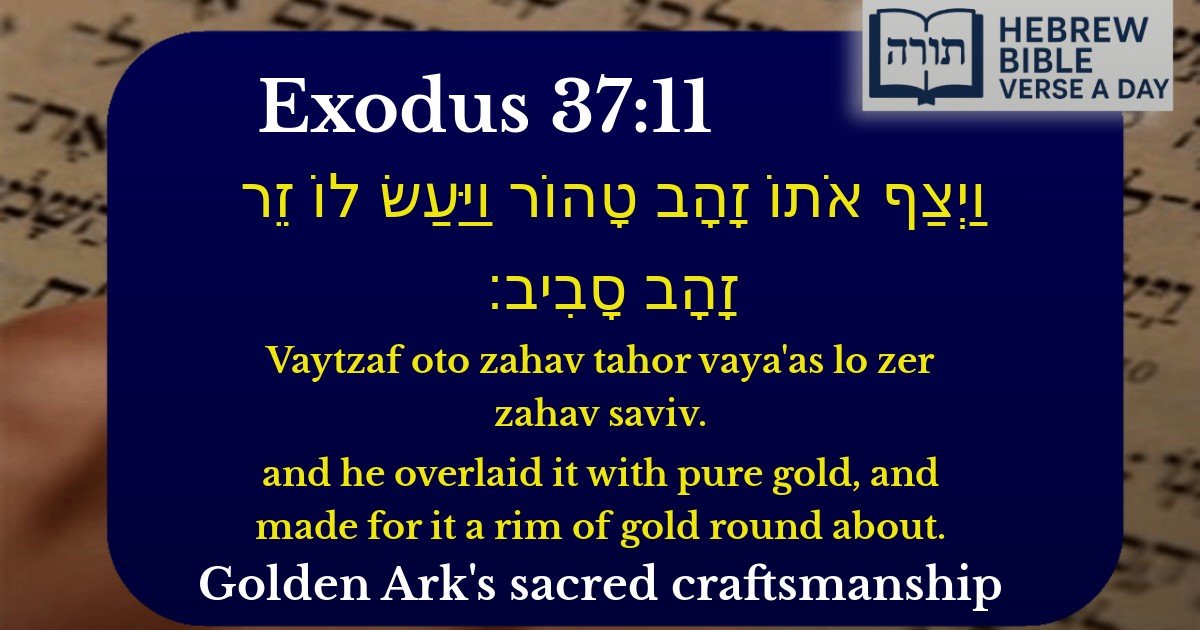

Context of the Verse
The verse (Exodus 37:2) describes the construction of the Ark of the Covenant (אָרוֹן הַבְּרִית) by Betzalel, who overlaid it with pure gold and fashioned a golden rim around it. This was part of the meticulous craftsmanship of the Mishkan (Tabernacle) as commanded by Hashem.
Rashi's Explanation
Rashi (Exodus 37:2) explains that the phrase "וַיְצַף אֹתוֹ זָהָב טָהוֹר" ("and he overlaid it with pure gold") refers to covering the wooden Ark with gold both on its interior and exterior. This dual overlay symbolizes the importance of inner and outer purity in divine service. The golden rim ("זֵר זָהָב סָבִיב") served both a functional and symbolic purpose—preventing the lid (כַּפֹּרֶת) from slipping while also representing the crown (כֶּתֶר) of Torah.
Symbolism of the Gold Overlay
The Golden Rim (זֵר זָהָב)
The Midrash (Shemos Rabbah 34:2) compares the golden rim to a crown, symbolizing the Torah's supremacy. The rim encircling the Ark alludes to the Torah's all-encompassing wisdom, which has no end. The Kli Yakar (Exodus 37:2) adds that the rim also served as a reminder that the Torah's teachings must "surround" and guide every aspect of a Jew's life.
Practical Halachic Insight
Rabbeinu Bachya (Exodus 37:2) notes that the precise measurements and materials used for the Ark teach the importance of adhering strictly to divine commandments without deviation. This mirrors the principle of "לא תסור" (do not turn aside from the word of the Torah, Deuteronomy 17:11).