

Join Our Newsletter To Be Informed When New Videos Are Posted
Hebrew Text
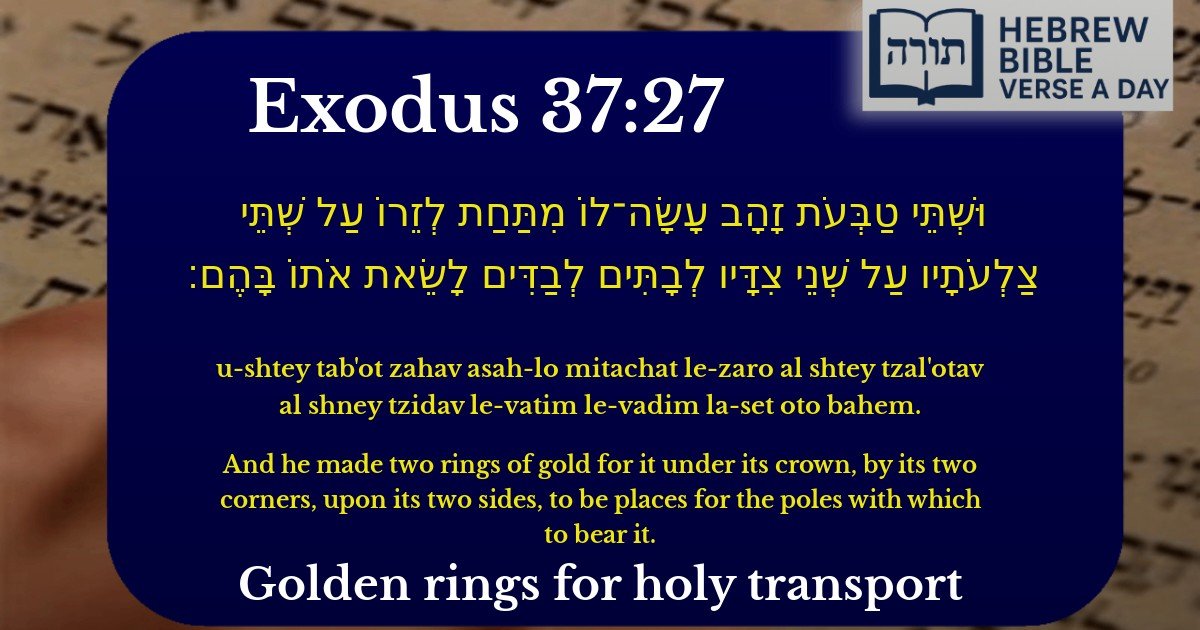
וּשְׁתֵּי טַבְּעֹת זָהָב עָשָׂה־לוֹ מִתַּחַת לְזֵרוֹ עַל שְׁתֵּי צַלְעֹתָיו עַל שְׁנֵי צִדָּיו לְבָתִּים לְבַדִּים לָשֵׂאת אֹתוֹ בָּהֶם׃
English Translation
And he made two rings of gold for it under its crown, by its two corners, upon its two sides, to be places for the poles with which to bear it.
Transliteration
U-shtey tab'ot zahav asah-lo mitachat le-zaro al shtey tzal'otav al shney tzidav le-vatim le-vadim la-set oto bahem.
Hebrew Leining Text
וּשְׁתֵּי֩ טַבְּעֹ֨ת זָהָ֜ב עָֽשָׂה־ל֣וֹ&thinsp
🎵 Listen to leining
Parasha Commentary
📚 Talmud Citations
This verse is not quoted in the Talmud.
Context of the Verse
This verse (Exodus 37:27) describes the construction of the golden altar (מִזְבַּח הַזָּהָב) used for incense offerings in the Mishkan (Tabernacle). The rings and poles were essential for transporting the altar during the Israelites' journeys in the wilderness.
Rashi's Commentary
Rashi (Exodus 37:27) explains that the two golden rings were placed "under its crown" (מִתַּחַת לְזֵרוֹ), meaning beneath the decorative molding (זֵר) that encircled the top of the altar. These rings were positioned on opposite sides ("עַל שְׁתֵּי צַלְעֹתָיו") to hold the carrying poles ("בַּדִּים"). Rashi emphasizes that the rings were not attached to the altar's base but slightly higher, ensuring stability during transport.
Rambam's Explanation
In Hilchot Klei HaMikdash (1:12), the Rambam (Maimonides) notes that all vessels of the Mishkan with carrying poles—including the Ark, Table, and Incense Altar—had rings fixed to their sides. The poles were never removed ("לֹא יָסוּרוּ מִמֶּנּוּ"), as derived from Exodus 25:15. This design ensured the sanctity of the vessels was preserved, as they were always ready for transport in a dignified manner.
Symbolism of the Rings and Poles
Practical Halachic Insights
The Mishneh LaMelech (R' Yehuda Rosanes) discusses why the Torah specifies the rings' placement ("עַל שְׁנֵי צִדָּיו"). Unlike the Ark’s rings, which were attached to its feet (Exodus 25:12), the incense altar’s rings were higher to prevent the poles from interfering with the priest’s service when the altar was stationary.
Midrashic Interpretation
The Midrash Tanchuma (Terumah 11) connects the altar’s transport system to the Jewish people’s role as bearers of Torah: just as the poles allowed the altar to be carried without direct handling, the Torah is sustained through those who dedicate themselves to its study and transmission.