

Join Our Newsletter To Be Informed When New Videos Are Posted
Hebrew Text
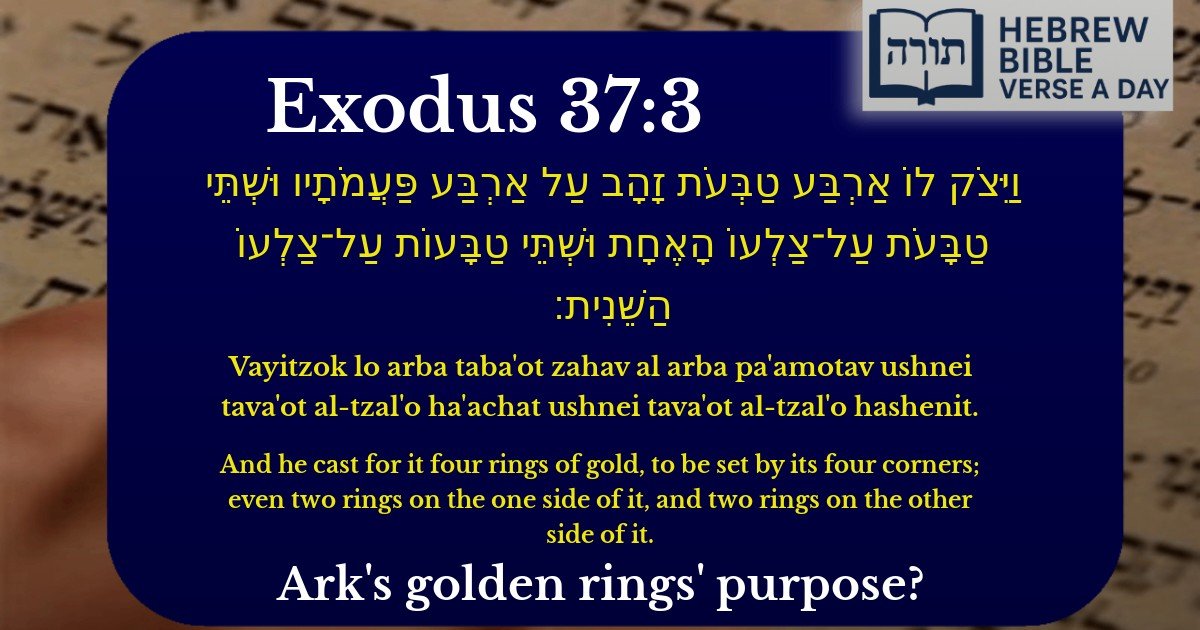
וַיִּצֹק לוֹ אַרְבַּע טַבְּעֹת זָהָב עַל אַרְבַּע פַּעֲמֹתָיו וּשְׁתֵּי טַבָּעֹת עַל־צַלְעוֹ הָאֶחָת וּשְׁתֵּי טַבָּעוֹת עַל־צַלְעוֹ הַשֵּׁנִית׃
English Translation
And he cast for it four rings of gold, to be set by its four corners; even two rings on the one side of it, and two rings on the other side of it.
Transliteration
Vayitzok lo arba taba'ot zahav al arba pa'amotav ushnei tava'ot al-tzal'o ha'achat ushnei tava'ot al-tzal'o hashenit.
Hebrew Leining Text
וַיִּצֹ֣ק ל֗וֹ אַרְבַּע֙ טַבְּעֹ֣ת זָהָ֔ב עַ֖ל אַרְבַּ֣ע פַּעֲמֹתָ֑יו וּשְׁתֵּ֣י טַבָּעֹ֗ת עַל־צַלְעוֹ֙ הָֽאֶחָ֔ת וּשְׁתֵּי֙ טַבָּעֹ֔ת עַל־צַלְע֖וֹ הַשֵּׁנִֽית׃
🎵 Listen to leining
Parasha Commentary
📚 Talmud Citations
This verse is quoted in the Talmud.
📖 Yoma 72a
The verse is referenced in a discussion about the construction of the Ark and its rings, comparing it to the construction of other sacred objects.
📖 Shabbat 92a
Mentioned in a discussion about the dimensions and features of the Ark, focusing on the placement of the rings.
Context of the Verse
This verse (Exodus 25:26) describes the construction of the Shulchan (Table) in the Mishkan (Tabernacle), specifically detailing the placement of golden rings on its corners for carrying. The Shulchan held the Lechem HaPanim (Showbread), symbolizing divine sustenance and the material blessings bestowed upon Israel.
Rashi's Explanation
Rashi (Exodus 25:26) clarifies that the four rings were cast (ויצק) directly onto the Shulchan, rather than being attached afterward. This emphasizes the permanence and unity of the structure, reflecting the unbreakable bond between Hashem and the Jewish people. The rings' placement—two on each side—ensured balanced carrying by the Levites, teaching the importance of stability in divine service.
Symbolism of the Rings
Rambam's Perspective
In Hilchot Beit HaBechirah (3:14), Rambam notes that the rings' precise placement ensured the Shulchan could never be overturned, symbolizing that divine providence sustains the world with unwavering stability. The gold material reflects the sanctity (kedushah) imbued in even mundane aspects of life when directed toward holiness.
Practical Halachic Insight
The Kli Yakar (Exodus 25:26) highlights that the rings were placed near the table's corners but not at the very edges, preventing the carrying poles from slipping. This teaches a lesson in meticulousness (hiddur mitzvah)—even functional details in avodat Hashem (divine service) require thoughtful execution.