

Join Our Newsletter To Be Informed When New Videos Are Posted
Hebrew Text
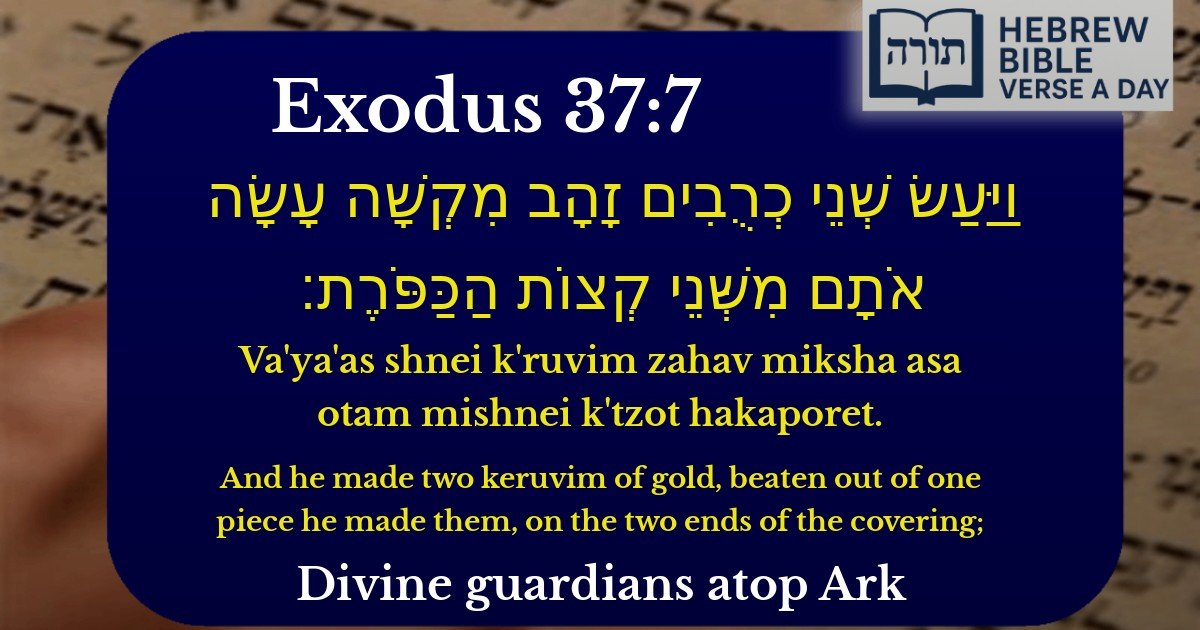
וַיַּעַשׂ שְׁנֵי כְרֻבִים זָהָב מִקְשָׁה עָשָׂה אֹתָם מִשְּׁנֵי קְצוֹת הַכַּפֹּרֶת׃
English Translation
And he made two keruvim of gold, beaten out of one piece he made them, on the two ends of the covering;
Transliteration
Va'ya'as shnei k'ruvim zahav miksha asa otam mishnei k'tzot hakaporet.
Hebrew Leining Text
וַיַּ֛עַשׂ שְׁנֵ֥י כְרֻבִ֖ים זָהָ֑ב מִקְשָׁה֙ עָשָׂ֣ה אֹתָ֔ם מִשְּׁנֵ֖י קְצ֥וֹת הַכַּפֹּֽרֶת׃
🎵 Listen to leining
Parasha Commentary
📚 Talmud Citations
This verse is quoted in the Talmud.
📖 Yoma 54a
The verse is discussed in relation to the construction of the keruvim in the Temple and their significance.
📖 Chagigah 13b
Mentions the keruvim in the context of mystical discussions about the Divine Chariot (Merkavah).
📖 Sukkah 5b
References the keruvim in a discussion about the dimensions and construction of the Temple vessels.
The Keruvim in the Mishkan
The verse describes the construction of the two keruvim (cherubim) made of pure gold, positioned on the kaporet (covering) of the Aron HaKodesh (Holy Ark). According to Rashi (Shemot 25:18), these keruvim were fashioned "miksha"—beaten out of a single piece of gold rather than assembled from separate parts. This method of construction symbolizes their unity and indivisibility, reflecting the divine presence that would rest between them.
Symbolism of the Keruvim
The Talmud (Chagigah 13b) teaches that the keruvim had the form of children, representing purity and closeness to Hashem. Rambam (Moreh Nevuchim 3:45) explains that their presence served as a reminder of the angels who serve Hashem, reinforcing the sanctity of the Aron and the Torah it contained. The Midrash (Shemot Rabbah 34:3) further elaborates that their faces were turned toward one another when Bnei Yisrael fulfilled Hashem's will, but turned away during times of transgression.
Positioning on the Kaporet
The verse specifies that the keruvim were placed "mi'shnei ketzot ha'kaporet"—on the two ends of the covering. Ibn Ezra (Shemot 25:18) notes that their placement was precise, ensuring they faced inward toward the center, where the Shechinah would manifest. The positioning teaches that divine revelation occurs when there is harmony and unity, as the keruvim faced each other in mutual respect and devotion.
Lessons from the Keruvim