

Join Our Newsletter To Be Informed When New Videos Are Posted
Hebrew Text
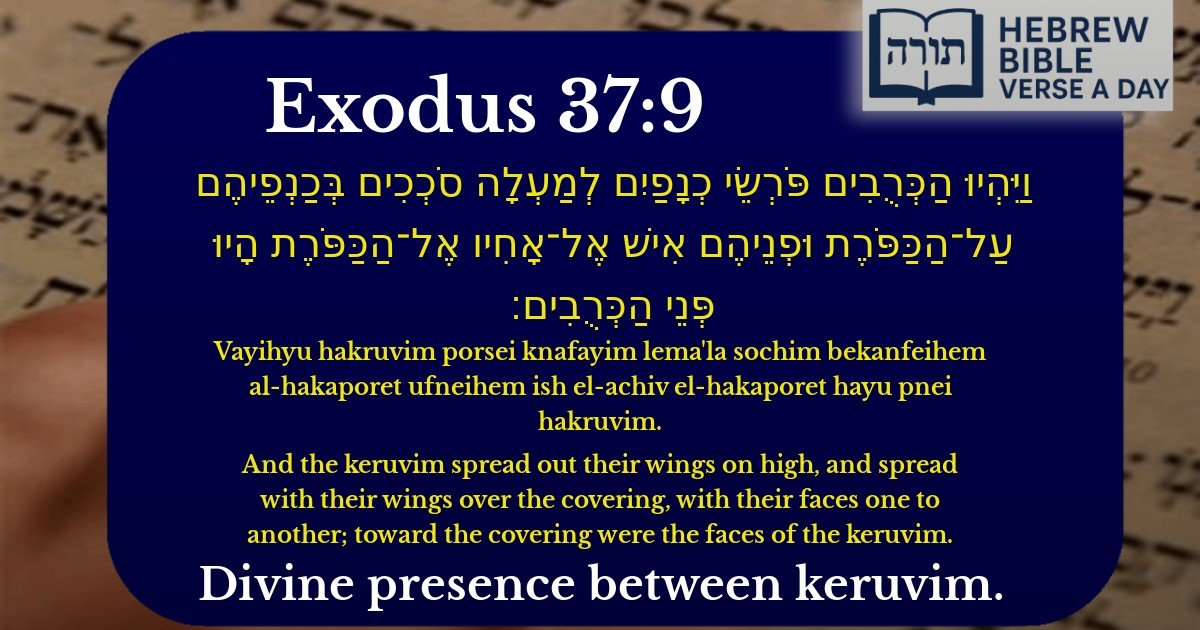
וַיִּהְיוּ הַכְּרֻבִים פֹּרְשֵׂי כְנָפַיִם לְמַעְלָה סֹכְכִים בְּכַנְפֵיהֶם עַל־הַכַּפֹּרֶת וּפְנֵיהֶם אִישׁ אֶל־אָחִיו אֶל־הַכַּפֹּרֶת הָיוּ פְּנֵי הַכְּרֻבִים׃
English Translation
And the keruvim spread out their wings on high, and spread with their wings over the covering, with their faces one to another; toward the covering were the faces of the keruvim.
Transliteration
Vayihyu hakruvim porsei knafayim lema'la sochim bekanfeihem al-hakaporet ufneihem ish el-achiv el-hakaporet hayu pnei hakruvim.
Hebrew Leining Text
וַיִּהְי֣וּ הַכְּרֻבִים֩ פֹּרְשֵׂ֨י כְנָפַ֜יִם לְמַ֗עְלָה סֹֽכְכִ֤ים בְּכַנְפֵיהֶם֙ עַל־הַכַּפֹּ֔רֶת וּפְנֵיהֶ֖ם אִ֣ישׁ אֶל־אָחִ֑יו אֶ֨ל־הַכַּפֹּ֔רֶת הָי֖וּ פְּנֵ֥י הַכְּרֻבִֽים׃ {פ}
🎵 Listen to leining
Parasha Commentary
📚 Talmud Citations
This verse is quoted in the Talmud.
📖 Yoma 54a
The verse is discussed in relation to the positioning of the keruvim in the Holy of Holies and their symbolic significance.
📖 Bava Batra 99a
The verse is referenced in a discussion about the construction and appearance of the keruvim in the Temple.
The Keruvim on the Ark Covering
The verse describes the positioning of the keruvim (cherubim) atop the kaporet (ark covering) in the Mishkan (Tabernacle). According to Rashi (Shemot 25:20), the keruvim faced each other with outstretched wings, symbolizing the relationship between Hashem and Klal Yisrael. Their faces turned inward toward the kaporet—where the Divine Presence rested—demonstrating humility and reverence.
Symbolism of the Keruvim
The Talmud (Bava Batra 99a) teaches that the keruvim had the form of children, representing purity and innocence. Rambam (Moreh Nevuchim 3:45) explains that their wings spread upward, signifying spiritual aspiration, while their faces turned toward each other reflected mutual love and unity among Bnei Yisrael.
The Keruvim and Divine Revelation
The keruvim served as intermediaries for Divine communication, as Hashem spoke to Moshe from between them (Shemot 25:22). The Sforno notes that their positioning—facing inward yet wings upward—symbolized the balance between earthly service and heavenly devotion.