Frequently Asked Questions
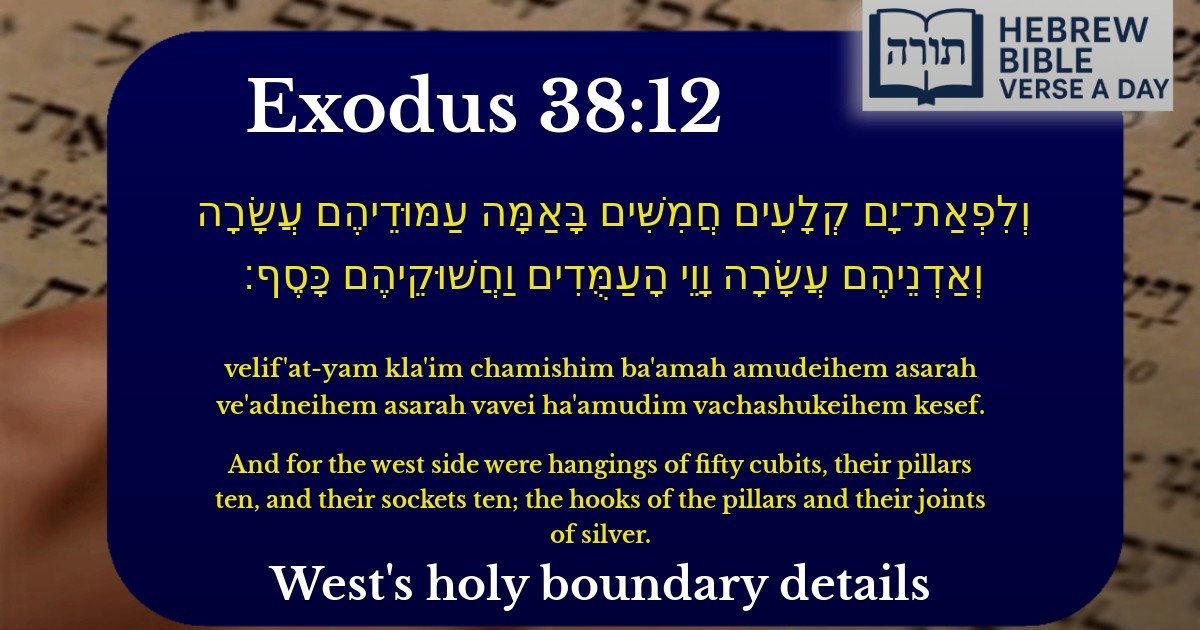
Q: What does Exodus 38:12 describe?
A: Exodus 38:12 describes the western side of the courtyard of the Mishkan (Tabernacle). It specifies that there were hangings (curtains) measuring fifty cubits in length, supported by ten pillars with ten sockets (bases), and the hooks and bands of the pillars were made of silver.
Q: Why is the west side of the Mishkan important?
A: The west side of the Mishkan is significant because it was one of the four sides that formed the sacred enclosure where the Divine Presence rested. According to Rashi and other commentators, each side had specific measurements and materials, reflecting the precision and holiness required in building a dwelling place for Hashem.
Q: What can we learn from the details in Exodus 38:12?
A: The detailed description teaches us the importance of exactness and dedication in fulfilling mitzvot (commandments). Just as the Mishkan was built with precise measurements and materials, we learn from the Talmud and Rambam that our service to Hashem should be performed with care, attention to detail, and a sincere heart.
Q: Why were the hooks and bands of the pillars made of silver?
A: Silver symbolizes purity and refinement in Jewish tradition. The use of silver for the hooks and bands, as explained in Midrashic sources, highlights the elevated spiritual nature of the Mishkan. It also teaches that even the seemingly minor components of a mitzvah contribute to its overall sanctity.
Q: How does the construction of the Mishkan apply to us today?
A: While we no longer have the Mishkan, the principles of its construction still apply. The Talmud (Berachot 8a) teaches that synagogues are considered 'miniature sanctuaries.' Just as the Mishkan was built with precision and holiness, we should approach our places of worship and mitzvot with the same reverence and attention to detail.


Context in the Mishkan
This verse (Shemot 36:12) describes the construction of the western side of the courtyard (chatzer) of the Mishkan (Tabernacle). The west side featured hangings (kelaim) of fine twisted linen, measuring fifty cubits in length, supported by ten pillars with corresponding sockets and silver hooks.
Rashi's Explanation
Rashi (Shemot 36:12) clarifies that the "west side" refers to the side facing westward, opposite the entrance of the Mishkan. He notes that the fifty-cubit measurement was consistent on all sides except the east, which was longer (100 cubits) due to the entrance. The ten pillars corresponded to the ten sockets (adanim), ensuring stability.
Symbolism of the West Side
According to the Midrash (Bamidbar Rabbah 12:21), the western side holds special significance as it faced the Holy of Holies (Kodesh HaKodashim). The ten pillars allude to the Ten Commandments, representing the foundation of Torah. The silver hooks (vavei ha'amudim) symbolize the unity of the Jewish people, as silver (kesef) is linked to love and connection (see Keli Yakar on Shemot 38:17).
Structural Details
Halachic Insights
The Chizkuni (Shemot 36:12) notes that the precise measurements teach the principle of hiddur mitzvah (beautifying commandments). The symmetry and materials reflect the care required in fulfilling divine service. The Sforno adds that the western side's durability (with silver reinforcements) symbolizes the eternal nature of Torah.